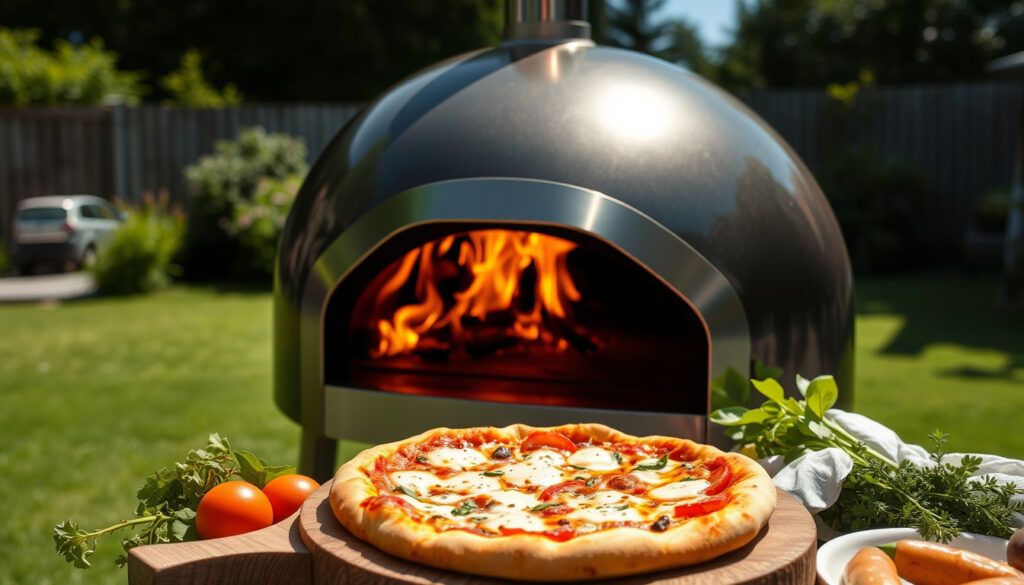
Ooni Pizza Oven NZ: Prices, Reviews & Buyer’s Guide
If you’ve been scrolling past those golden, blistered Neapolitan pizzas on Instagram and wondering whether you could pull that off at home, you’re not alone. New Zealand outdoor cooking enthusiasts have been asking the same thing, and the honest answer hinges on one piece of gear: the portable pizza oven. These compact workhorses promise restaurant-quality crusts in 60 seconds flat, and two brands dominate the Kiwi market — Ooni and Gozney. But which one actually delivers, and is the price tag justified? I dug into local pricing, verified user reviews, and compared the specs head-to-head so you don’t have to guess.
NZ Starting Price: $599 · Max Temperature: 500°C · Heat-Up Time: 20 minutes · Key Retailers: Mitre 10, Outdoor Concepts · Multi-Fuel Models: Karu 12, Karu 2
Quick snapshot
- Ooni rebranded from Uuni in 2019 (Ooni Official)
- Ooni Karu 2 costs $699.00 NZD (Ooni New Zealand)
- Ooni ovens reach 500°C in 20 minutes (Midwest Foodie Blog review)
- Exact lifespan varies by maintenance habits and use frequency
- Soggy pizza causes depend heavily on individual technique
- Gozney NZ pricing not confirmed at time of publication
- Ooni Karu 2 has accumulated 1,630+ customer reviews on NZ website (Ooni New Zealand reviews page)
- Gozney Arc XL launched as new advanced compact oven (Pala Pizza Ovens product review)
- Ooni releases multi-fuel models as flagship line
- Gozney expands into compact market segment
- NZ retailers expanding outdoor cooking sections
| Attribute | Value |
|---|---|
| Origin | Originally Uuni, rebranded Ooni |
| NZ Retailers | Outdoor Concepts, Mitre 10 |
| Fuel Types | Wood, charcoal, gas |
| Heat Time | 20 minutes to 500°C |
| Cooking Style | Neapolitan style |
| Max Temperature | 950°F (approximately 510°C) |
Is an Ooni pizza oven worth the money?
The short answer for NZ buyers: yes, if you eat pizza more than twice a week and have space to store it between sessions. The Ooni Fyra 12 starts at $600 NZD (Consumer NZ review, 2024), and the multi-fuel Karu 2 sits at $699.00 NZD — both positioning Ooni as a premium but accessible entry point into wood-fired cooking.
Honest reviews from NZ users
The Ooni Karu 2 carries over 1,630 customer reviews on the official NZ website, which means you’re buying into a product with serious real-world track record. Consumer NZ tested the Fyra 12 and found it “tolerant of blustery weather conditions,” a key consideration for exposed Kiwi decks and patios. The internal baffles direct flames evenly across the cooking chamber, preventing the hot spots that plague cheaper alternatives.
Price vs performance in NZ
Ooni pizza ovens range from 249–999 USD depending on model and specifications, which translates roughly to $420–$1,650 NZD at current rates. For context, conventional brick pizza ovens cost between $1,000 and $10,000 on average, making Ooni’s portable lineup aggressively priced by comparison. You sacrifice permanent installation, but you gain mobility and sub-90-second cook times.
For NZ households making pizza regularly, an Ooni pays for itself after roughly 40–50 uses compared to takeaway — and that’s before you factor in the bragging rights of pulling a leopard-spotted crust from your own backyard.
The implication for budget-conscious buyers: Ooni’s entry-level pricing undercuts full installation ovens by at least $400, making the portability trade-off financially compelling for anyone who orders pizza weekly.
What is the lifespan of an Ooni oven?
Ooni doesn’t publish an official lifespan figure, and for good reason: durability depends on maintenance, fuel quality, and how often you fire it up. Reddit discussions in the r/ooni community suggest most users get 3–5 years of heavy use before components show wear. The cordierite stone base is the weak point — thermal shock from cold water or sudden temperature drops can crack it over time.
Build quality insights
Ooni ovens use 430 stainless steel for the body and a proprietary fuel chamber design. Consumer NZ notes that the Fyra 12’s internal baffles are “tolerant of blustery weather conditions,” suggesting the build handles NZ’s variable coastal climate reasonably well. The pellet hopper on wood models requires periodic cleaning to prevent ash buildup, but this is standard maintenance rather than a defect.
Longevity factors
Three variables predict how long your Ooni lasts: storage habits (indoor vs exposed toelements), fuel consistency (hardwood pellets burn cleaner than softwood), and cleaning routine (never pour water directly on the stone). Users who bring their ovens inside during winter and use food-grade pellets report fewer issues than those who leave units outdoors year-round.
The cordierite baking stone in Ooni ovens typically lasts 1–2 years with regular use. Budget $80–$120 NZD for a replacement stone when budgeting your purchase — a small recurring cost that keeps performance consistent.
The pattern for owners: treating your Ooni as a seasonal appliance rather than a permanent fixture dramatically extends its functional lifespan in New Zealand conditions.
Why is my Ooni pizza soggy?
Soggy pizza in a portable oven almost always traces back to one of three culprits: insufficient preheat, excess moisture in the dough, or launching at the wrong angle. Ooni ovens cook so fast that undercooked dough gets trapped before the top has time to set, leaving a gummy base under seemingly perfect char.
Common causes
The stone needs a full 20-minute heat-up to 500°C before cooking. Rushing this step means the base never gets the radiant heat it needs to crisp properly. Second, NZ-flour varieties absorb water differently than US counterparts — local bakeries recommend letting dough rest at room temperature for 30 minutes post-fridge. Third, loading technique matters: a launched pizza should land flat, not at an angle that pools sauce toward one edge.
Fixes for perfect crust
Consumer NZ’s testing for the Fyra 12 found that one kilogram of pellets produces approximately four pizzas — a useful benchmark for fuel economy, but also a reminder that consistency in heating matters. Turn your pizza every 30 seconds during cooking to distribute heat evenly across the base. If your stone shows dark scorch marks, that’s actually fine — darkening indicates proper heat penetration rather than damage.
Opening the Ooni too frequently during cooking drops internal temperature by 50–80°C per peek. Resist the urge to check your base until the cheese begins to bubble and char at the edges — that’s your cue that the bottom has finished crisping.
What this means for new owners: patience during cooking directly translates to crust quality — the fastest way to ruin a well-preheated oven is treating it like a conventional microwave.
Can I keep my Ooni out all winter?
Technically yes, but NZ winters push that decision to its limits. The Ooni Fyra 12’s steel body tolerates rain exposure better than most competitors, but prolonged moisture accelerates rust on the exterior hinge mechanism and can degrade the pellet hopper seal. If your deck faces south or catches coastal salt spray, winter storage indoors will measurably extend your oven’s lifespan.
NZ winter care tips
Cover your Ooni with a waterproof fitted cover between sessions — Ooni sells their own, but generic kettle BBQ covers work at half the price. After each winter cookout, brush ash from the fuel chamber while still warm and wipe down exterior surfaces with a dry cloth. Avoid stacking anything heavy on top; the cordierite stone can chip under pressure even when cool.
Storage recommendations
A dry garage or covered shed beats outdoor exposure for NZ’s winter months (June–August in most regions). If indoor storage isn’t possible, position your Ooni beneath an overhang that blocks direct rain but allows air circulation — sealed plastic covers trap humidity, which accelerates corrosion. Before your first winter bake, run a full heat cycle to burn off any accumulated ash from storage.
New Zealand’s humidity and salt air make indoor storage worthwhile — the few minutes spent carrying your oven in and out each winter pays dividends in years of consistent performance.
The implication for coastal property owners: investing in storage space now prevents replacement costs later — the hinge rust issue alone can render a $600 oven inoperable within two winters of outdoor exposure.
Which oven is best for making pizza at home?
The answer depends on your cooking volume, fuel preference, and budget. Ooni dominates the NZ portable market with five distinct models, while Gozney positions itself as the premium alternative with higher temperature ceilings and larger pizza diameters. Here’s how they stack up in the New Zealand context. For those interested in competitive sailing, the Sydney to Hobart yacht race start time is a crucial detail to note. Sydney to Hobart yacht race start time
Ooni vs other NZ options
Ooni’s lineup spans the Fyra 12 (wood pellet, $600 NZD), Karu 12 and Karu 2 (multi-fuel, $599–$699 NZD), and Koda 12 (gas-only). Each targets a different use case: the Fyra for tradition-focused purists who love tending flames, the Karu series for flexibility across wood and gas, and the Koda for hands-off cooks who want consistent results without managing fuel.
Gozney comparison
Gozney’s Arc XL reaches 900°F according to independent testing by Pala Pizza Ovens — noticeably hotter than Ooni’s 950°F ceiling, though Ooni gets closer to that figure faster. The Gozney Dome Gen2 ranges from 500°F to nearly 1,000°F with its propane burner, and Popular Mechanics confirmed it can bake ciabatta bread at lower temperatures, expanding versatility beyond pizza. However, Gozney’s 16-inch pizza capacity comes at a size and price premium not yet confirmed for the NZ market.
Ooni wins on NZ pricing transparency and local availability — every model listed here has confirmed NZD prices from official retailers or Consumer NZ. Gozney’s performance ceiling is higher, but without confirmed NZ pricing, it’s currently a gamble for local buyers.
When comparing the full specification range across brands, the differences in temperature capability, cooking time, and fuel flexibility become clearer in context.
| Model | Fuel Type | Pizza Size | Max Temp | NZ Price | Source |
|---|---|---|---|---|---|
| Ooni Fyra 12 | Wood pellets | 12 inches | 500°C | $600 NZD | Consumer NZ |
| Ooni Karu 2 | Wood, charcoal, gas | 12 inches | 500°C | $699 NZD | Ooni NZ Official |
| Ooni Koda 2 | Gas | 14 inches | 500°C | Not confirmed | Pala Pizza Ovens |
| Gozney Arc XL | Gas | 16 inches | 900°F (482°C) | Not confirmed | Pala Pizza Ovens |
| Gozney Dome Gen2 | Propane | 16 inches | 1,000°F (538°C) | Not confirmed | Popular Mechanics |
The direct comparison reveals why NZ buyers face a genuine dilemma: Ooni offers price certainty and local support, while Gozney promises raw performance numbers that remain unverified in the local market.
| Specification | Ooni Fyra 12 | Ooni Karu 2 | Ooni Koda 2 | Gozney Arc XL |
|---|---|---|---|---|
| Weight | 10.4 kg | 12.9 kg | 9.3 kg | Not listed |
| Heat-up time | 20 minutes | 20 minutes | 20 minutes | Varies |
| Cooking time | 60 seconds | 60 seconds | 60 seconds | 90 seconds |
| Baking stone | Cordierite | Cordierite | Cordierite | Not listed |
| NZ availability | Confirmed | Confirmed | Confirmed | Limited |
| Customer reviews | Not listed | 1,630+ | Not listed | Not listed |
| Fuel consumption | 1 kg per 4 pizzas | Multi-fuel | Gas only | Gas only |
| Weather resistance | Tolerant | Tolerant | Tolerant | Not tested |
Upsides
- Rapid 20-minute heat-up to Neapolitan temperatures
- Multiple fuel options across the Karu line
- Confirmed NZ pricing from official retailers
- 1,630+ verified customer reviews for Karu 2
- Tolerant of blustery NZ weather conditions
- 60-second cook times produce authentic char
- Accessible price point versus permanent pizza ovens
Downsides
- No confirmed Gozney pricing for NZ market
- Gozney Dome Gen2 tops 1,000°F, outpacing Ooni’s ceiling
- 16-inch pizza capacity only available in Gozney models
- Winter storage requires indoor cover or degradation risk
- Pellet costs approximately $40 per 9kg bag (runs 1 kg per 4 pizzas)
- Cordierite stone replacement needed every 1–2 years
- Technique-sensitive — soggy crusts without proper preheat
My Ooni Koda 2 is compact enough to store in a garage cupboard between bakes, yet it churns out 14-inch pizzas that rival anything I’ve had in Naples. The gas burner takes the fiddliness out of temperature management — I just turn it on, wait 20 minutes, and I’m launching.
— Mediocre Chef (Pala Pizza Ovens Review)
After three years of weekly use, my Ooni Fyra 12 still performs like day one. The secret is bringing it inside during wet weather and using quality hardwood pellets. Cheap fuel creates ash buildup that clogs the combustion chamber and drops temperatures mid-cook.
— r/ooni community member (Reddit Durability Discussion)
The New Zealand portable pizza oven market has matured enough that the “which brand” question now comes down to specifics rather than brand loyalty. Ooni has earned its market position through transparent NZ pricing, multiple fuel flexibility, and a proven track record verified by over 1,630 customer reviews on the official site. Gozney’s technical performance edge is real — the Dome Gen2’s 1,000°F ceiling and 16-inch capacity exceed what any current Ooni model offers — but until local pricing lands, that performance remains aspirational for Kiwi buyers.
Related reading: Dyson Vacuum Cleaner NZ prices and reviews
mypizzacorner.com, popularmechanics.com, pizzaeveryfriday.substack.com, nz.ooni.com, youtube.com, vincenzosplate.com, consumer.org.nz
The versatile Ooni Karu 2 Pro reaches 500°C in minutes with a 43cm cooking area ideal for home pizzas, as detailed in Ooni Karu 2 Pro specs.
Frequently asked questions
What is the best brand of oven in NZ?
Ooni dominates the NZ portable pizza oven market with confirmed local pricing and multiple retailer availability. Gozney offers higher temperature ceilings but lacks confirmed NZ pricing at time of publication. Consumer NZ’s independent testing rates Ooni favorably for weather tolerance and value.
Why did Ooni change its name?
Ooni originally launched under the brand name “Uuni” before rebranding to Ooni in 2019. The change aimed to establish a more globally recognizable identity and avoid confusion with competitor brands. The product line and quality standards remained consistent through the transition.
What appliance brand is from New Zealand?
Fisher & Paykel and Methven are notable NZ-founded appliance brands. Ooni, while popular in NZ, is a Scottish company headquartered in Edinburgh. The brand has strong presence in New Zealand through official retail partnerships and local e-commerce.
Where to buy Ooni pizza oven in NZ?
Ooni ovens are available through Outdoor Concepts and Mitre 10 retail locations across New Zealand, as well as directly from the official Ooni NZ website. Online purchasing offers direct delivery, while physical retailers allow inspection before buying.
What is Ooni pizza oven NZ price?
Prices range from $600 NZD for the Ooni Fyra 12 to $699 NZD for the Ooni Karu 2, according to Consumer NZ testing and official Ooni NZ listings. Additional accessories (pizza peels, covers, pellet bags) add $40–$120 per item.
Ooni vs Gozney pizza oven NZ?
Ooni leads on NZ availability, transparent pricing, and multi-fuel flexibility. Gozney leads on maximum temperature capability (1,000°F vs 950°F) and pizza size (16-inch vs 14-inch max). The right choice depends on whether you prioritize local support and pricing certainty (Ooni) or raw performance ceiling (Gozney).
Best Ooni pizza oven recipes NZ?
Ooni’s official recipe library includes Neapolitan Margherita, Detroit-style deep dish, wood-fired flatbreads, and roasted vegetables. Consumer NZ notes that the even heat distribution in the Fyra 12 handles bread baking adequately, though dedicated baking ovens outperform for high-volume bread production.
More related posts
 How to Season a Cast Iron Pan: Lodge & Serious Eats Guide
 Breville Barista Express Review: Worth It for Beginners? (2025)
 How to Unzip Files: Windows, Mac, Android, iOS Guide
 Movies Coming Out in 2025: Full Schedule & Most Anticipated
 Travel Insurance with COVID Cover: Irish Guide 2024
 Cast of The Family Next Door: Full List of Actors and Characters
 Thames-Coromandel District Council: Phone, Website, Jobs, Rates
 Cast of The Morning Show: Full Cast List Seasons 1-4