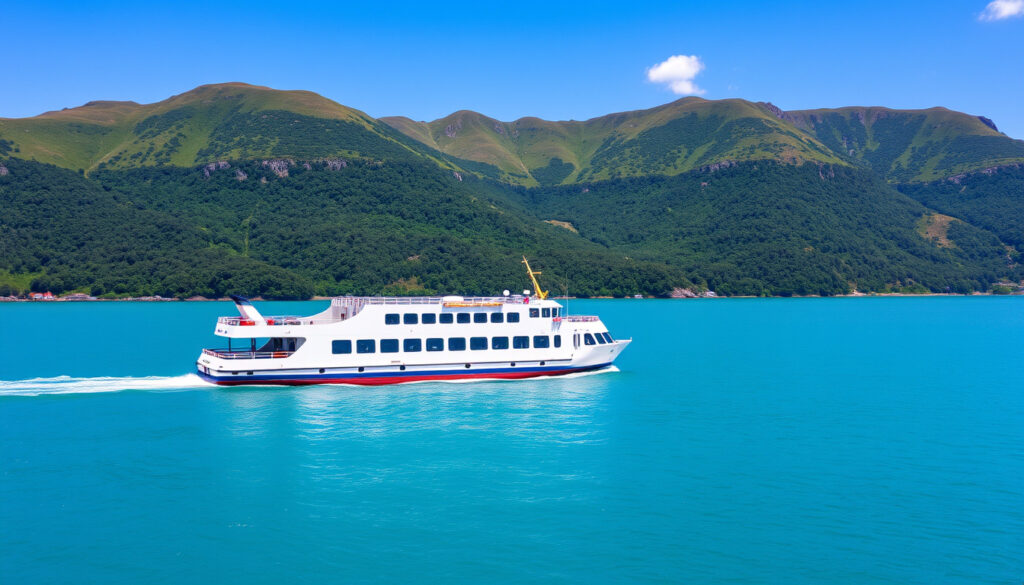
Ferry from Wellington to Picton: Timetable, Prices, Booking Guide
The ferry from Wellington to Picton crosses Cook Strait in 3 hours 25 minutes, carrying cars, campers, and foot passengers between New Zealand’s main islands on up to 50 sailings per week. Two operators—Interislander and Bluebridge—compete on price and amenities, making this the only practical way to move a vehicle south. Below is everything you need to sort out the details before you book.
Crossing Time: 3 hours 25 minutes ·
Main Operators: Interislander, Bluebridge ·
Frequency: Up to 50 sailings per week ·
Route: Wellington to Picton via Cook Strait ·
Vehicle Friendly: Cars and freight carried daily
Quick snapshot
- Standard crossing takes 3 hours 25 minutes (Direct Ferries route page)
- Interislander and Bluebridge operate the route (Direct Ferries route page)
- Combined 40+ weekly sailings between operators (Direct Ferries route page)
- Exact prices fluctuate by season and availability
- Weather-related delay frequency varies year to year
- Real-time fare caps during peak holiday periods
- Multiple daily departures year-round
- Peak summer schedule may add extra sailings
- Advance booking recommended for vehicle transport
- Compare fares and choose your operator
- Secure vehicle booking if driving aboard
- Check terminal locations and arrival times
The table below summarizes the core specs you need before comparing operators.
| Detail | Value |
|---|---|
| Route | Wellington (North Island) to Picton (South Island) |
| Distance | Cook Strait crossing — approximately 100 km |
| Duration | 3 hours 25 minutes |
| Operators | Interislander, Bluebridge |
| Sailings | Daily, up to 50 per week combined |
| Vehicle access | Cars, campervans, and freight carried daily |
How much does the ferry cost from Wellington to Picton?
Pricing across the Cook Strait ferries depends on three things: which operator you choose, what you’re bringing aboard, and how far in advance you book. According to Direct Ferries route page, Wellington to Picton fares span a wide range—from around $99 for a basic passenger booking up to $483 for premium vehicle compartments during peak season. The average reported fare sits near $228 per crossing.
Ferry prices overview
Passenger-only fares typically fall between NZ$50–$70 per direction, according to NZ Pocket Guide ferry cost breakdown. Adding a vehicle pushes the price up considerably: a passenger plus car crossing ranges from NZ$175–$255 depending on operator and season. Small campervans cost NZ$205–$285, while large campervans run NZ$310–$405.
Cheapest ferry options
Bluebridge offers one-way fares from approximately $137 for a passenger, according to Rome2Rio current pricing. Interislander runs a Saver fare option at $20 per person with flexible change policies up to 1 hour before departure—useful if your plans might shift.
“We saved $80 by booking Bluebridge two weeks out instead of showing up at the terminal. The cabin was comfortable, and we watched the coast slide by the whole way.”
— Sarah, traveler from Auckland
Pricing for cars and vehicles
Vehicle transport is where the biggest cost differences emerge. Both operators charge per linear metre for cars and per vehicle class for campervans. NZ Pocket Guide vehicle pricing table shows the Picton to Wellington leg mirrors Wellington to Picton rates closely, so round-trip costs roughly double.
How long does it take to go from Wellington to Picton by ferry?
The Cook Strait crossing takes 3 hours 25 minutes in normal conditions. Direct Ferries crossing time data confirms this duration as the standard schedule. Rough weather can extend the trip by 30–90 minutes, and in rare cases, sailings get cancelled when swells exceed safe operating limits.
Typical crossing duration
Most departures maintain the 3h25m schedule year-round. The ships—Interislander’s Kaiarahi and Kaitaki, Bluebridge’s Strait Feronia and Straitsman—are built for Cook Strait conditions, with stabilizers that reduce roll even when swells reach 3–4 metres. Passengers prone to seasickness should book a cabin or position near the ship’s centre.
“We crossed in December during a squall. It was rough for about 45 minutes mid-strait, but the crew kept everyone updated and the cafe stayed open.”
— Marcus, Christchurch resident
Weather impact on schedule
Cook Strait weather is notoriously variable. The crossing sits between two weather systems—Tasman Sea to the west, Pacific Ocean to the east—that can collide over the strait at any time. Summer tends to be calmer, but even January days can see 2-metre swells. Winter crossings offer scenic snow-capped mountains but carry higher cancellation risk.
Fast ferry times
No high-speed catamaran service operates this route. Both operators use larger rail-capable ferries that carry vehicles and freight. The 3h25m crossing is the fastest option available; there is no “fast ferry” alternative to shorten the Cook Strait segment.
Ferry from Wellington to Picton timetable
Interislander operates approximately 16 sailings per week; Bluebridge runs roughly 25, according to Direct Ferries weekly frequency data. Combined, that means up to 50 sailings per week—averaging 7 per day with seasonal variation.
Interislander schedule
Interislander sailings depart Wellington’s Aotea Quay terminal (adjacent to the cruise terminal) and arrive at Picton’s 1 Auckland Street terminal. Morning departures typically run 6:30am–9am, afternoon sailings 1pm–4pm, and evening crossings 7pm–9pm. The exact schedule shifts by season; summer adds 1–2 extra daily sailings.
Bluebridge timetable
Bluebridge departs from Wellington’s South Island Ferry Terminal and runs 4 sailings per day in each direction, according to Rome2Rio Bluebridge schedule. NZ Pocket Guide notes that Bluebridge offers free shuttle services in Picton from the Interislander Terminal Bus Shelter, Picton i-SITE, and Oxleys Tavern—useful if you’re arriving without a car.
Booking peak times
Christmas–late January and Easter week are the busiest periods. During these windows, vehicle deck space often sells out 2–4 weeks ahead. If your crossing falls in those windows, book as early as possible to lock in a specific sailing time. Mid-week crossings (Tuesday–Thursday) generally have better availability than Friday–Sunday.
Ferry from Wellington to Picton with car
Both operators carry vehicles daily. The process differs slightly between them, but the core steps are similar: select your sailing, add vehicle details, pay, then arrive at the terminal 60–90 minutes before departure for vehicle check-in.
Vehicle booking process
To book with a vehicle, you first select passenger fares, then add vehicle transport as a separate line item. The vehicle fee depends on length: standard cars (under 5m) cost less than campervans (5–7m) or large RVs (over 7m). NZ Pocket Guide vehicle transport guide details the per-metre pricing model both operators use.
Car ferry costs
Based on current ranges, a standard car (around 4.5m) adds approximately NZ$175–$255 to your crossing, according to NZ Pocket Guide car fare data. This stacks on top of the passenger fare, so a car with two passengers might total NZ$275–$375 per direction before any discounts. For more details on ferry costs, including a breakdown of pricing models, consult the NZ Pocket Guide car fare data, and for information on the best travel credit card Singapore, explore this resource. best travel credit card Singapore
Size and weight limits
Standard passenger vehicles, motorcycles, and bikes board freely. Heavy freight vehicles need pre-approval through each operator’s freight desk. Recreational vehicles over 7 metres in length or 3 metres in height may face surcharges—check with your operator before booking.
Is the ferry ride from Wellington to Picton worth it?
Whether the crossing is “worth it” depends on what you’re comparing it to. Flying Wellington to Christchurch takes 1 hour gate-to-gate but costs $150–$300 and doesn’t move your car. The ferry takes 3h25m but lets you transport a vehicle and offers scenic views you can’t get from 30,000 feet.
Pros and cons vs flying
The ferry wins on vehicle transport and scenic value. You board with your car, drive off in Picton, and continue your journey without rental fees or logistics. The Cook Strait views—including glimpses of the Sounds and wildlife on clear days—make the crossing memorable. Flying wins on speed and weather reliability. A cancellation due to rough seas doesn’t affect flights, and even a delayed crossing adds hours you wouldn’t lose in the air.
Scenic value
The crossing passes through a dynamic stretch of water. On good days, you see the North Island’s volcanic hills to the north and the South Island’s mountains to the south. Dolphin and seabird sightings are common. The ships have observation decks where passengers gather during the middle portion of the crossing.
“The ferry was the highlight of our South Island trip. We watched the mountains appear through the clouds as we entered the Sounds. No plane could give you that.”
— Tom, Wellington local traveling to visit family
Alternatives comparison
There is no bridge or tunnel. The only alternatives are flying (1 hour, no vehicle) or shipping a vehicle by freight vessel (days, expensive). For most travelers with a car, the ferry is the obvious choice. For solo travelers or those without a vehicle, flying may be cheaper and faster—check current fares on Rome2Rio flight comparison.
How to book the ferry step by step
Booking is straightforward once you know the sequence. Follow these steps to secure your crossing.
- Choose your operator: Interislander and Bluebridge both serve the route. Compare prices on Direct Ferries fare comparison page, then check the operator’s own site for the most current availability.
- Select your date and sailing: Both operators show calendars with available slots. Morning sailings tend to have better weather windows; evening crossings may encounter rougher conditions depending on the day.
- Add passengers: Enter the number of travelers and select cabin types if desired. Cabins cost extra but provide a quiet place to rest during the crossing.
- Add your vehicle: Specify vehicle type and dimensions. The system calculates the vehicle fee based on length. Confirm your vehicle fits the operator’s restrictions before paying.
- Pay and confirm: You’ll receive a confirmation email with a booking reference. Save this—you’ll need it for check-in at the terminal.
- Arrive early: Aim for 60–90 minutes before departure. Vehicle boarding starts 45 minutes out and closes 15 minutes before sailing. Late arrivals may lose their spot.
Ferry operators comparison
Both operators cover the same route, but their vessels and service profiles differ.
Upsides
- Interislander: Longer history, larger vessels (Kaiarahi carries more vehicles), established Scenic Drive Café with full menu, cabin options include Premium Seats.
- Bluebridge: Four daily sailings each direction, competitive pricing, free Picton shuttles from multiple pickup points, newer ferry (Strait Feronia launched 2017).
Downsides
- Interislander: Slightly higher average fares, some older vessels on the route, peak-season deck space fills quickly.
- Bluebridge: Smaller vehicle deck capacity, fewer cabin grades, shuttle service subject to Picton location availability.
The implication: If price is your primary concern, start with Bluebridge. If vehicle deck space or onboard amenities matter more, Interislander may justify the premium. For most travelers, either operator delivers a safe, scenic crossing.
Frequently Asked Questions
Is there a tunnel alternative to the ferry?
No tunnel exists. Cook Strait is approximately 25 km wide at its narrowest point, and New Zealand has never built a fixed link between the islands. The ferry is the only way to cross by land.
What amenities are available on the ferry?
Both operators offer onboard cafes serving hot meals, snacks, and beverages. Seating areas range from standard passenger seats to recliner-style loungers in premium sections. Cabins with beds are available for overnight crossings. Free Wi-Fi is typically available, though signal can be patchy mid-strait.
How do I book ferry tickets in advance?
Book directly through the Interislander website or Bluebridge website. Third-party aggregators like Direct Ferries compare both operators in one view. Advance booking opens 60–90 days out for most sailings.
Can I bring pets on the Wellington to Picton ferry?
Both operators allow pets in vehicles only—cats and dogs must stay inside your car or campervan during the crossing. Pets are not permitted in passenger cabins or public areas. Book pet-inclusive crossings early; deck space for vehicles with animals is limited.
What happens if the ferry is delayed by weather?
If conditions are unsafe, operators may cancel or delay sailings. In most cases, you can rebook to a later sailing the same day at no extra charge, or request a refund if no suitable alternative exists. Check your operator’s weather policy before booking—Interislander and Bluebridge both publish cancellation terms on their sites.
Are there discounts for ferry bookings?
Early-bird rates and off-peak pricing exist but vary by operator and season. Interislander’s Saver fare offers the most flexibility at a $20 premium per person. Check both operator sites for current promotions, especially for multi-trip or return crossings.
How early should I arrive at the Wellington ferry terminal?
Arrive 60–90 minutes before your sailing for vehicle boarding. Foot passengers can arrive closer to 45 minutes. Wellington’s Aotea Quay terminal has parking if you’re dropping off a vehicle or waiting for a return crossing.
For more New Zealand travel ideas, see Things to Do in Queenstown New Zealand or Places to Visit in Christchurch for Free.
More related posts
 Kiwis vs Samoa 2025 Time: Kickoff, Score & Result
 Image to Text Converter: Free Online OCR Tools in 2025
 Lower Wye Creek Track Guide: Length, Difficulty & Hiking Guide
 Golden State Warriors Standings 2026: Playoff Path
 ANZ Bank App & Website Outage: Live Status Check
 Fast X: Part 2 Is Now Fast Forever – 2028 Release & Cast
 Greymouth Boil Water Notice: Status, Safety, and FAQ