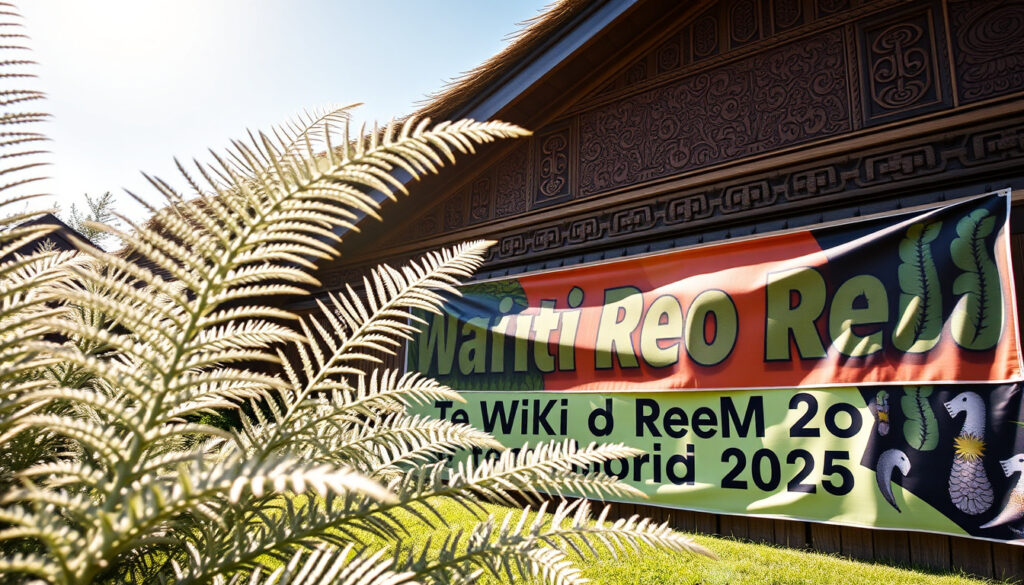
Te Wiki o te Reo Māori 2025: Theme, Dates & Resources
Te Wiki o te Reo Māori turns 50 this year—and 2025 marks the milestone worth celebrating. From 14–20 September, New Zealand marks half a century of Māori language revival with the theme “Ake ake ake – A forever language.” Whether you’re looking for the right phrase to share or want to understand why this week matters, here’s everything you need to join in with confidence.
Dates: 14–20 September 2025 · Anniversary: 50 years · Theme: Ake ake ake – A forever language · Organiser: Te Taura Whiri i te Reo Māori · Resources: Official phrases, merch, signatures
Quick snapshot
- 14–20 September 2025 (Christchurch City Libraries)
- 50th anniversary milestone (Christchurch City Libraries)
- “Ake ake ake – A forever language” (Christchurch City Libraries)
- Focus on whakapapa and language journey (Christchurch City Libraries)
- Phrases, merch, email signatures (Reo Māori Resources)
- Twinkl activity packs for educators (Reo Māori Resources)
- “Kia pārekareka te Wiki o te Reo Māori!”
- Use WH pronunciation guide
The table below consolidates verified facts about Te Wiki o te Reo Māori 2025 from multiple sources.
| Fact | Detail |
|---|---|
| Event Dates | 14–20 September 2025 |
| Anniversary | 50th |
| Theme | Honouring whakapapa |
| Official Site | reomaori.co.nz |
| First Celebration | 1975 |
| Petition Date | 14 September 1972 |
| Petition Signatures | Approximately 30,000 |
| Mahuru Māori 2025 | 23 August – 22 September |
What is the theme for Te Wiki o te Reo Māori 2025?
Te Wiki o te Reo Māori 2025 carries the theme “Ake ake ake – A forever language” (Christchurch City Libraries). Three simple words, but they carry the weight of five decades of language preservation and revival. The phrase echoes through Māori oral tradition and speaks directly to the resilience of a language that, at various points in history, was discouraged and suppressed.
Te Taura Whiri i te Reo Māori, the Māori Language Commission, sets the annual theme to guide celebrations across New Zealand (Christchurch City Libraries). For the 50th anniversary, the choice feels deliberate and powerful — honouring the journey while looking forward.
Languages thrive when people are actively learning, speaking, and listening. We can all contribute to the endurance of te reo Māori by speaking a little bit every day (Fire and Emergency NZ).
50th anniversary celebrations
The 50-year milestone marks half a century since the first official Te Wiki o te Reo Māori in 1975 (Christchurch City Libraries). That first celebration came three years after the landmark 1972 petition presented to Parliament on 14 September — a document signed by approximately 30,000 people calling for Māori language recognition (National Today). Fire and Emergency NZ and organisations nationwide hosted special events throughout Mahuru Māori 2025, the encompassing month-long language challenge, with activities including waiata rōpu, hāngi lunch, and quizzes (Fire and Emergency NZ).
Focus on whakapapa
Whakapapa — genealogy or ancestry — sits at the heart of the 2025 theme. Language connects to whakapapa in Māori culture; to speak te reo Māori is to connect with ancestors, whenua, and identity. The celebration encourages New Zealanders to explore their own connections to language, whether through whakapapa research or simply learning a new phrase to pass down.
When is Te Wiki o te Reo Māori 2025?
Te Wiki o te Reo Māori 2025 runs from Sunday 14 September to Saturday 20 September 2025 (Christchurch City Libraries). This places it squarely in the third week of September, consistent with the typical timing for the celebration. Note that one source (National Today) lists dates of September 15–22, which conflicts with the majority reporting — the widely accepted dates are 14–20.
These dates fall within the final week of Mahuru Māori, the month-long te reo Māori challenge that ran from Saturday 23 August to Monday 22 September 2025 (Fire and Emergency NZ). Mahuru Māori was initiated in 2014 by Paraone Gloyne to normalise te reo Māori usage and aligns with the maramataka, the Māori lunar calendar, despite its name translating to September (Fire and Emergency NZ).
Exact dates confirmed
The official 2025 dates come from Te Taura Whiri i te Reo Māori resources and are corroborated by Christchurch City Libraries and Fire and Emergency NZ. The week opens on a Sunday, giving families and workplaces the full week to participate through Saturday.
Historical context
Te Wiki o te Reo Māori has been celebrated annually in New Zealand since 1975 (Christchurch City Libraries). The week acknowledges and celebrates the Māori language as a unique cultural treasure — a taonga — for all New Zealanders. The event is government-sponsored and aims to inspire daily use of te reo Māori (National Today).
How to say happy te wiki o te reo māori?
The standard greeting for Te Wiki o te Reo Māori is “Kia pārekareka te Wiki o te Reo Māori!” — wishing the week to be joyful and celebratory. This phrase, along with others, appears in official resources from Te Taura Whiri i te Reo Māori and event materials from Fire and Emergency NZ, which highlighted sessions like “Whiua te Reo” pronunciation practice on 16 September 2025.
Greetings and phrases
Beyond the main greeting, common phrases used during the 2025 celebration include:
- “Tahutahu Wairua” — for morning karakia and waiata sessions (Fire and Emergency NZ)
- “Kia ora” — general greeting meaning “be well”
- “Nō reira” — therefore, used to conclude speeches
- “Mauri ora” — wishes for health and vitality
Te Iwa Johnston, Kaitohutohu Ahurea, hosted te reo sessions during Mahuru Māori 2025, guiding participants through pronunciation and phrase usage (Fire and Emergency NZ). Resources from Reo Māori Resources include over 1,000 terms and phrases covering diverse contexts (Reo Māori Resources).
Email signatures
Adding te reo to your email signature is a simple way to participate daily. Common additions include “Kia ora” as a closing, or a short message like “Kia pārekareka te Wiki o te Reo Māori!” during the celebration week. Official downloadable assets and posters are available from reomaori.co.nz to help spread the word (Reo Māori Resources).
What are 5 Māori words every New Zealander should know?
Whether you’re new to te reo Māori or looking for a refresh, these five words form a solid foundation for daily use:
Essential vocabulary
- Whānau — family, extended family network. Unlike the common misspelling “whanau,” the macron on the “ā” indicates a long vowel sound and is the correct spelling in formal contexts.
- Whakapapa — genealogy, ancestry, lineage. The concept connects individuals to their ancestors and is central to Māori identity.
- Ake ake ake — forever, eternal. The repeated word emphasises permanence and resilience.
- Kia ora — greetings, health, vitality. The most widely used te reo phrase in everyday New Zealand.
- Pākehā — New Zealander of European descent. A commonly misunderstood term outside New Zealand.
Twinkl offers a full week of activities for educators looking to incorporate Te Wiki o te Reo Māori into classrooms (Twinkl). From colouring pages to pronunciation guides, these resources make language learning accessible for all ages.
Pronunciation matters. The “wh” sound in te reo Māori is pronounced as an “f” — so “whānau” sounds like “fa-nau,” not “wuh-nau.” Getting this right shows respect for the language.
Common Māori language questions answered
Beyond vocabulary, several questions keep coming up around usage, spelling, and cultural context. Let’s clear up the most common ones.
Is it whānau or whanau?
The correct spelling is whānau with a macron over the “ā.” The macron indicates a long vowel sound and is standard in formal te reo Māori writing. “Whanau” without the macron is common in informal digital communication but loses the proper pronunciation guidance.
Why WH instead of F?
In te reo Māori, the “wh” digraph is pronounced as an “f” (with breath). This isn’t an “f” from English — it has its own place in the language’s phonology. The sound developed historically from “wh” combinations that shifted in certain dialects. When you see “wh,” pronounce it as “f.”
Pākehā meaning
Pākehā describes a New Zealander of European descent. The term’s meaning has evolved — some interpret it as “non-Māori” while others emphasise European settler identity. Unlike some English terms for ethnic groups, Pākehā is generally considered neutral in New Zealand contexts, though its usage continues to be discussed.
Whānau vs whakapapa
While both relate to family connections, whānau refers to your immediate and extended family network, while whakapapa extends to your genealogical lineage going back generations. Whakapapa can connect you to specific ancestors, mountains, rivers, and iwi affiliations.
Learning te reo Māori means accepting imperfect pronunciation. Māori speakers appreciate the effort — making the attempt matters more than getting every sound perfect on the first try.
Timeline
Five decades of te reo Māori celebration traced through key milestones.
The timeline below shows the progression from petition to established national celebration.
| Date | Event |
|---|---|
| 14 September 1972 | Māori Language Petition presented to Parliament |
| 1975 | First Te Wiki o te Reo Māori celebrated |
| 2014 | Mahuru Māori founded by Paraone Gloyne |
| 23 September 2025 | Mahuru Māori 2025 commences |
| 14–20 September 2025 | Te Wiki o te Reo Māori 2025 (50th anniversary) |
| 22 September 2025 | Mahuru Māori 2025 ends |
The pattern is clear: what started as a single petition day grew into a week, then a month, then a nationwide movement spanning 50 years. The journey from 30,000 signatures to daily classroom usage reflects language revival in action.
What’s confirmed and what’s unclear
Confirmed facts
- Dates: 14–20 September 2025
- 50th anniversary milestone
- Theme: “Ake ake ake – A forever language”
- Organised by Te Taura Whiri i te Reo Māori
- Resources available at reomaori.co.nz
Unverified claims
- Full list of 2025-specific phrases beyond the main greeting
- Complete national event calendar beyond Fire and Emergency NZ
- Participation metrics for 2025 celebrations
“‘Ake ake ake – A Forever Language’ is the theme for Te Wiki o te Reo Māori. This represents the resilience, adaptability and endurance of the Māori language.”
— Fire and Emergency NZ (organisation)
“Te Wiki o te Reo Māori – Māori Language Week has been celebrated in New Zealand since 1975. It acknowledges and celebrates the Māori language as a unique cultural treasure for all New Zealanders.”
— Christchurch City Libraries (Library Service)
Related reading: Jobs in New Zealand 2025
portal.fireandemergency.nz, youtube.com, nationaltoday.com, hail.to
Frequently asked questions
What does whānau mean?
Whānau means family, particularly your extended family network. Unlike English “family,” whānau carries deeper connotations of collective identity and belonging.
What is whakapapa?
Whakapapa refers to genealogy or ancestry — your lineage connecting you to ancestors, whenua (land), and iwi (tribe). It’s foundational to Māori identity.
Why is Māori pronounced with WH?
In te reo Māori, “wh” is pronounced as an “f” sound (with breath). This is a standard part of the language’s phonology, not an English influence.
What is Pākehā?
Pākehā describes a New Zealander of European descent. The term is generally considered neutral in New Zealand usage, though discussions about its meaning continue.
What does ake ake mean?
Ake ake means “forever” or “eternal.” The repeated word emphasises permanence — central to the 2025 theme celebrating language resilience.
When did Te Wiki o te Reo Māori start?
The first Te Wiki o te Reo Māori was celebrated in 1975, three years after the Māori Language Petition was presented to Parliament on 14 September 1972.
Where to find 2025 resources?
Official resources, assets, and posters are available from reomaori.co.nz. Additional activities can be found through Twinkl for educators.
More related posts
 New Zealand Visitor Visa Application – Complete 2025 Guide
 650 USD to NZD: Convert 650 US Dollars to New Zealand Dollars
 Spider-Man: Across the Spider-Verse 3 Release & Delay Answers
 How to Update Drivers Using Windows Update & Device Manager
 We Are the World: The Untold Drama Behind the Charity Anthem
 Houses for Rent Timaru – Current Listings Prices Suburbs
 NZ vs South Africa Rugby: Records, TV & Biggest Defeats