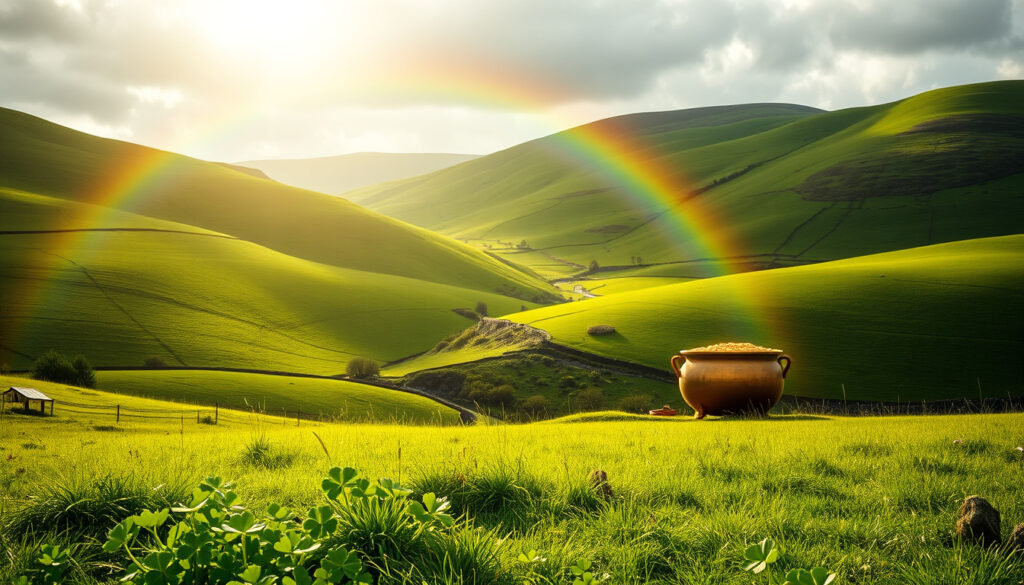
St. Patrick’s Day: History, Traditions & Modern Meaning
There’s something about March 17 that pulls people into the streets, whether in Dublin, New York, or Tokyo — a holiday that started as a quiet religious observance has become one of the world’s most recognizable cultural festivals. But for all the green beer and “Kiss Me I’m Irish” T-shirts, the real story of St. Patrick’s Day is older, more layered, and full of surprising turns that most celebrations skip — this guide separates the authentic traditions from the modern mash-ups, giving you a grounded look at what this day actually means and how to navigate it as a visitor or curious observer.
Date: March 17 (5 March 461, date of St. Patrick’s death) ·
Patron Saint: Saint Patrick (c. 385–461 AD) ·
National Holiday in: Ireland (both Republic and Northern Ireland) plus Montserrat ·
First Parade in Ireland: Waterford, 1903 (before 1903, processions were more religious) ·
Global Celebrants: Irish diaspora and millions worldwide ·
Traditional Color: Green (blue was original; green became popular in the 19th century)
Quick snapshot
- Saint Patrick was a real historical figure (Britannica’s historical entry)
- March 17 is a public holiday in both the Republic and Northern Ireland (the Irish government’s Department of Foreign Affairs)
- Green became dominant in the 19th century; blue was original (Britannica’s historical entry)
- Pinching tradition is American, not Irish (National Museum of Ireland’s folk tradition archive)
- Exact birthplace of Saint Patrick (Britannica’s historical entry)
- Origins of the “kiss me I’m Irish” phrase (HistoryExtra’s medieval history coverage)
- How much of modern celebration is originally Irish versus Irish-American invention (Britannica’s cultural overview)
- c. 385–461: Life of St. Patrick (Britannica’s historical entry)
- Early 17th century: March 17 becomes Catholic feast day (Britannica’s historical entry)
- 1762: First parade in New York City (HistoryExtra’s medieval history coverage)
- 1903: First official parade in Ireland, Waterford (the Irish government’s Department of Foreign Affairs)
- Pubs and restaurants in Ireland book up weeks in advance for March 17 (the Irish government’s Department of Foreign Affairs)
- Global celebrations continue expanding — parades in Tokyo, Sydney, and beyond (Britannica’s cultural overview)
The following table summarizes the core attributes of St. Patrick’s Day.
| Attribute | Value |
|---|---|
| Full name | St. Patrick’s Day (also Saint Patrick’s Day) |
| Date | March 17 |
| Patron Saint | Saint Patrick (c. 385–461) |
| Type of holiday | National holiday in Ireland; cultural and religious festival globally |
| Official color | Originally blue; green became dominant in the 19th century |
| Symbols | Shamrock, green, leprechaun, pot of gold, harp |
Why do they celebrate St. Patrick’s Day?
Who was Saint Patrick?
Saint Patrick was a 5th-century Christian missionary and bishop — born around 385 AD in Roman Britain, according to Britannica’s historical entry — who became the patron saint of Ireland. Captured by Irish raiders as a teenager, he spent six years in slavery before escaping and later returning to bring Christianity to the island. The Irish government’s Department of Foreign Affairs explicitly describes him as the patron saint of Ireland.
How did St. Patrick’s Day begin?
The observance of March 17 as a feast day dates to the early 17th century, when the Catholic Church officially placed it on the liturgical calendar, per Britannica’s historical entry. Over time, what began as a religious occasion — marked by church services, a special meal after Mass, and the wearing of crosses or shamrocks — slowly broadened into a celebration of Irish identity.
The National Museum of Ireland’s folk tradition archive notes that in older folk custom, the day often began with a pilgrimage to a holy well or chapel, followed by Mass and prayers. The day typically ended with food, drink, music, dance, and games.
Why is St. Patrick’s Day celebrated on March 17?
March 17 is the traditional death date of Saint Patrick — the day he is believed to have died in 461 AD. Britannica’s historical entry confirms that the day marks the saint’s death in Christian tradition, making it a natural focal point for feast-day observance. The Irish government’s Department of Foreign Affairs states that St. Patrick’s Day is celebrated each year on the 17th of March to commemorate him.
The pattern: a religious feast day that became a national holiday, then a global festival — but the core date never shifted. That consistency matters because it ties every modern parade, pint, and green hat directly back to the 5th-century figure who started it.
What are 5 facts about St. Patrick’s Day?
What is the original color of St. Patrick’s Day?
Blue, not green. The original color associated with Saint Patrick was “St. Patrick’s blue” — a light shade of blue that appeared in early depictions and on medieval Irish flags. Britannica’s historical entry notes that green only became the dominant color in the 19th century, driven by the symbolism of the shamrock and the Irish landscape in nationalist imagery. By the 20th century, green had fully overtaken blue in all parades and merchandise.
What does the shamrock symbolize?
The shamrock — a three-leaf clover — is linked in popular tradition to St. Patrick himself. According to the Irish government’s Department of Foreign Affairs, St. Patrick is said to have used the shamrock to explain the Holy Trinity to the pagan Irish. Each leaf represented one part of the Father, Son, and Holy Spirit. By the late 17th century, HistoryExtra’s medieval history coverage reports, Irish people were already celebrating the day by wearing crosses, ribbons, or shamrocks.
How did the parade tradition start?
The first St. Patrick’s Day parade was not in Ireland — it was in New York City in 1762, organized by Irish soldiers serving in the British army, according to HistoryExtra’s medieval history coverage. Ireland’s first official parade came much later: Waterford hosted the first in 1903, per the Irish government’s Department of Foreign Affairs. Before 1903, processions in Ireland were more religious in character — typically church-led walks rather than the civic spectacles seen today.
What is the role of the leprechaun?
Leprechauns come from Irish folklore, not from St. Patrick’s Day traditions directly. These solitary fairy figures — shoemakers by trade who guard hidden pots of gold — became commercially associated with the holiday through American greeting cards and merchandise in the early 20th century. Britannica’s historical entry treats the leprechaun as a folkloric character that got swept into the celebration’s visual identity, much like the green hat and the rainbow.
What is the spiritual meaning of St. Patrick’s Day?
For many in Ireland, the day still carries religious weight. The National Museum of Ireland’s folk tradition archive describes how in older custom, after Mass, a special meal containing meat was eaten — a break from Lenten fasting. The museum also records “St. Patrick’s Pot” or Póta Phádraig, the term for the alcoholic drink consumed to honor the saint. Seven facts, one pattern: the spiritual meaning of the day has always blended devotion with celebration — a feast in the literal sense.
The catch: the religious core has thinned for many outside Ireland. The day is now as much about diaspora identity and national pride as about Christian observance. But the Irish government’s Department of Foreign Affairs still frames the holiday primarily around its patron saint — a reminder that the religious foundation hasn’t disappeared, even if the green beer gets more attention.
Is March 17 a holiday in Ireland?
Is St. Patrick’s Day a public holiday in Ireland?
Yes — March 17 is a public holiday in both the Republic of Ireland and Northern Ireland. The Irish government’s Department of Foreign Affairs explicitly states that St. Patrick’s Day is Ireland’s national holiday. It is also a national holiday in Montserrat, the Caribbean island with historic Irish ties.
What is the date of St. Patrick’s Day?
March 17 — fixed, not movable. Unlike Easter or Ramadan, St. Patrick’s Day lands on the same date every year, which means it always falls during Lent in the Christian calendar. That timing is what gave rise to the tradition of taking a break from Lenten fasting on the feast day — the “St. Patrick’s Pot” meal included meat, which was otherwise restricted during the season.
What this means: if you’re visiting Ireland on March 17, expect everything closed — banks, post offices, many shops. The day is treated with the same seriousness as Christmas in terms of public services.
Why do we pinch on St. Patrick’s Day?
What happens if you don’t wear green on Saint Patrick?
The tradition of pinching someone not wearing green is entirely American — it has no roots in Irish custom. According to the National Museum of Ireland’s folk tradition archive, there is no historical record of pinching in Ireland. The practice reportedly started in the United States as a way to make people wear green — possibly tied to the idea that green makes you invisible to leprechauns, who would otherwise pinch you. In Ireland itself, people wear shamrocks fastened to their lapels, but no one gets pinched for forgetting.
What color is bad luck on Saint Patrick’s day?
No color is considered bad luck in Irish tradition. The idea that wearing orange brings bad luck is a modern internet myth, not an authentic folk belief. However, orange does carry political meaning in Northern Ireland, where it represents Protestant and Unionist heritage — a link to William of Orange. That doesn’t make it “bad luck,” but it means the color choice can be read as a statement in specific contexts.
What color is offensive on St. Patrick’s day?
Orange is not inherently offensive, but wearing it — particularly in Northern Ireland — can signal a political stance. The Irish flag itself contains both green and orange: green symbolizes the Catholic/nationalist tradition, orange the Protestant/unionist tradition, and white the peace between them. Wearing orange on St. Patrick’s Day in Dublin is common and unremarkable. Wearing it in parts of Belfast is a more loaded gesture. The Irish government’s Department of Foreign Affairs makes no mention of any color restrictions for the holiday.
The paradox: the “don’t wear orange” advice is popular on American social media but has little basis in everyday Irish practice. The real issue is not the color itself, but the context — and most visitors to Ireland will not encounter any problem wearing either green or orange on March 17.
What does kiss me I’m Irish mean?
Why do people say ‘kiss me I’m Irish’?
The phrase “Kiss me I’m Irish” is a 20th-century marketing invention, not a traditional Irish salutation. HistoryExtra’s medieval history coverage notes that the phrase became popular on souvenirs and T-shirts, possibly drawing on the Blarney Stone legend — kissing the Blarney Stone in County Cork is said to bestow the gift of eloquence. The “kiss me” element plays on the idea of Irish friendliness and hospitality, but it has no historical or folkloric basis. The Irish government’s Department of Foreign Affairs makes no mention of the phrase in any of its official St. Patrick’s Day materials.
Is it offensive?
Most Irish people find it more amusing than offensive — a mild, touristy cliché rather than a genuine cultural faux pas. The phrase is so widely associated with American St. Patrick’s Day merchandise that it’s seen as part of the global celebration, not a slur on Irish identity. For a visitor to Ireland, saying it is unlikely to cause offense, though it will mark you immediately as a tourist.
The trade-off: if you want to sound more natural in Ireland, skip the slogan and simply say “Happy St. Patrick’s Day” — or in Irish, “Lá Fhéile Pádraig Sona Duit.”
What not to wear as a tourist in Ireland?
Can you wear green in Ireland?
Absolutely. Green is the national color of Ireland and is worn by everyone, especially on St. Patrick’s Day. Britannica’s historical entry notes that green clothing or shamrocks are commonly worn on the day. Irish politicians, sports teams, and schoolchildren all wear green on March 17. There is no context in which wearing green is inappropriate in Ireland.
Can you wear orange in Ireland?
Yes — but with a caveat. In the Republic of Ireland, orange is worn freely. In Northern Ireland, the color is associated with Protestant/Unionist identity, particularly the Orange Order. Wearing an orange shirt in a predominantly nationalist area of Belfast on St. Patrick’s Day might be read as a political statement. But in Dublin, Cork, or Galway, no one will notice or care.
Is Catholic orange or green?
The answer is neither — these are political colors, not religious ones. Green became associated with Irish nationalism and Catholicism because it was the color of the shamrock and the Irish landscape. Orange became associated with Protestantism because of William of Orange. But the Irish government’s Department of Foreign Affairs does not categorize the colors by religion. The best advice for a tourist: wear whatever you like, but avoid clothing with overt political slogans or symbols — that rule applies to every country, not just Ireland.
For the visitor in Dublin, the choice is simple: green makes you blend in, orange is fine, and no one is checking. The real etiquette rule is about behavior, not clothing — be respectful, learn a few words of Irish, and don’t pinch anyone.
Timeline: The evolution of St. Patrick’s Day
- c. 385–461: Life of Saint Patrick. He brings Christianity to Ireland and becomes its patron saint. (Britannica’s historical entry)
- Early 17th century: March 17 is officially made a feast day in the Catholic Church. (Britannica’s historical entry)
- Late 17th century: Irish people celebrate by wearing crosses, ribbons, or shamrocks. (HistoryExtra’s medieval history coverage)
- 1762: First St. Patrick’s Day parade in New York City, by Irish soldiers. (HistoryExtra’s medieval history coverage)
- 1903: First official parade in Ireland, Waterford. (the Irish government’s Department of Foreign Affairs)
- 1960s: Guinness becomes a major sponsor, commercializing the holiday. (Britannica’s cultural overview)
- 1990s–present: Global celebration expands, with parades in Tokyo, Sydney, and many cities worldwide. (Britannica’s cultural overview)
The pattern: from a small religious feast to a global franchise. The American version (parades, green beer, pinching) overtook the Irish version in popular imagination — but Ireland has since reclaimed the day as a major tourism and cultural event, with Dublin’s parade now drawing over 500,000 attendees.
Clarity section
Confirmed facts
- Saint Patrick was a real historical figure (Britannica’s historical entry)
- March 17 is a public holiday in Ireland (the Irish government’s Department of Foreign Affairs)
- Green is the dominant modern color (Britannica’s historical entry)
- Pinching tradition is American, not Irish (National Museum of Ireland’s folk tradition archive)
- Shamrock was used by St. Patrick to explain the Holy Trinity (the Irish government’s Department of Foreign Affairs)
- “Drowning the shamrock” was a traditional toast (National Museum of Ireland’s folk tradition archive)
What’s unclear
- Exact birthplace of Saint Patrick (Britannica’s historical entry)
- Origins of the “kiss me I’m Irish” phrase (HistoryExtra’s medieval history coverage)
- How much of modern celebration is originally Irish vs. Irish-American invention (Britannica’s cultural overview)
- When exactly the pinch tradition started in the U.S. (National Museum of Ireland’s folk tradition archive)
- The precise date of St. Patrick’s death is traditionally given as 461, but some sources vary (Britannica’s historical entry)
- The role of the leprechaun in St. Patrick’s Day celebrations is a later commercial addition, but the exact timeline is unclear (Britannica’s historical entry)
The pattern: The clarity section shows that while many facts about St. Patrick’s Day are well-documented, key details about the origins of certain traditions remain uncertain, highlighting the blend of historical fact and commercial invention.
For the tourist visiting Dublin on March 17, the real joy is not in green beer or souvenir slogans — it’s in experiencing a public holiday that still retains a genuine religious and cultural core. The day off work means families gather, children wear homemade shamrock badges, and the streets fill with people who are celebrating Irishness itself. Skip the “Kiss Me I’m Irish” T-shirt. Join a parade. Eat the traditional meal. And if someone asks you about the pinch tradition, you can tell them it’s an American import — and they probably won’t believe you.
The Irish diaspora — estimated at over 80 million people worldwide — uses March 17 as a day of connection and identity. For the visitor in Ireland, understanding the difference between authentic custom and commercial export is the difference between being a tourist and being a guest.
“For centuries, the Irish and our diaspora have proudly celebrated St Patrick on 17 March.”
— National Museum of Ireland’s folk tradition archive
“St. Patrick’s Day observes the death of St. Patrick, the patron saint of Ireland.”
— Britannica’s historical entry
“The day commemorates Saint Patrick and the arrival of Christianity in Ireland.”
— Britannica’s historical overview
“St Patrick’s Day is celebrated each year on the 17th of March to commemorate St Patrick, the patron saint of Ireland.”
— the Irish government’s Department of Foreign Affairs
For the visitor planning a trip to Ireland around March 17, the choice is clear: engage with the holiday on its own terms — attend a parade, visit a church, share a meal, and skip the plastic leprechaun hat. The authentic St. Patrick’s Day is not about green beer or pinching; it’s about a feast that has been celebrated in Ireland for over a millennium, and that still carries the weight of a national identity that survived colonization, famine, and emigration. The real celebration is the fact that it’s still happening at all.
en.wikipedia.org, irish-genealogy-toolkit.com, history.com, insightvacations.com, reddit.com, askaboutireland.ie, historynewsnetwork.org
Frequently asked questions
What is the official name of St. Patrick’s Day?
The official name is St. Patrick’s Day, also written as Saint Patrick’s Day. In Irish it is Lá Fhéile Pádraig, meaning “the Feast Day of Patrick.”
Is St. Patrick’s Day a religious holiday?
Yes — it began as a Catholic feast day and is still observed as a religious occasion in Ireland by many. The National Museum of Ireland’s folk tradition archive confirms the day traditionally includes church services and religious processions alongside secular celebrations.
Do people in Ireland pinch on St. Patrick’s Day?
No. The pinching tradition is entirely American and has no roots in Irish custom, according to the National Museum of Ireland’s folk tradition archive.
What food is traditionally eaten on St. Patrick’s Day?
In older Irish custom, a special meal containing meat was eaten after Mass — a break from Lenten fasting. This meal was sometimes colloquially called “Lenten Fish” in the National Museum of Ireland’s folk tradition archive. Corned beef and cabbage, often associated with the day, is actually an Irish-American innovation.
Why is the shamrock a symbol of St. Patrick’s Day?
According to the Irish government’s Department of Foreign Affairs, St. Patrick used the three-leaf shamrock to explain the Holy Trinity to pagan Ireland. Each leaf represented the Father, Son, and Holy Spirit.
Is St. Patrick’s Day celebrated in other countries?
Yes — globally. Major parades are held in New York (since 1762), Tokyo, Sydney, and Buenos Aires. It is also a public holiday in Montserrat. The Britannica’s cultural overview notes that the day evolved from a religious feast into a worldwide celebration of Irish culture.
Why do people wear green on St. Patrick’s Day?
Green is now the dominant color, but blue was originally associated with St. Patrick. Britannica’s historical entry explains that green became popular in the 19th century as a symbol of Irish nationalism, the shamrock, and the Irish landscape. By the 20th century, it had fully replaced blue in all parade and commercial contexts.
More related posts
 Clothes Drying Rack NZ: Best Heavy Duty Retailer Picks
 NZ vs South Africa Rugby: Records, TV & Biggest Defeats
 How to Delete Instagram Account Permanently: Step by Step
 Inter Miami vs Nashville: Messi’s 900th Goal and Loss
 What Are the 3 New COVID Symptoms in 2025? Signs & Recovery Tips
 New Zealand Wilding Pine – Invasion, Impacts and Control
 Te Wiki o te Reo Māori 2025: Theme, Dates & Resources
 England v South Africa Rugby 2026: TV, History & How to Watch