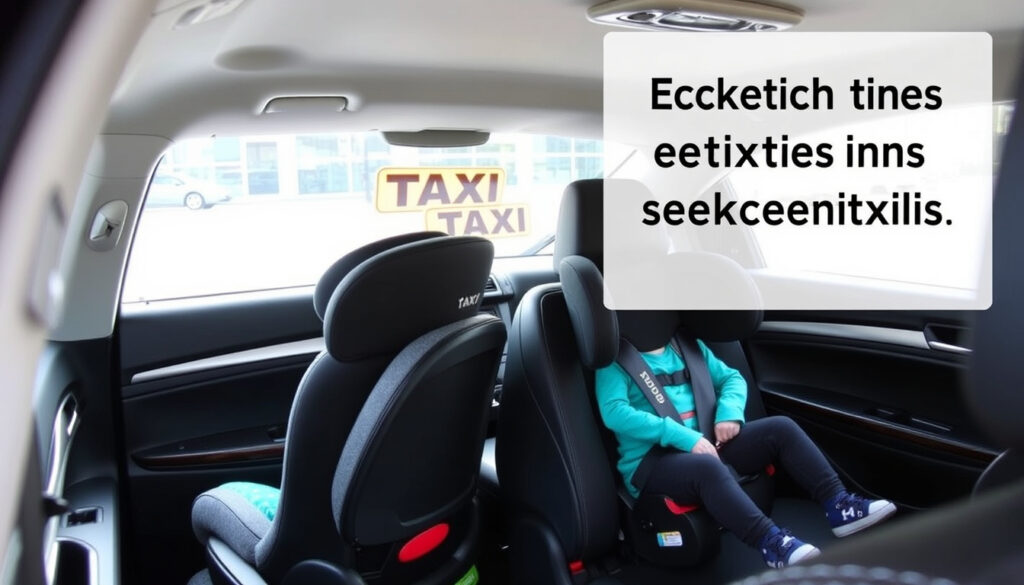
Car Seat Rules NZ: Age, Boosters & Taxi Exemptions
There is a stressful little gap between “old enough for a booster” and “old enough for just a seatbelt.” In New Zealand, the law draws a bright line at 7: every child under 7 must be in an approved child restraint, and a 7-year-old must stay in one if a restraint is available. That core rule comes from the national road safety agency.
Under 7: approved child restraint required (Govt.nz) · Age 7: restraint if available (Govt.nz) · Taxi: exemption only when no restraint is on board — NZTA’s exceptions factsheet
The table below summarises the core rules and common exceptions under New Zealand law.
| Rule | What the law says |
|---|---|
| Legal age to stop using a child restraint | Until the child’s 7th birthday |
| Minimum age for a booster seat | No single legal age; restraint must fit the child’s height and weight |
| Backless booster seat | Not specifically prohibited; must still be approved and properly fitted |
| Taxi exemption | Child under 7 exempt only if no approved restraint is available in the taxi or bus |
| Front-seat recommendation | No explicit minimum age; NZTA advises back seat until about 12 |
| Penalties | Penalties apply for non-compliance |
Age-Based Rules
Booster Seat Types
- Backless boosters legal from 4 years / 18 kg (Govt.nz)
- High-back boosters provide more protection (Plunket)
- Must match child’s height and weight
Taxi & Ride-share
- Taxi exemption: no restraint needed if unavailable (Govt.nz)
- Uber are not taxis; standard rules apply
- Best practice is to carry a portable seat
Front Seat Safety
- No legal min age, but NZTA says back seat until about 12 (Govt.nz)
- Airbag off for rear-facing seats
- Move seat back if child in front
Does a 7 year old need a car seat in NZ?
It is not a single line that flips at “big school.” The legal line is the 7th birthday: a child under 7 must use an approved child restraint. According to NZ Transport Agency Waka Kotahi, all children under 7 fall into that requirement.
- Under 7: approved child restraint mandatory.
- Age 7: if an approved restraint is available in the car, it must still be used.
- No restraint available: a 7-year-old moves to the available safety belt.
The upshot: 7 is a change, not a full stop: the law shifts from “must use” to “must use if available.”
When to move from car seat to booster?
People often ask for an age, but the rule is size-based. The core test is that an approved child restraint must match the child’s height and weight — that is the piece parents forget when they ask “can they move yet?” Government guidance makes the child’s fit the legal anchor, not a school-year milestone.
The back seat is the safest place for a child, and a full booster seat provides better protection than a booster cushion.
So the real answer is that a booster seat is not a separate legal event. The question is whether the child has outgrown the harness limits of the current approved seat, and then whether the replacement booster is approved and properly adjusted for the child.
The upshot: don’t look for a magic birthday; look at the seat’s height and weight limits.
Are backless booster seats allowed in New Zealand?
Yes, with a condition. The law does not specifically prohibit backless boosters. What it does require is an approved restraint that suits the child’s height and weight. A backless booster can be used if it is approved and fits that particular child correctly.
Government child restraint rules are clear that “approved” is not optional. The law does not ban a category of seat; it bans the wrong fit.
The catch: legal doesn’t mean “good enough.” The seat still has to be the right one for the child and must be used properly.
Warning: The taxi exemption is a narrow legal exception, not a safety recommendation. An approved child restraint is always the safest option for every trip.
Do kids need a car seat in a taxi in NZ?
The exemption is real, but it is narrow. Under NZTA’s exceptions factsheet, a child under 7 in a taxi or bus does not need an approved child restraint if no approved restraint is available in that vehicle. If one is available, it must be used when appropriate for the child’s age and size.
The tricky part is that rideshare services such as Uber are not legally the same as taxis for this purpose. The exemption does not automatically follow a private car just because it was booked through an app.
The upshot: the taxi exemption is an “if there is no restraint on board” rule, not a permanent pass.
Tip: Taxi companies may provide child restraints if given 24 hours notice. Planning airport car travel? See Christchurch Airport Car Rentals for tips on renting with children.
When can a child sit in the front seat NZ?
No. New Zealand does not set a minimum front-seat age. The legal rules are instead tied to the child’s restraint status and the vehicle’s seating.
NZTA’s own advice is that the back seat is safest, and the recommendation is to keep children in the back until around 12. There is also a front-seat exception in the government’s guidance: a child under 15 may sit in the front if there is no back seat, or if the back seat is already full of other children under 7. In that situation, any available safety belt must still be used.
The paradox: the law says “maybe,” but the safety advice is “if you can manage it, keep them in the back.”
What happens if you don’t follow the restraint rules?
Penalties apply. NZTA does not treat child restraints as optional equipment, and enforcement is part of normal road policing.
The law puts the responsibility on the driver. A child under 7 in the wrong seat, a 7-year-old in a seatbelt when a restraint is available, or a parent treating the taxi exemption as a blanket “no car seat needed” could each put the driver on the wrong side of the rule.
The takeaway: a short drive does not create a new exemption.
How to ensure you are complying with New Zealand’s child restraint rules
- Know the child’s age and size: Check height and weight against restraint limits.
- Choose an approved restraint: Ensure it meets NZTA standards.
- Install correctly: Follow the manufacturer’s instructions.
- Use the taxi exemption correctly: It only applies if no restraint is on board.
- Plan ahead for rideshares: Bring a suitable restraint if traveling with a child under 7.
Following these steps reduces legal risk and keeps the focus on the child’s safety. For more on driving regulations in New Zealand, see NZ Driving Age Limit Changes 2025.
What the rules clearly say
- All children under 7 must use an approved child restraint. (Govt.nz)
- At 7, a child restraint must still be used if one is available. (Govt.nz)
- Taxis and buses are exempt from providing one only if none is on board. (Govt.nz)
- Penalties apply for non-compliance. (Govt.nz)
The rules are clear on the baseline requirements, even if some edge cases raise questions.
Grey areas and common misunderstandings
- Exact fine amounts vary by jurisdiction and are not specified in central NZTA guidance.
- Whether Uber vehicles are legally considered taxis for the exemption is a grey area; standard child restraint rules apply by default.
- No explicit legal age for sitting in the front seat exists, creating uncertainty for parents.
- Backless booster safety depends heavily on the vehicle’s head restraints and the child’s size.
These grey areas highlight why staying informed and erring on the side of safety is the best practice for parents and caregivers.
What the rules actually say
All children under 7 must use a child restraint by law.
— New Zealand Government
If a child restraint is available in the car, children must use it until they turn 8.
— New Zealand Government
A child under 15 may sit in the front seat without an approved suitable child restraint if there is no back seat or if the back seat is already full of other children under 7.
— Land Transport (Road User) Rule 2004, as summarised in government guidance
The back seat is the safest place for a child, and a full booster seat provides better protection than a booster cushion.
— Plunket child restraint expert
Bottom line: New Zealand’s child-restraint law is not just “car seat until 7.” It is a 7-year-old “use it if it’s there” rule, a narrow taxi-bus exception, and no sweeping front-seat age law. The safety advice behind the rules is simpler: use the restraint that fits the child, keep them in the back when possible, and treat “I didn’t have one” as the limited exception it actually is.
The bottom line for parents and drivers: New Zealand law requires an approved child restraint for every child under 7. A 7-year-old must use a restraint if one is available in the car. The taxi exemption is narrow — it only applies when no restraint is on board — and Uber is not treated the same as a taxi for this purpose. The safest and most legally secure approach is to always use an approved restraint that fits the child’s height and weight, keep children in the back seat, and never treat a short trip as a free pass from the rules.
nzta.govt.nz, nzta.govt.nz, careforkids.co.nz, nzta.govt.nz, huttcity.govt.nz, myece.org.nz, at.govt.nz, nzta.govt.nz, drivingtests.co.nz
Frequently asked questions
At what age can a child stop using a booster seat in New Zealand?
The law changes at 7 only if no child restraint is available in the vehicle. If a restraint is available, a 7-year-old must still use it.
What kind of car seat is appropriate for an 8-year-old child?
An 8-year-old may not need an approved child restraint if none is available, but if a restraint is available it must still be used. For an 8-year-old, a booster seat that fits their height and weight is appropriate.
Is a backless booster seat legal for a 5-year-old?
The law does not specifically prohibit backless boosters, but the booster must be approved and suitable for the child’s height and weight. Not every 5-year-old fits safely in every backless booster.
What is the penalty for not using a car seat in NZ?
Penalties apply for non-compliance. The driver is legally responsible for ensuring children under 7 are in an approved restraint and that 7-year-olds use one if available.
Is Uber required to provide a car seat?
Rideshare services are not the same as licensed taxi services for this exemption. Parents should bring or arrange an approved restraint for the child.
Do I need a car seat for a short trip in NZ?
Yes. The law applies to every trip, no matter how short. A short drive does not create a new exemption.
What are the rules for a child sitting in the front seat?
There is no explicit minimum age. NZTA recommends the back seat until about 12. If a child under 15 sits in the front under an exception, an available safety belt must still be used.
More related posts
 Auckland Property Valuation: How Council CVs & Objections Work
 Red Bull Ford 2026 F1: Partnership, Engine, Drivers & Car
 Travel Insurance with COVID Cover: Irish Guide 2024
 When does spring start in NZ? Both dates explained
 We Are the World: The Untold Drama Behind the Charity Anthem
 Business Class Air NZ: Reviews, Prices & Inclusions
 Pets in the City Mt Wellington – Dog Daycare and Boarding Guide
 Flame Bar and Grill Queenstown: Menu, Reviews, Location & Hours