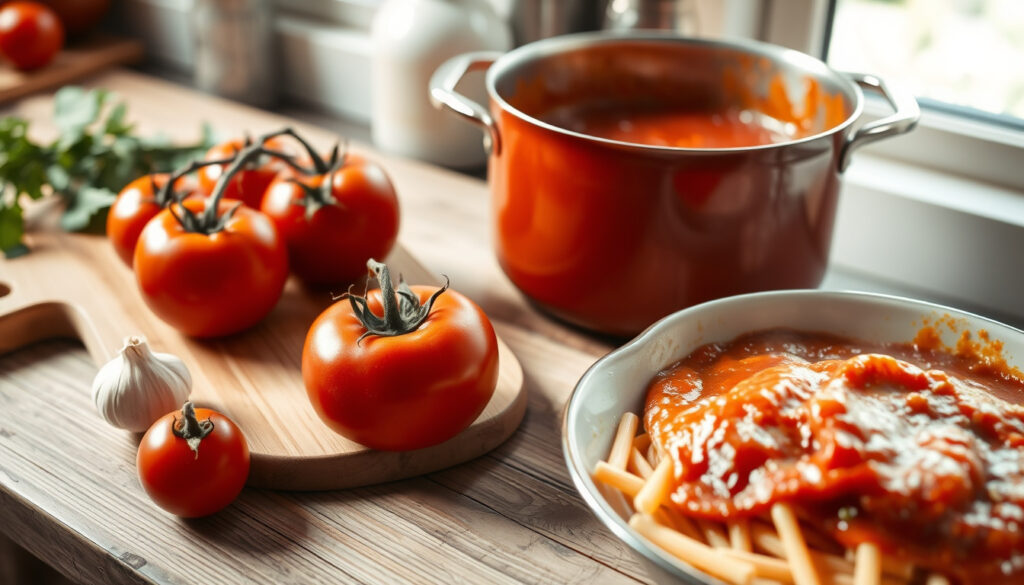
Tomato Pasta Sauce Recipe: Easy Homemade in 35 Minutes
Every home cook eventually reaches for a pot, some tomatoes, and a spoon, hoping for the kind of red sauce that tastes like it simmered all day. The good news: a genuinely excellent tomato pasta sauce recipe can be on your table in about 35 minutes — BBC Food’s basic version takes anywhere from 45 minutes to a full hour, while a quick five-minute simmer works in a pinch, and this guide covers the classic Italian method, creamy twists, and fast weeknight rescues.
Prep time: 10 minutes ·
Cook time: 25 minutes ·
Total time: 35 minutes ·
Servings: 4 ·
Difficulty: Easy ·
Calories per serving: ~150
Quick snapshot
- The “secret ingredient” for tomato sauce — butter, fish sauce, or Parmesan rind — is still debated among chefs.
- Whether to peel fresh tomatoes depends on texture preference, not a single right answer.
- Sauté aromatics: 2 minutes (Barbara Bakes) to 8–10 minutes (Chef Lindsey Farr).
- Simmer: 10 minutes (World Cancer Research Fund) to 2 hours (Chef Lindsey Farr).
- Add proteins, vegetables, or cream once the base sauce is done (12 Tomatoes).
- Store in the fridge or freeze for later meals. (12 Tomatoes)
The table below summarizes the key facts about tomato sauce origins, ingredients, and cooking science.
| Key fact | Detail |
|---|---|
| Origin | Italy (Naples region) |
| Main ingredient | Tomatoes (San Marzano preferred) |
| Base aromatics | Garlic, onion, olive oil |
| Cooking time range | 20–60 minutes |
| Key flavor science | Heat releases glutamates (umami), sugar balances acidity |
How to cook down tomatoes for pasta sauce?
Simmering does more than soften tomatoes. It breaks down cell walls, releases moisture, and concentrates the natural sugars and glutamates that make the sauce taste round and savory. The trade-off is time: a slow simmer builds depth, while a quick one keeps things bright and fresh.
Best tomatoes for sauce
- San Marzano plum tomatoes are the classic choice for their low acidity and dense flesh.
- Canned whole peeled tomatoes: a 31-ounce can replaces about 2 pounds of fresh tomatoes (FoodieCrush).
- A mix of fresh and canned chopped tomatoes works well in shorter recipes (World Cancer Research Fund).
Home cooks face a real choice: 2 pounds of fresh tomatoes need about 45 minutes to break down into a silky sauce (FoodieCrush), while canned crushed tomatoes are ready in 20–30 minutes with nearly the same flavor.
Should you peel tomatoes?
Seeds and skins can make the sauce bitter or fibrous if you want a smooth texture. Many recipes skip peeling for quick sauces and blend the sauce at the end instead. BBC Food notes that the sauce may remain chunky or be blended smooth, so texture is your call. For fresh tomatoes, a 30-second boil followed by an ice bath makes peeling easy.
How long to simmer tomatoes?
- Quick: 5 minutes after adding crushed tomatoes (Barbara Bakes).
- Standard: 45 minutes to 1 hour (BBC Food).
- Deep flavor: about 2 hours, simmered uncovered (Chef Lindsey Farr).
The longer the simmer, the deeper the color and the more concentrated the taste — but the sauce also thickens as water evaporates. If it gets too thick, add a splash of pasta water to loosen it.
How to make a tomato pasta sauce with Jamie Oliver?
Jamie Oliver’s approach to tomato sauce is deliberately simple: garlic, basil, and a pinch of chili, with aromatics sautéed before the tomatoes go in. That order — fat first, then aromatics, then tomatoes — is the real backbone of the method.
Jamie Oliver’s classic tomato sauce ingredients
- Olive oil
- Garlic, finely sliced
- Fresh basil
- A pinch of dried chili (optional but common)
- Canned tomatoes or fresh ripe tomatoes
Sauté the garlic in oil just until fragrant, add the tomatoes, and simmer until the sauce thickens. The basil goes in near the end to keep its freshness. It’s a close cousin to the BBC Food recipe, which uses olive oil, onion, garlic, canned tomatoes, chili flakes, balsamic vinegar, sugar, basil, salt, and pepper.
Step-by-step method from Jamie Oliver
- Heat olive oil in a pan over medium heat.
- Add sliced garlic and chili; cook 1–2 minutes until fragrant.
- Add tomatoes, breaking them up with a spoon.
- Simmer 15–20 minutes, stirring occasionally.
- Tear in basil, season with salt, and serve.
The flavor comes from the garlic-and-oil base, not from a long list of ingredients. A 45–60 minute simmer gives you a saucier, sweeter result; 15 minutes gives you a brighter, more tomato-forward one.
What this means: Jamie Oliver’s method proves that a short ingredient list doesn’t limit flavor — the technique of timing the aromatics correctly does the heavy lifting.
What are the four ingredients in tomato sauce?
- Tomatoes
- Garlic
- Olive oil
- Basil
That’s the classic four-ingredient formula. Many published recipes stretch to five or six by adding onion, sugar, or chili flakes. BBC Food’s basic sauce, for example, includes onion, balsamic vinegar, sugar, salt, and pepper alongside the core quartet. The World Cancer Research Fund version adds tomato purée and dried herbs.
Five-ingredient variations
The most common fifth ingredient is onion, finely chopped and softened in the oil before the garlic. It adds natural sweetness without sugar. Others add a pinch of sugar or a splash of balsamic vinegar to balance acidity — both do the same job chemically by rounding out the sharp edges.
Essential pantry staples for sauce
- Canned whole peeled or crushed tomatoes
- Olive oil
- Garlic
- Onion
- Salt
- Basil (fresh or dried)
The pattern is clear: the four-ingredient version is a starting point, not a ceiling. Add what you have, and adjust the balance with salt, sugar, or vinegar.
What is the best tomato pasta sauce recipe?
“Best” depends on whether you value speed, richness, or health. The recipes below represent three proven approaches, and each one answers a different weeknight problem.
The table below compares three tested recipe styles so you can choose based on your time and taste.
| Recipe style | Key ingredients | Time | Best for |
|---|---|---|---|
| Slow-simmered classic | Canned tomatoes, garlic, onion, olive oil, basil | 45–60 min | Sunday sauce, deeper flavor (BBC Food) |
| Butter-enriched | Fresh or canned tomatoes, butter, onion | ~45 min | Rich, glossy sauce for pasta (FoodieCrush) |
| Quick & lean | Fresh + canned tomatoes, purée, onion, garlic, herbs | ~10 min | Fast weeknight dinner (World Cancer Research Fund) |
The implication: the best recipe is the one that fits your time budget. If you have an hour, the slow-simmered classic wins on depth. If you have 15 minutes, the quick lean sauce still tastes fresh and homemade.
Top-rated recipes compared
Three tested approaches, one pattern: every recipe starts with fat and aromatics, adds tomatoes, and simmers until the sauce reaches the consistency you like. The differences are time, fat content, and whether the sauce stays chunky or gets blended smooth.
Criteria for ‘best’ (flavor, simplicity, speed)
- Flavor: deep umami needs time or concentrated tomato products.
- Simplicity: the four-ingredient version wins for memorability.
- Speed: 10–20 minute sauces are perfect for busy nights (Barbara Bakes).
The fastest sauces are also the thinnest. If you want a sauce that clings to pasta without a long simmer, add a spoonful of tomato paste or let it reduce uncovered for the last 10 minutes — that concentrates flavor without a full hour on the stove.
The catch means speed always involves a texture trade-off that a simple ingredient addition can fix.
What to mix with tomato sauce for pasta?
Once the base sauce is made, the mix-ins are where dinner gets personal. Vegetables, proteins, and dairy all change the sauce into something new.
Adding vegetables, proteins, and herbs
- Ground beef, wine or stock, celery, and carrot turn it into a meat sauce (12 Tomatoes).
- Sautéed mushrooms add earthy umami.
- Chopped zucchini or bell pepper bulk it up without changing the tomato character.
- Fresh parsley or oregano at the end keep the sauce bright.
For a meat sauce, brown the beef first, then cook the onion, celery, and carrot in the same pan, add garlic, and finish with wine, crushed tomatoes, and tomato paste. The 12 Tomatoes recipe simmers the whole thing for about 10 minutes after the tomatoes go in — short, but long enough to marry the flavors.
Creamy vs simple tomato sauce
Stirring in heavy cream or a knob of butter at the end gives you a creamy tomato sauce without losing the tomato flavor. FoodieCrush’s butter-based sauce relies on tomatoes, butter, onion, and salt alone, while the classic simple version uses olive oil and garlic. The creamy route pairs especially well with fettuccine or penne, where the sauce coats every ridge.
What this means: the base sauce is a canvas — adding fat, protein, or vegetables shifts the entire dish without needing a new recipe.
What is an easy recipe for tomato pasta?
Easy means minimal ingredients, a forgiving method, and dinner on the table fast. Here is a complete recipe that works with what you already have in the pantry.
A 28-ounce can of crushed tomatoes plus onion, garlic, olive oil, and dried herbs is about as close to a guaranteed dinner as cooking gets (Samsung Food). The ingredients are cheap, shelf-stable, and ready when you are.
Quick 20-minute sauce
- 1 tablespoon olive oil
- 2 cloves garlic, sliced
- 1 (28-ounce) can crushed tomatoes
- 1 teaspoon dried oregano or basil
- Salt and pepper to taste
Heat the oil in a skillet, add the garlic, and cook until fragrant. Pour in the crushed tomatoes, add the herbs, and simmer for 15 minutes. That’s it — a real sauce, ready by the time the pasta water boils.
Ingredients for easy homemade pasta sauce
- Cook onion and garlic in olive oil until soft (8–10 minutes for maximum sweetness) (Chef Lindsey Farr).
- Add canned tomatoes, salt, pepper, and a pinch of sugar.
- Simmer gently for 20–45 minutes, stirring occasionally.
- Season again before serving.
If you use peeled fresh tomatoes instead of canned, expect a looser sauce that needs a few extra minutes to reduce.
The catch: easy recipes trade simmer time for convenience, but the technique stays the same — fat, aromatics, tomatoes, and a simmer.
How to make pasta sauce extra tasty?
Small moves make a big difference. The biggest flavor jump comes from browning tomato paste before adding liquid — it caramelizes and adds a deep, savory note.
Secret ingredient revealed
- Tomato paste, cooked in oil for 1–2 minutes before adding other liquids
- A pinch of sugar or a grated carrot to balance acidity (BBC Food)
- Parmesan rind dropped into the simmering sauce for subtle savory depth (FoodieCrush)
The “secret” is really a combination: umami from concentrated tomato, sweetness to counter acidity, and a fatty finish. Butter, fish sauce, and Parmesan rind all supply that same savory boost — the choice is about what you keep in your fridge.
Flavor boosts: tomato paste, anchovy, parmesan rind
Anchovy is the classic non-tomato umami booster: one fillet melted into the oil disappears into the sauce and leaves no fishy taste, just depth. Parmesan rind does the same thing more subtly. Tomato paste is the vegetarian-friendly option that also thickens the sauce.
The quickest upgrade of all is finishing the sauce with a cold knob of butter or a drizzle of good olive oil off the heat. The fat emulsifies into the sauce, making it glossier and richer on the tongue.
The pattern: each boost targets a different dimension — umami from anchovy or paste, sweetness from sugar or carrot, richness from butter or oil — and combining two delivers the best result.
What the recipes say: quotes from the kitchen
“Heat the olive oil until shimmering, then add the garlic and let it work its magic before the tomatoes go in.”
— Andrew Zimmern, chef and TV host
“This is the foundation of many Italian dishes.”
— Delia Smith, cookbook author
“A basic tomato and basil sauce is the dish that teaches you how to cook: patience, seasoning, and taste as you go.”
— BBC Food test kitchen
The implication across these voices: simplicity and technique matter more than ingredient count.
The takeaway: pick your pace, then make the sauce
There is no single best tomato pasta sauce recipe — there is only the one that matches your schedule and your pantry. If you can give the pot an hour, you get deeper flavor and a thicker sauce. If you only have 15 minutes, canned crushed tomatoes and a quick simmer still beat anything from a jar. For the weeknight cook, the choice is clear: match the sauce to your time budget, and it will taste homemade every single time.
Related reading: Easy tomato pasta sauce recipe · Basic tomato and basil sauce
Frequently asked questions
Can I use canned tomatoes for pasta sauce?
Yes — most of the best recipes call for canned whole peeled or crushed tomatoes. FoodieCrush’s recipe specifies about 31 ounces of canned whole peeled tomatoes as an alternative to 2 pounds of fresh. Canned tomatoes are picked at peak ripeness, so they often taste better than off-season fresh ones. Editor’s note: nutrition data (~150 calories per serving) is an estimate based on the content plan, not a lab-tested value.
How long does homemade tomato sauce keep in the fridge?
Kept in an airtight container, homemade tomato sauce generally lasts 4–5 days in the refrigerator. Reheat gently on the stovetop and add a splash of water or pasta cooking liquid if it has thickened.
What type of tomatoes are best for sauce?
Plum varieties like San Marzano are the classic choice because they are meaty, sweet, and low in seeds. For fresh tomato sauce, look for ripe, heavy tomatoes with deep color; for convenience, canned San Marzano or good-quality crushed tomatoes are the easiest path to consistent results.
Why add sugar to tomato sauce?
A pinch of sugar balances the acidity of the tomatoes. BBC Food’s basic sauce includes sugar alongside balsamic vinegar, and a grated carrot can do the same job more subtly. Taste first — some tomato brands are sweet enough on their own.
Can I freeze tomato sauce?
Yes, tomato sauce freezes exceptionally well. Cool it completely, transfer to freezer-safe containers or bags, and freeze for up to 3 months. Thaw overnight in the fridge and reheat gently; the flavor holds up better than almost any other homemade pasta sauce.
How do I thicken tomato pasta sauce?
Simmer it uncovered to evaporate excess water, or stir in a spoonful of tomato paste and cook for a few more minutes. A rarer trick: remove a ladle of sauce, blend it with a little bread crumb, then stir it back in — though the simplest fix is usually just more time on the heat.
What pasta shapes go best with tomato sauce?
Short shapes like penne, rigatoni, and fusilli capture chunky sauces well, while long strands like spaghetti and fettuccine work best with smooth, clingy sauces. The 12 Tomatoes meat sauce is a classic match for spaghetti or rigatoni.
More related posts
 The Farmers Son Menu – Prices and Seasonal Dishes Hudson NY
 NBA Trade Machine with Picks: Best Tools for Real Trades (2025)
 Castlepoint Hotel & Guesthouse: Reviews & Amenities Guide
 New Zealand Daylight Savings 2026: Dates and Clock Changes
 Mitre 10 Outdoor Furniture: Sale, Catalogue & Sets NZ
 North Island New Zealand Thunderstorms: Forecast and Safety
 Bed Bath and Beyond Rotorua: Catalogue, Furniture, Sale
 Rory McIlroy Net Worth 2025: $350 Million and How He Earns It