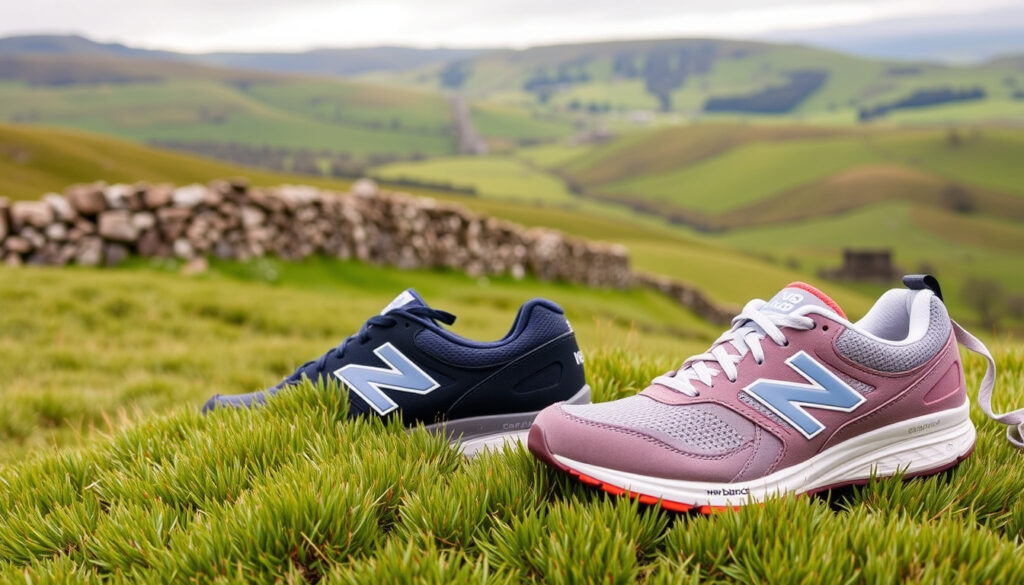
New Balance Women’s Sneakers: Fit, Durability & Irish Deals
Anyone who has spent an evening comparing women’s sneaker options knows the search usually ends one of two ways: style-first shoes that punish your arches, or sturdy shoes that look like medical equipment. New Balance keeps showing up in the middle of that conversation, and for a reason — the company has made athletic footwear since 1906, and several of its models carry the American Podiatric Medical Association’s Seal of Acceptance. Here’s what that means for Irish shoppers weighing fit, durability, and price.
Founded: 1906 ·
Wide width availability: 60%+ of women’s sneakers ·
Average retail price (Ireland): €80–€180 ·
Women’s running products listed in Ireland: 85
Quick snapshot
- New Balance has manufactured shoes since 1906 (New Balance history page)
- Exact lifestyle sneaker lifespan depends on usage frequency and terrain (APMA Official Seal)
- Not every New Balance model is podiatrist-approved (APMA Official Seal)
- The full list of approved models is not publicly indexed (APMA Official Seal)
- Several models carry the APMA Seal of Acceptance (APMA Official Seal)
- Width options range from Narrow (2A) to Extra Wide (2E) (New Balance size and fit)
- Retro 327 and 574 styles draw younger buyers (APMA Official Seal)
- 1906: founded as New Balance Arch Support Company (New Balance history)
- Ongoing: select models still made in the USA (Made in USA line) (Made in USA collection)
- Outlet rotation: 1080v15 at €135, Fresh Foam 680 v8 at €66 (New Balance Ireland Outlet (official Irish discount store))
- Trail models like Hierro v9 and DYNASOFT NITREL v6 rotate through promotions (New Balance Ireland Outlet (official Irish discount store))
Seven facts do most of the heavy lifting when you pick a women’s New Balance sneaker, and one pattern ties them together: this is an old brand that still treats foot shape as an engineering problem.
| Founded | 1906 as New Balance Arch Support Company |
|---|---|
| Country of origin (select models) | USA (Made in USA line), UK, China, Vietnam |
| Women’s size range | 5–12 (US), with half sizes |
| Width options | Narrow (2A), Medium (B), Wide (D), Extra Wide (2E) |
| APMA Seal of Acceptance | Granted to several New Balance models |
| Women’s running products on New Balance Ireland | 85 listed in the official running category (New Balance Ireland (official Irish store)) |
| Entry-level running price (Ireland) | €100 |
| Premium racing price (Ireland) | €280 (SuperComp Elite v6) |
| Outlet price range (Ireland) | €60 – €144 on selected women’s models (New Balance Ireland Outlet (official Irish discount store)) |
What are the most popular New Balance trainers?
New Balance 327 Ireland
- Retro lifestyle runner: suede upper, oversized N logo, sawtooth outsole
- Available across Ireland through Zalando.ie and Shooos.ie
- A style shoe first; not built for training mileage
The 327 is one of the most visible New Balance silhouettes in Ireland right now, riding the same retro wave that revived the 574 and the 990. It is a lifestyle sneaker: the shape borrows from the brand’s 1970s running archive, but the midsole is tuned for walking and standing, not intervals.
That distinction matters when you compare it with a dedicated runner. New Balance Ireland lists the 1080v15 as a premium women’s road running shoe at €180 (New Balance Ireland (official Irish store)). The gap between the 327 and the 1080v15 is the clearest sign that you are looking at two different products wearing the same logo.
New Balance lifestyle sneakers vs running shoes
- Lifestyle: 327, 574, 990 — heritage cushioning, casual shape
- Performance running: Fresh Foam, FuelCell, SuperComp — engineered for miles
- Trail: Hierro, DYNASOFT NITREL, Garoé — off-road grip patterns
The difference lives in the midsole. Lifestyle sneakers look good and feel fine for a few hours, but they do not carry the energy-return foams or stability frames of the performance line. Anyone who stands most of the day tends to feel that difference by late afternoon.
Irish retailers Shoeshop.ie and Shooos.ie regularly discount selected New Balance models by up to 40%, which narrows the price gap between the two tiers during sales. But the engineering gap stays: the running tier is where the science lives. The 327 is a style purchase; the 1080v15 is a support purchase.
Do podiatrists recommend New Balance sneakers?
What does a healthy sneaker actually look like?
Podiatrists do not endorse a brand — they endorse geometry. A shoe that runs from Narrow (2A) to Extra Wide (2E), with arch support and a low heel drop, is what makes New Balance’s performance line worth the money.
The American Podiatric Medical Association (the podiatry body behind the Seal of Acceptance) has granted that seal to several New Balance models. The review is done by a committee of podiatrists who look at the construction and decide whether it promotes good foot health.
For women with wider feet, New Balance’s width range — Narrow (2A) through Extra Wide (2E) — is one of the broadest in athletic footwear. That is precisely the kind of fit feature podiatrists point to when patients ask what to buy.
What shoes do podiatrists say not to wear?
- Shoes with excessive heel elevation (roughly above 1.5 inches)
- Narrow toe boxes that squeeze the toes together
- Flat soles with zero arch support
The common thread is geometry. A shoe that raises the heel higher than it supports the arch shifts weight forward and overloads the forefoot. A narrow toe box is especially problematic if you have Morton’s toe, where the second toe is longer than the first.
The trade-off: New Balance’s lifestyle models can look nearly identical to the performance ones, but the medical endorsement follows the shoes with actual support features. Check the seal on the box or product page, per model, not per brand.
What this means: The performance tier carries the medical endorsement, not the logo.
What kind of shoe is a New Balance?
New Balance running shoes vs lifestyle sneakers
- Road running: 1080v15, Fresh Foam X 880v15, Arishi v4
- Trail running: Hierro v9, DYNASOFT NITREL v6, Garoé V2
- Racing: SuperComp Elite v6, FuelCell Rebel v5
- Lifestyle: 327, 574, 990
One brand, several categories. New Balance splits its women’s line between “made to move” and “made to match an outfit.” The names are the clue: Fresh Foam and FuelCell signal running technology, while the three-digit heritage numbers signal lifestyle.
New Balance women’s sneaker categories
- Neutral cushioning: Fresh Foam X 880v15, 1080v15
- Stability: Fresh Foam X 860v15
- Speed: FuelCell Rebel v5
- Max cushioning: Fresh Foam X More v6
Category determines what the shoe does for your foot. Stability shoes guide the foot through overpronation. Max-cushion shoes absorb more impact. Speed shoes push you forward. Most women who run a few times a week land in the everyday neutral camp (880v15) or the stability camp (860v15). On the trail side, New Balance Ireland lists the Fresh Foam X Hierro v9 at €160 and the DYNASOFT NITREL v6 at €100 before promotions (New Balance Ireland trail category (official)), with the same fit language carrying over. Why this matters: the wrong category will not hurt on day one, but after a few weeks of miles, the difference between neutral and stability shows up as foot fatigue.
How long do New Balance sneakers last?
Factors affecting sneaker lifespan
- Running shoes generally last 300–500 miles (roughly 6–8 months for regular runners)
- Lifestyle sneakers can last 1–3 years depending on wear frequency and care
- Terrain, body weight, and shoe rotation change the math
The 300–500 mile figure is a running-industry benchmark, not a New Balance-specific promise. Once the midsole compresses past its limit, the cushioning stops absorbing shock and your joints start absorbing it. Lifestyle sneakers last longer because they do not take the same repetitive impact.
Air-drying, rotating between pairs, and skipping the washing machine all extend midsole life.
Signs it’s time to replace your New Balance sneakers
- Worn-out sole tread or smooth patches under the heel
- Loss of cushioning — press the midsole and there is no spring back
- Visible creasing or cracks in the midsole foam
If you notice new hip, knee, or foot pain after months in the same pair, the shoes are the first suspect.
Compression is not visible: a sneaker can look brand new while its midsole has already lost the ability to absorb shock. Running on dead foam is how overuse injuries start.
The implication: rotate two pairs if you run regularly, and replace on mileage, not on looks.
The implication: Running on dead foam is a common but invisible cause of injury.
What age group wears New Balance shoes?
New Balance for older adults: stability and wide sizes
- Extra width options (D, 2E) fit broader or swollen feet
- Stability models like the 860v15 provide motion control
- Lower heel-to-toe drop eases pressure on the Achilles
New Balance has a strong following among older consumers because of two features: wide widths and supportive midsoles. If your current shoes are narrow or flat, a wide, stable base is a relief. Select models are still manufactured in the USA as part of the Made in USA line.
Youth and children’s New Balance collections
- Kids’ sizes from toddler to teen
- School-shoe ranges designed for all-day wear
- Retro styles adopted by younger buyers in recent years
The retro sneaker wave reshaped the brand’s age profile. The 327 and 574 now appear on young women as often as on their parents, making New Balance one of the few athletic brands with genuine cross-generational reach. The kids’ ranges carry the same width options — a practical reason to consider them for school shoes.
The pattern: New Balance did not chase a young audience with performance gimmicks; it got adopted because heritage style came back into fashion. For older buyers, the value remains in width and support.
New Balance women’s sneaker models at a glance
Twelve women’s models listed across New Balance Ireland’s official running and trail categories, one visible pattern: the further up the price ladder, the more engineered the cushioning becomes.
| Model | Category | Price (New Balance Ireland) | Design role |
|---|---|---|---|
| Fresh Foam X Arishi v4 | Road running | €100 | Entry-level daily trainer |
| DYNASOFT NITREL v6 | Trail running | €100 | Budget trail shoe |
| Garoé V2 | Trail running | €120 | Lightweight trail option |
| FuelCell Rebel Trail | Trail running | €150 | Hybrid trail/speed shoe |
| Fresh Foam X 880v15 | Road running | €160 | Everyday neutral trainer |
| FuelCell Rebel v5 | Road running | €160 | Tempo and speed runs |
| Fresh Foam X Hierro v9 | Trail running | €160 | Versatile trail shoe |
| Fresh Foam X More v6 | Road running | €170 | Maximum cushioning |
| Fresh Foam X 860v15 | Road running | €170 | Stability / overpronation support |
| Hierro v9 GORE-TEX | Trail running | €180 | Waterproof trail |
| 1080v15 | Road running | €180 | Premium neutral flagship |
| SuperComp Elite v6 | Road racing | €280 | Carbon-plated race shoe |
Listed prices follow New Balance Ireland’s official running and trail categories (New Balance Ireland running category (official Irish store) and New Balance Ireland trail category (official)).
The gap between €100 and €280 is not branding. The Arishi v4 is a basic daily trainer; the SuperComp Elite v6 is a carbon-plated racer. If you are not racing, you are paying for technology you will not use.
That leaves the practical choice: match the model to the miles, not to the discount.
New Balance women’s sneakers: pros and cons
Upsides
- Width options from Narrow (2A) to Extra Wide (2E) — rare among athletic brands
- APMA Seal of Acceptance on several specific models
- Clear tiered line-up from €100 daily trainers to €280 racers
- Official Irish outlet with regular markdowns
- Heritage styles (327, 574) that hold value across generations
Downsides
- Lifestyle models (327, 574) are not performance shoes
- Premium performance models cost €170–€280 at full price
- Not every model is podiatrist-approved — the seal is per product
- Irish outlet stock is seasonal and varies by model
- Wide sizes in popular models sell out quickly online
The trade-off is honest: the same breadth that makes New Balance strong — widths, categories, price tiers — is also what makes it confusing. Start with the width measurement, then the category, then the price.
What we know vs what we don’t
What’s unclear
- Exact lifespan of lifestyle sneakers depends heavily on usage frequency and terrain
- Not all New Balance models are recommended by podiatrists — only those with proper support and cushioning
- The full list of “podiatrist-approved” models is not publicly indexed
- Whether a specific model fits depends on foot shape, not just the US size number
Confirmed facts
- New Balance has been manufacturing shoes since 1906
- The brand offers width options from Narrow (2A) to Extra Wide (2E)
- Several New Balance models carry the APMA Seal of Acceptance
- Running shoe lifespan is typically 300–500 miles
The practical result: the brand’s full list of approved models is not published anywhere, so the reliable move is to check the APMA seal on the box or product page before you trust a recommendation.
What experts say
The Seal of Acceptance is granted after a podiatry review committee evaluates a product’s potential to promote good foot health.
— American Podiatric Medical Association (podiatry professional body)
Width options and fit-first construction are the backbone of New Balance’s design approach across road, trail, and lifestyle categories.
— New Balance Ireland (official Irish brand store)
The practical read: the APMA sets the bar for what counts as a foot-healthy shoe, and New Balance’s width system gives women a way to actually meet that bar.
The takeaway
For Irish women, the decision between a New Balance lifestyle sneaker and a performance model is a decision about what the shoe will actually do. The 327 and 574 deliver style and heritage. The 1080v15 and 860v15 deliver the cushioning and stability that podiatrists point to. For anyone whose feet hurt by 6pm, the choice is clear: buy a performance model from the outlet while the 1080v15 sits at €135 (New Balance Ireland Outlet (official Irish discount store)), or pay €180 full price once the outlet sizes sell out.
Related reading: New Balance Shoes Near Me: Stores & Fit Guide in Ireland
newbalance.ie, newbalance.ie, newbalance.ie, newbalance.ie, newbalance.ie, newbalance.ie, newbalance.ie
Frequently asked questions
What is the 3 shoe rule?
The 3 shoe rule is a runner’s rotation habit: keep three pairs in active use — one for daily miles, one for speed or tempo sessions, and one for long runs. Rotating spreads wear across midsoles and lowers injury risk. It is training guidance, not a New Balance-specific rule.
How many shoes should an average person own?
There is no universal number. Most podiatrists suggest having more than one pair so you can rotate, especially if you walk or run daily. Quality and fit matter far more than the count. One well-fitted pair beats three ill-fitting ones.
Should your toes touch the end of your shoes when walking?
No. Leave about a thumb’s width — roughly one centimetre — between your longest toe and the end of the shoe. Toes need room to splay during walking. If they jam against the front, the shoe is too short.
Is it better to buy a shoe that is slightly larger or tight?
Slightly larger. Feet swell during activity, so a little extra length prevents blisters and toe jamming. The heel should still fit snugly; if your heel slips, the shoe is too big regardless of toe room.
What is Morton’s toe syndrome?
Morton’s toe is a foot structure where the second toe is longer than the first. It changes how weight distributes across the forefoot, which is why a wide toe box and proper fit matter. It is common, and many people do not know they have it until they buy narrow shoes.
What is the healthiest shoe for your feet?
A shoe with a low heel-to-toe drop, a wide toe box, good arch support, and adequate cushioning. Podiatrists consistently point to stability and fit first — the two areas where New Balance’s performance line, including the 860v15 and 880v15, is strongest.
Related reading
More related posts
 Miami Heat vs Timberwolves Player Stats | Jan 2026 Box Score
 P&O Cruise Control: Manage Booking, Drinks & Cancellations
 Blue and Yellow Flag: Countries and Meanings
 Capital of New Zealand: Why It’s Wellington, Not Auckland
 White Air Force 1 – Styling, Care and Buying Guide
 South Auckland Middle School: Key Facts and Decile Info
 Vegan Food Near Me: Ireland Chains & Surprises Guide
 Movies Coming Out in 2025: Full Schedule & Most Anticipated