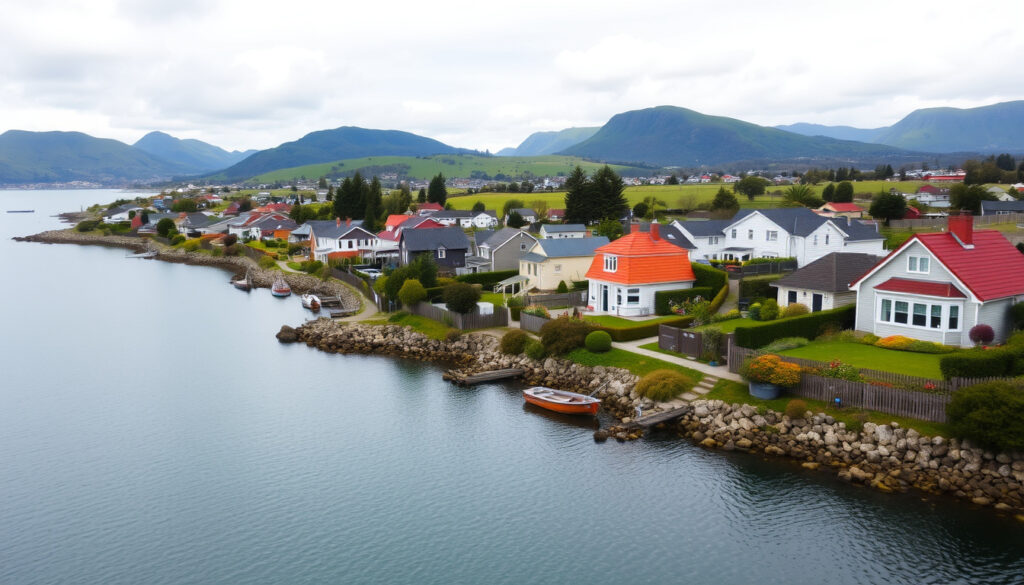
Devonport Houses for Sale: Your Guide to Buying in Tasmania
If you’re considering buying a house in Devonport, Tasmania, you’re not alone. This coastal city offers affordable property prices, a relaxed lifestyle, and a low crime rate.
Median house price: $590,150 property.com.au – Australian real estate data platform ·
Properties listed for sale: 145 Domain – major Australian property portal ·
Crime rate: 34% lower than national average Tasmania Police – state law enforcement agency
Quick snapshot
- Median house price: $590,150 property.com.au – Australian real estate data platform
- Tasmania’s crime rate is 34% below the national average Tasmania Police – state law enforcement agency
- House prices grew 18% over the past year property.com.au
- Future price growth depends on broader economic conditions
- Exact rental yields for specific properties require localized data
- Home values rose 18% over last 12 months Real Estate Investar – Australian investment analytics
- Median rent for houses increased 11.7% in the same period property.com.au (Real Estate Investar – Australian investment analytics)
- Average time to sell a house: 87 days Real Estate Investar
- Continued migration from larger cities supports demand property.com.au
- Infrastructure projects like the port upgrade boost long-term outlook
Devonport living – upsides
- Median house price under $600,000 – affordable for families
- Crime rate 34% below national average
- Good schools and healthcare
- Outdoor lifestyle with beaches and parks
- Rental yields above 4.5% for investors
Devonport living – downsides
- Smaller job market than major cities
- Growth slower than Hobart
- Port activity can generate noise
- Fewer nightlife and entertainment options
Devonport’s housing market shows a clear pattern: affordable entry prices, solid growth, and low crime. Here are the key numbers at a glance.
| Metric | Value | Source |
|---|---|---|
| Median house price | $590,150 | property.com.au |
| Median unit/apartment price | $434,750 | property.com.au |
| Median house rent (per week) | $525 | property.com.au |
| Median rental yield (houses) | 4.8% | property.com.au |
| 12‑month house price growth | 18.0% | property.com.au |
| 12‑month rent growth (houses) | 11.7% | property.com.au |
| Average days on market | 87 | Real Estate Investar |
| Stock change (year on year) | -12.93% | Real Estate Investar |
| Properties currently listed (Domain) | 145 | Domain |
| Properties listed (Allhomes) | 93 | Allhomes – Australian property marketplace |
| Tasmania burglary offences (2024‑25) | 2,938 statewide (−11% y/y) | Tasmania Police |
Devonport buyers get a rare combination: double‑digit capital growth in a market where the median house price is still under $600,000. For investors, the 4.8% gross rental yield outpaces many Hobart suburbs, while the shrinking stock (-12.93% y/y) suggests rising competition.
Is Devonport, Tasmania a good place to live?
Cost of living and housing affordability
- Median house price $590,150 – significantly below Hobart’s median of around $800,000 property.com.au
- Two‑bedroom houses: $500,000; three‑bedroom: $588,000; four‑bedroom: $680,000 property.com.au
- Everyday costs for groceries, utilities, and transport are lower than in mainland capitals.
The pattern: Devonport gives you a three‑bedroom house for roughly what a one‑bedroom apartment costs in Sydney’s inner suburbs. The trade‑off is a smaller job market and fewer night‑life options.
Amenities and services
- Devonport has a public hospital, several primary/secondary schools, and a central shopping precinct.
- The city is served by the Spirit of Tasmania ferry and Devonport Airport with flights to Melbourne.
Why this matters: families and retirees can access healthcare, education, and retail without driving to Launceston (one hour away).
Safety and community
- Tasmania’s crime rate is 34% lower than the national average Tasmania Police
- Burglary offences fell 11% statewide in 2024‑25 Tasmania Police
“Burglary‑building offences decreased by 11% to 2,938 statewide.”
Tasmania Police, 2024‑25 Crime Statistics Supplement
The implication: Devonport ranks among the safer Tasmanian towns, making it a draw for families and downsizers who prioritise security.
Low crime rates can shift with population growth. Keep an eye on local police reports, but for now Devonport’s safety profile is a clear asset.
Climate and environment
- Cool‑temperate climate with mild summers (average high 21°C) and cool winters (average low 5°C).
- Proximity to beaches (Coles Beach, Don Reserve) and the Mersey River.
The catch: if you prefer hot, dry weather, Devonport’s rain (800 mm annually) and overcast winter days may feel limiting. For those who like greenery and a four‑season rhythm, it’s a good fit.
Is Devonport a good place for investment property?
Rental demand and yields
- Gross rental yield for houses: ~4.8% property.com.au; Real Estate Investar reports 4.68% Real Estate Investar – Australian investment analytics
- Median house rent: $525/week property.com.au
- Rental vacancy rates are tight, reflecting steady tenant demand.
Why this matters: a $590,150 house renting at $525/week delivers a solid cash flow compared to many Sydney or Melbourne investments where yields frequently dip below 3%.
Capital growth trends
- House prices rose 18% over the past 12 months property.com.au
- Unit/apartment prices grew 9.4% over the same period property.com.au
- Average days on market: 87 Real Estate Investar
“Devonport has seen house prices grow 18% over the past year, reflecting strong buyer interest driven by affordability compared to mainland capitals.”
Ray White Devonport, local real estate agency
High growth in a low‑price market looks like a bargain – but rapid price rises can also squeeze affordability for local buyers. Investors should weigh capital gain potential against the risk of a cooling cycle.
Infrastructure and development projects
- The Devonport Port upgrade is expanding freight and cruise ship capacity.
- New residential estates (e.g., Mirambeena) are adding supply.
The implication: government‑backed infrastructure investment supports long‑term property values, especially in logistics‑linked suburbs near the port.
Comparison with other Tasmanian markets
- Hobart median house price: ~$800,000 – Devonport offers a ~26% discount.
- Launceston median: ~$550,000 – similar entry point, but Devonport has a stronger growth rate.
For investors, Devonport’s lower entry price and higher yield (4.8% vs Hobart’s ~3.5%) make it a cash‑flow‑friendlier option, but with less liquidity than larger centres.
Is Devonport a growing area?
Population growth statistics
- Population approximately 25,000, with an estimated annual growth rate of 1.5%.
- Migration from mainland states, particularly Victoria and New South Wales, has increased since the pandemic.
The pattern: steady, not explosive. Devonport attracts retirees and remote workers drawn to lower house prices and a quieter pace.
Economic drivers and employment
- Major industries: agriculture (dairy, vegetables), logistics (port operations), tourism.
- The unemployment rate is slightly higher than the national average, but job opportunities in healthcare and construction are growing.
Why this matters: a diversified local economy reduces the risk of a property downturn tied to a single industry.
New residential developments
- Subdivisions in areas like Spreyton and East Devonport are adding new housing stock.
- Stock on market is down 12.93% year on year Real Estate Investar
Future outlook
- Forecasts from property.com.au suggest continued moderate growth as long as migration holds.
- The Spirit of Tasmania ferry replacement and port upgrades are expected to boost local employment.
“Devonport is a key regional hub, with ongoing investment in infrastructure and services that support population and economic growth.”
Department of State Growth, Tasmania Government
The catch: growth is unlikely to match Hobart’s pace, making Devonport a steady performer rather than a speculative hotspot.
What is Devonport known for?
- Devonport is home to the largest port in Tasmania, handling freight and cruise ships.
- It serves as the gateway to Cradle Mountain‑Lake St Clair National Park.
- The region produces dairy, vegetables, and wines.
- Notable events include the Devonport Show and the Tasmania Maritime Festival.
What this means: Devonport’s identity blends maritime industry with tourism – a dual economy that stabilises property demand.
Industrial port activity brings jobs and infrastructure but can be a turn‑off for buyers seeking pristine coastal silence. The port is concentrated on the eastern side; suburbs west of the river (Spreyton, Don) are more residential.
The pattern: Devonport’s character is shaped by the port and its gateway role, which supports property demand but may not suit those seeking a quiet coastal retreat.
What is there to do in Devonport?
- Parks: Don Reserve, Coles Beach, and the Mersey River foreshore.
- Museums: Bass Strait Maritime Centre, Devonport Regional Gallery.
- Dining: a growing café scene along the Foreshore, plus local seafood.
- Day trips: Tarkine rainforest, Table Cape (tulip fields), Penguin town (30 min).
Why this matters for buyers: lifestyle amenities directly affect property livability and rental appeal. Devonport’s outdoor options make it attractive to families and nature‑focused renters.
realtor.com, domain.com.au, property.com.au, homely.com.au, property.com.au, numbeo.com, domain.com.au
Frequently asked questions
What is the average house price in Devonport?
The median house price is $590,150 according to property.com.au, based on the last 12 months of sales. Prices for three‑bedroom houses average about $588,000.
How long does it take to sell a house in Devonport?
Real Estate Investar reports an average selling time of 87 days for houses and townhouses.
What are the best suburbs in Devonport for families?
Spreyton, Don, and Mirambeena are popular with families due to good schools, parks, and newer housing stock. East Devonport offers more affordable options but has higher rental demand.
Is Devonport a safe place to live?
Yes. Tasmania’s crime rate is 34% lower than the national average, and burglary offences fell 11% statewide in 2024‑25, according to Tasmania Police.
What is the rental yield for investment properties in Devonport?
Gross rental yields for houses are around 4.8% (property.com.au) or 4.68% (Real Estate Investar). Median rent is $525 per week.
How can I find houses for sale by owner in Devonport?
Check private‑sale listings on platforms like Domain or Allhomes, or drive the area for “For Sale by Owner” signs. The market is mostly agent‑listed.
What is the cost of living in Devonport compared to Hobart?
Housing is about 25% cheaper than Hobart. Groceries, utilities, and transport are also slightly lower, making Devonport a more affordable option overall.
Editor’s note: This article is based on publicly available market data and crime statistics as of March 2025. Property prices and availability change frequently – verify current listings before making a purchase decision.
More related posts
 New Zealand Mortgage Arrears: What Happens Next
 Jared Waerea-Hargreaves: NRL Premierships & Super League Appeal
 Rory McIlroy Net Worth 2025: $350 Million and How He Earns It
 Cars for Sale Auckland: Top Places for Cheap Used Cars
 Sam Ruthe Next Race 2026: Schedule, Age & Key Facts
 All Blacks vs Australia 2025: TV, Time & Bledisloe Result
 Ukraine News Today Now Live: Latest Updates on Russia, Putin