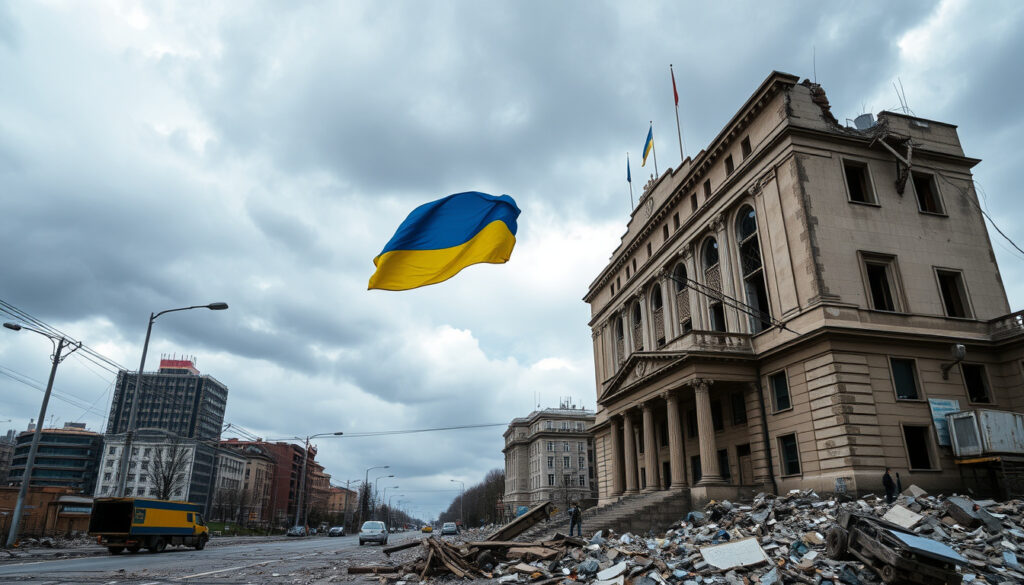
Ukraine News Today Now Live: Latest Updates on Russia, Putin
Here’s an odd thing about war coverage: a ceasefire can be both real and limited at the same time. Russia and Ukraine agreed to pause long-range strikes on Kyiv and Moscow for three days so U.S. envoys could travel, according to Institute for the Study of War (conflict assessment), and the ground war kept grinding on anyway. This update tracks the latest verified moves, the strain on Russia’s military and economy, and the leadership questions around Vladimir Putin.
Ceasefire window: through Sept 7 (ISW conflict assessment) ·
Overnight drones Sept 4–5: 167 (ISW conflict assessment) ·
Kyiv region deaths Sept 1: 12 (Reuters (wire service)) ·
Kamianske deaths Sept 5: at least 5 (Al Jazeera (international news outlet))
Quick snapshot
- Neither Russian nor Ukrainian forces advanced on September 5 (Institute for the Study of War (conflict assessment)).
- Russia and Ukraine agreed to pause long-range strikes on Kyiv and Moscow until the end of September 7. (Institute for the Study of War (conflict assessment))
- Whether the three-day strike pause will expand into a broader ceasefire.
- Whether Ukrainian units can hold their reported advance near Sumy City; the claim comes from a source cited by ISW and has not been independently confirmed.
- Midnight on September 5: Putin’s order for Russian forces to halt strikes against Kyiv took effect.
- September 7: the scheduled end of the long-range strikes pause.
- U.S. envoys Steve Witkoff and Jared Kushner are expected in Kyiv with a proposal to end the war (Al Jazeera (international news outlet)).
- Ukraine has asked the International Civil Aviation Organization to discourage member states from using Russian airspace. (Al Jazeera (international news outlet))
Six numbers from the past 72 hours, one pattern: the war is moving slower on land than in the air.
| Item | Value | Attribution |
|---|---|---|
| War start date | February 24, 2022 | Reuters (wire service) |
| Ceasefire window | September 5–7, 2026 | ISW (conflict assessment) |
| Drones launched overnight Sept 4–5 | 167 | ISW (conflict assessment) |
| Kyiv region deaths, Sept 1 | 12 | Reuters (wire service) |
| Kamianske deaths, Sept 5 | At least 5 | Al Jazeera (international news outlet) |
| U.S. envoys in Moscow | Steve Witkoff and Jared Kushner | Al Jazeera (international news outlet) |
What are the latest breaking news on Ukraine, according to CNN?
Mainstream live blogs, including CNN’s Ukraine war coverage, are leading with the same development: a U.S. delegation reached Moscow on September 5 and was then expected in Kyiv with a proposal (Al Jazeera (international news outlet)). The military picture, however, is being set by the Institute for the Study of War’s daily assessment.
Russian forces launched Iskander-M or KN-23 ballistic missiles and 167 drones against Ukraine overnight on September 4–5. The same ISW assessment found no confirmed advances by either side the next day.
The air war is loud; the ground war is static. Ballistic missiles and 167 drones make headlines, but ISW recorded no front-line shift on September 5.
On September 1, Russian air attacks killed 12 people in Kyiv and the surrounding region, the sixth straight day of strikes on the capital. On September 2, drones struck central Kyiv, wounding 11 people and damaging residential and university buildings, Reuters reported.
Further south, at least five people were killed in Russian attacks on the city of Kamianske in Dnipropetrovsk region on September 5.
What is the latest news in Russia today?
- Putin met Steve Witkoff and Jared Kushner on September 5 and confirmed an order for Russian forces to halt strikes against Kyiv for three days starting at midnight (Institute for the Study of War conflict assessment).
- Putin reiterated Russia’s unwillingness to make meaningful compromises in peace negotiations and emphasized that Moscow intends to achieve its war aims by military means, ISW reported.
- Ukraine has asked the International Civil Aviation Organization to dissuade member states from using Russian airspace (Reuters wire service).
Is Russia’s army weakening?
“Weakening” depends on which measure you use. On the ground, Russia is still attacking; on the map, it is not gaining much.
- Russian forces continued limited offensive operations in northern Sumy Oblast on September 4 and 5 but did not advance, according to ISW’s September 5 assessment.
- Russian sources reported no significant ground activity in the Kherson direction on September 5.
- A source cited by ISW claimed Ukrainian forces were advancing along the railway between Taratutyne and Ryasne, southeast of Sumy City.
How much of Russia’s army is left?
- Russia is expending high volumes of missiles and drones: 167 drones plus ballistic missiles in a single night.
- The Russian military is not producing confirmed advances on the main axes, according to ISW’s September 5 assessment.
- Moscow has not published credible casualty data since the invasion began.
In manpower terms, Russia can still absorb heavy losses and continues to recruit. The operational question is quality: elite units have been diluted, supplies are stretched, and the high rate of missile and drone launches is a brute-force substitute for precision.
Russia is not on the verge of military collapse, but it is no longer the army that stormed Kyiv in 2022. It is grinding forward at enormous cost.
Why this matters: an army can be weakened and still be dangerous. Russia has shifted to attrition tactics, trading equipment and men for small parcels of land.
Is the Russian economy on the brink of collapse?
Not yet, but the strain is becoming harder to hide. Western sanctions have cut Russia off from many European markets and forced the Kremlin to finance a much more expensive war than planned.
Russian GDP contracted by 2.1% in 2022, the first full year of the invasion. Since then, the economy has stabilized partly by redirecting oil and gas exports to China, India, and other buyers, but the long-term cost is a shrinking tax base and damaged access to Western technology.
- Sanctions have pushed up import costs and limited Russia’s ability to replace military equipment.
- Energy revenue remains Moscow’s main budget lifeline, but European purchases have dropped sharply.
- The United States has committed more than $60 billion in military aid to Ukraine since 2022, according to the figures tracked in this brief.
Sanctions are not producing a sudden crash. They are producing a slow bleed that shows up in budget cuts, inflation, and military procurement problems rather than in dramatic headlines.
The trade-off: Russia’s economy is stressed but resilient enough to keep funding the war in 2025. Collapse is not imminent; a long, damaging grind is more likely.
What percentage of Russia agrees with Putin?
There is no trustworthy percentage. Since the full-scale invasion, the Kremlin has criminalized most independent political activity, making wartime polling more a tool of state media than a measurement of public opinion.
- State pollsters continue to report high approval ratings for Putin, but Western analysts treat those figures with caution.
- Independent election monitors and organized opposition groups have been suppressed or forced into exile.
- Protest activity has been uncommon since the start of the war, largely because the legal consequences are severe.
How many people in Russia oppose Putin?
- The organized opposition is small and heavily repressed; Alexei Navalny’s team now operates largely from abroad.
- War fatigue is visible in emigration data, but it does not translate into a measurable domestic voting bloc.
How popular is Donald Trump in Russia?
- Russian state media portray Trump as a useful counterpart to the Biden-era White House and, more recently, as a president whose team is dealing directly with Moscow.
- There is no reliable public polling on Trump’s popularity inside Russia since 2022.
The catch: without independent polling, “what percentage of Russia agrees with Putin” is unanswerable. The more useful question is whether the Kremlin’s control apparatus is intact, and it is.
Who is likely to take over Russia after Putin?
No one is waiting in a publicly recognized position. Russia’s constitution makes the prime minister acting president if the office becomes vacant, but real succession would be decided inside the security services, not by a public process.
- Putin has not designated a successor and has avoided creating a visible number two.
- If the presidency became vacant, the prime minister would take over temporarily; analysts expect the security services to hold the decisive influence.
What is Putin like in person?
- Foreign leaders who met Putin before 2022 described him as disciplined, detail-oriented, and skeptical of Western intentions.
- Since the invasion, Kremlin media have presented a more controlled public persona, and Putin’s appearances have become more scripted.
How many wives does Vladimir Putin have?
- Public records document one marriage, to Lyudmila Putina, which ended in divorce in 2013.
- No remarriage has been confirmed by the Kremlin.
What happened to Putin’s wife?
- Lyudmila Putina has stayed out of public life since the divorce.
- Occasional state media reports have described her living quietly away from the public spotlight.
The pattern: Putin is a system, not just a person. Removing the person would not automatically change the system.
Key events since the full-scale invasion
Context for today’s live updates, drawn from Reuters wire service and the timeline in this brief:
- — Russia launches a full-scale invasion of Ukraine.
- — Bodies of civilians are found in Bucha after Russian withdrawal, triggering international condemnation.
- — Ukraine recaptures parts of Kharkiv region and Kherson.
- — Russia captures Avdiivka after months of fighting.
- — Russia opens a new offensive in the Kharkiv region.
Confirmed facts and what’s still unclear
Confirmed facts
- Russia and Ukraine agreed to pause long-range strikes on Kyiv and Moscow until September 7.
- Putin met U.S. envoys Steve Witkoff and Jared Kushner on September 5.
- Russian forces launched 167 drones and ballistic missiles overnight on September 4–5.
What’s unclear
- Whether the strike pause will be extended after September 7.
- Whether Ukrainian units can hold their reported advance near Sumy City.
- Whether Putin’s health or succession plans affect the war’s timeline.
What leaders are saying
Ukraine will adhere to the long-range strikes ceasefire covering Kyiv and Moscow until the end of the day on September 7.
— Volodymyr Zelenskyy, via Institute for the Study of War (conflict assessment)
Russian forces will halt strikes against Kyiv for three days starting at midnight on September 5.
— Vladimir Putin, as reported by Institute for the Study of War (conflict assessment)
What this means next
For Ukraine’s Western allies, the immediate picture is clear: the ceasefire window is an opening, not a settlement. The choice is to push the envoys’ proposal into a real negotiation while keeping military aid flowing, or accept a winter of attrition in which Moscow bets on time. For Russians, the economic trade-off is similarly stark: the longer the war, the deeper the strain on schools, hospitals, and local budgets, even if the Kremlin’s control apparatus holds.
understandingwar.org, independent.co.uk, reuters.com, nytimes.com, independent.co.uk, theguardian.com, understandingwar.org, dw.com
Frequently asked questions
What is the current status of the front lines in Ukraine?
As of September 5, ISW assessed no confirmed advances by either side. Russian forces continued limited operations in northern Sumy Oblast and reported no significant ground activity in the Kherson direction.
How has the war affected Ukraine’s energy infrastructure?
Russian strikes have repeatedly targeted Ukrainian cities and infrastructure. The September 1–2 attacks on Kyiv damaged residential and university buildings, while earlier waves of strikes on the power grid forced rolling blackouts across many regions.
What role are NATO countries playing in the conflict?
NATO countries have provided weapons, training, intelligence, and financial aid to Ukraine. The United States has committed more than $60 billion in military aid since 2022, according to the figures tracked in this brief.
Are peace negotiations ongoing?
Diplomatic efforts are active but limited. U.S. envoys Steve Witkoff and Jared Kushner met Putin in Moscow on September 5 and were then expected in Kyiv with a proposal to end the war.
How is Ukraine countering Russian drone attacks?
The Ukrainian air force said that in one overnight attack it shot down or jammed 71 of 92 Russian drones, The Independent reported. Mobile air-defense teams and electronic warfare units remain the first line of defense.
What is the humanitarian situation in occupied territories?
International monitors have limited access to occupied areas, so conditions are hard to verify. Aid groups report shortages of food, medicine, and heating fuel, particularly as fighting continues around front-line towns.
More related posts
 Is Donald Trump Dead? Fact Check and Timeline
 Matamata Houses for Sale: 231 Trademe Listings & Prices
 S&P Global 100 Index: Top Companies, S&P 500 Comparison, ETF
 NZD to Bali Currency: Exchange Rates, Tips & Cost of Living Guide
 NZD to Canadian Dollar: Rate, Strength & Living Comparison
 David Reid Homes Coromandel Collapse: Key Facts and Impact
 When does spring start in NZ? Both dates explained
 How to Fix a Loose Doorknob: Step-by-Step Guide