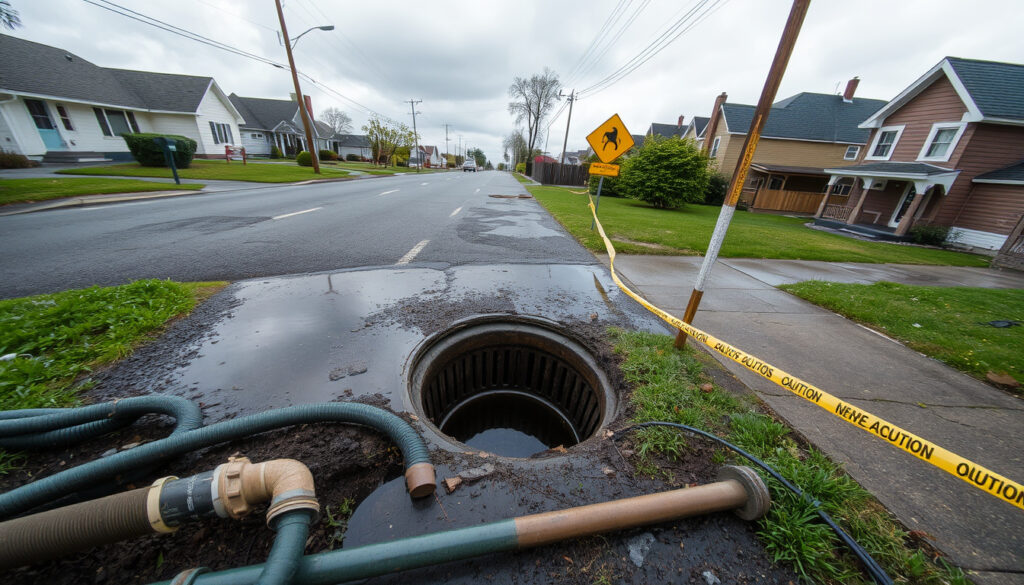
Wellington Sewage Leak 2026: Map, Updates & Health Risks
When a city’s wastewater system fails, the smell isn’t the only thing that hits you — it’s the uncertainty about what’s in the water and whether it’s safe to go near the coast. In early February 2026, Wellington residents woke up to exactly that reality after a catastrophic failure at the Moa Point Wastewater Treatment Plant sent untreated sewage pouring into the city’s south coast waters.
Untreated sewage leaking daily: Millions of litres ·
Source location: Moa Point Wastewater Treatment Plant ·
Affected area: Wellington’s south coast beaches and marine reserve ·
Event status: Ongoing as of February 2026 ·
Official response: Wellington Water and Tiaki Wai
Quick snapshot
- Massive failure at Moa Point Wastewater Treatment Plant (Wellington Water)
- Millions of litres of untreated sewage released daily (Wellington Water)
- Event began on 4 February 2026 (Wellington Water)
- Wellington’s south coast (Wellington Water)
- Moa Point plant outfall discharges into Tarakena Bay (Wellington Water)
- Affected marine reserve and reefs (Wellington Water)
- Leak is ongoing (Wellington Water)
- Beaches closed (Greater Wellington Regional Council)
- Wellington Water managing cleanup (Wellington Water info hub)
- Do not swim or gather shellfish (Greater Wellington Regional Council)
- Avoid contact with water (Greater Wellington Regional Council)
- Symptoms of illness reported (Wellington Water)
Five key facts, one pattern: the scale of the failure and the slow recovery show just how fragile Wellington’s aging wastewater infrastructure really is.
| Fact | Details |
|---|---|
| Total volume leaked | Millions of litres daily (exact amount evolving) |
| Start date | 4 February 2026 (Wellington Water) |
| Responsible body | Wellington Water / Tiaki Wai |
| Beaches closed | Multiple along the south coast |
| Treatment type bypassed | Full secondary treatment; only screening applied (Wellington Water) |
Where did the Wellington sewage leak happen?
Moa Point Wastewater Treatment Plant location
The failure occurred at the Moa Point Wastewater Treatment Plant, which sits on Wellington’s south coast. At about 1:00 am on Wednesday 4 February 2026, the plant experienced a catastrophic event that forced a complete shutdown, according to Wellington Water (the city’s water services provider).
The plant’s short outfall pipe now discharges untreated wastewater directly into Tarakena Bay — a popular coastal area — because the full treatment process has been bypassed. Wellington residents face the reality that their primary treatment plant is offline and won’t be fully restored for months.
Normally, sewage at Moa Point undergoes full secondary treatment before being discharged through a long outfall pipe about 1.8 km offshore, as described by Wellington City Council (the local authority responsible for wastewater management). But since the failure, that process has been replaced with only screening — meaning large solids are removed but the water isn’t fully treated before it enters the ocean.
Affected beaches along the south coast
- Tarakena Bay (Wellington Water)
- Breaker Bay (Wellington Water)
- Lyall Bay (Wellington Water)
- Houghton Bay (Wellington Water)
- Island Bay (Wellington Water)
- Ōwhiro Bay (Wellington Water)
- Princess Bay (Wellington Water)
Wellington Water has published an affected-area map on its Moa Point discharge FAQs page (the official incident information hub) so residents can check which beaches are impacted.
Is it safe to swim in Wellington?
Current beach closure advisories
As of 25 February 2026, public health warnings were lifted for much of the south coast, according to Greater Wellington Regional Council (the regional authority overseeing water quality). It is now safe to swim close to shore from Ōwhiro Bay through to Breaker Bay.
However, Tarakena Bay remains closed because of its proximity to the short outfall pipe. The council also warns that during or after wet weather, the short outfall pipe may release untreated, unscreened wastewater — meaning even beaches that are safe on a dry day can become hazardous after rain.
Tarakena Bay swimmers and shellfish gatherers face the highest risk because the untreated discharge pipe is just metres from shore. After heavy rain, the entire south coast becomes unpredictable — the 48-hour rule from LAWA applies.
Health risks from raw sewage in water
Contact with raw sewage can cause gastrointestinal illness, skin infections, and respiratory issues. Wellington Water advises the public to avoid all contact with water in affected areas and to refrain from gathering shellfish, which can concentrate pathogens.
Greater Wellington Regional Council (the regional authority overseeing water quality) recommends using LAWA (Land, Air, Water Aotearoa) for up-to-date information on which beaches are safe to swim at, and notes the general rule: stay out of the water for 48 hours after heavy rain.
What was the largest sewage leak in history?
Comparison to the 2026 Potomac River spill
For context, the largest sewage spills in recent memory include a 2026 incident on the Potomac River in the United States, where millions of gallons of untreated sewage were released. While the Wellington leak is significant — millions of litres daily — it is smaller in scale than the Potomac event, though the local ecological impact on the marine reserve and reefs is still being assessed.
Scale of the Wellington leak
Wellington Water has not yet published an exact total volume for the Moa Point discharge, stating the amount is “evolving” as the incident continues. Early reports describe the release as “millions of litres daily” of untreated sewage. The long-term ecological damage, including effects on the Taputeranga Marine Reserve and nearby reefs, has not been fully assessed.
Where does Wellington sewage go?
Normal wastewater treatment process
Under normal operations, Wellington’s sewage flows to the Moa Point plant where it undergoes full secondary treatment — including screening, settling, and biological treatment — before being discharged 1.8 km offshore through the long outfall pipe. This is the standard process described by Wellington City Council (the local authority responsible for wastewater management).
Where sewage goes now due to the leak
Because the plant was shut down completely after the failure, only screening is applied — meaning large solids are removed but the water is not biologically treated. This partially screened sewage then flows through the short outfall pipe directly into Tarakena Bay, just metres from the shore.
Wellington Water chose to bypass full treatment to keep the city’s wastewater system operational, but the consequence is that untreated sewage now discharges into a bay that was previously a clean swimming area. The decision prioritises avoiding a city-wide sewage backup over coastal water quality.
How does the Wellington leak compare to other sewage systems?
Countries with the best and worst sewage systems
Globally, countries like Singapore, the Netherlands, and Japan rank highest for wastewater treatment infrastructure, with near-universal secondary treatment and advanced water recycling. At the other end of the spectrum, many developing nations still discharge untreated sewage directly into waterways. New Zealand sits somewhere in the middle — its larger cities have modern treatment plants, but aging infrastructure in places like Wellington is increasingly showing its limits.
Wellington’s infrastructure challenges
The Moa Point plant was already under scrutiny before the February 2026 failure. Wellington Water has acknowledged a design flaw identified in a hydraulic report, and the Recovery Road Map published on the Moa Point information hub (the official recovery planning page) outlines milestones to restore the plant and address the underlying issue.
What this means: Wellington’s wastewater infrastructure is not on par with global leaders, and this incident reveals vulnerabilities that could affect other parts of the city’s network.
Timeline of events
- Early February 2026: Moa Point treatment plant experiences a catastrophic failure (Wellington Water)
- 4 February 2026: Incident begins at about 1:00 am; plant shut down (Wellington Water)
- 7 February 2026: RNZ reports on the ongoing leak and removal efforts
- 19 February 2026: The Guardian publishes detailed report; public outrage grows
- 25 February 2026: Public health warnings lifted for most south coast beaches (Greater Wellington Regional Council)
- Ongoing: Wellington Water continues response, cleanup, and recovery planning (Wellington Water info hub)
The pattern: a rapid initial failure, a slow public-health response, and a recovery that will stretch for months.
Confirmed facts and what remains unclear
Confirmed facts
- The leak is at Moa Point Wastewater Treatment Plant (Wellington Water)
- Untreated sewage is entering the south coast marine environment (Wellington Water)
- Beaches are closed to the public (Greater Wellington Regional Council)
- The event began on 4 February 2026 (Wellington Water)
- Tarakena Bay remains closed as of late February 2026 (Greater Wellington Regional Council)
What’s unclear
- Exact total volume released to date
- When the leak will be fully stopped
- Long-term ecological damage assessment
- Cause of the initial failure
- Timeline for full plant restoration
What people are saying
“The catastrophic failure at the Moa Point plant is a wake-up call for Wellington’s infrastructure.”
— Wellington Mayor (via The Guardian (international news outlet))
“We are working around the clock to restore full treatment and address the design flaw identified in the hydraulic report.”
— Wellington Water official (via Wellington Water info hub (official update page))
“It’s absolutely disgusting that raw sewage is being pumped into our harbour. This is a failure of decades of underinvestment.”
— Local resident (via The Guardian (international news outlet))
“The fact that Porirua is also dealing with raw sewage discharges shows this is a systemic problem, not a one-off failure.”
— Julie Anne Genter, MP (via Facebook post (local MP’s social media))
What this means for Wellington
The Moa Point failure isn’t just a plumbing problem — it’s a test of how the city handles a public-health crisis when its core infrastructure fails. Tarakena Bay will remain closed for the foreseeable future, and every heavy rain will bring new uncertainty for the rest of the south coast. For Wellington residents, the choice is clear: demand a faster recovery and a serious investment in the city’s wastewater network, or accept that future spills are not a matter of if, but when.
wellingtonwater.co.nz, rnz.co.nz, theguardian.com, nzherald.co.nz, eveningreport.nz, wsws.org, rnz.co.nz, tiakiwai.co.nz, thespinoff.co.nz
Frequently asked questions
What does ‘partially screened’ sewage mean?
Partially screened sewage has passed through a mesh or filter that removes large solids, but it has not undergone biological treatment to kill pathogens. It still contains bacteria and viruses that can cause illness.
How long will the Wellington sewage leak last?
Wellington Water has not provided a specific end date. The Recovery Road Map outlines milestones for restoring the plant, but full repairs could take months. The current situation is ongoing as of late February 2026.
Who is responsible for the Moa Point plant?
The plant is operated by Wellington Water (Tiaki Wai), which is owned by the region’s councils. Oversight comes from Wellington City Council and Greater Wellington Regional Council.
How can I report a new sewage leak in Wellington?
You can report leaks to Wellington Water through their website or by calling their 24/7 emergency line. Details are available on the Moa Point discharge FAQs page.
What should I do if I come into contact with the water?
Wash the affected area thoroughly with soap and clean water. If you develop symptoms such as diarrhoea, vomiting, or skin rashes, contact your doctor or Healthline. Avoid swimming in affected areas.
Are there long-term plans for Wellington’s wastewater infrastructure?
Yes, Wellington Water has published a Recovery Road Map on its Moa Point information hub that outlines milestones to restore the plant and address the design flaw. However, broader infrastructure upgrades remain under discussion.
How does the Wellington leak affect marine life?
The discharge of untreated sewage into the Taputeranga Marine Reserve and nearby reefs can harm marine ecosystems through nutrient pollution, oxygen depletion, and pathogen exposure. The full ecological impact has not yet been assessed by authorities.
More related posts
 Yachts for Sale NZ: Find Used, Cheap & Luxury Yachts
 Ferry from Wellington to Picton: Timetable, Prices, Booking Guide
 Best Stick Vacuums NZ: Expert Tests & Top Picks 2025
 Breville Barista Express Review: Worth It for Beginners? (2025)
 How to Fix Phone Microphone – iPhone and Android Solutions
 K9 Natural Dog Food Review: Is It Worth the Price
 How Do I Get Started Playing Padel? Beginner Guide
 Sam Ruthe Mile Attempt: Sub-4 Record Breaker at 15