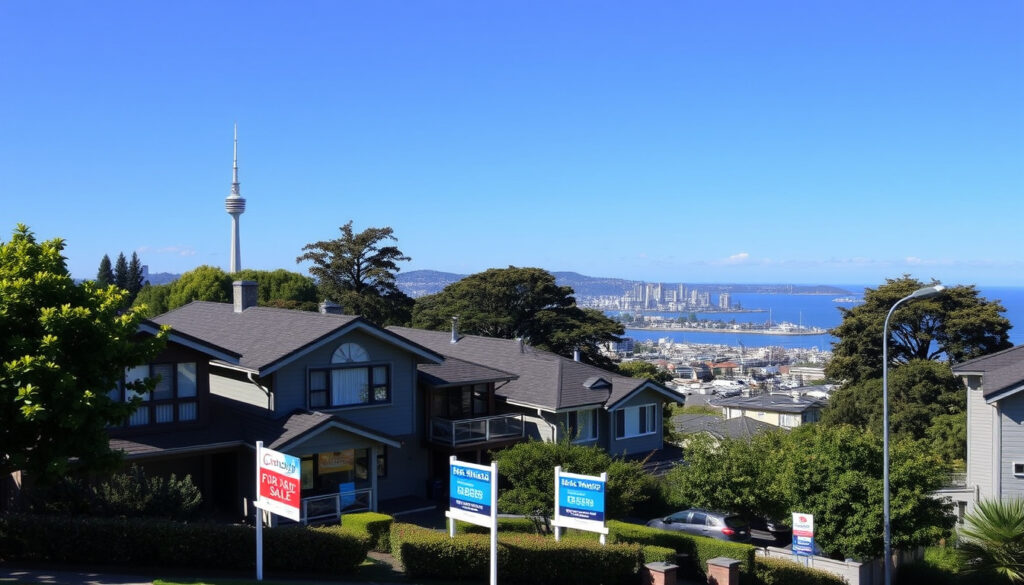
Houses for Sale in Auckland – Prices, Suburbs & Buying Guide
Auckland’s housing market presents a complex landscape for prospective buyers, with prices ranging from around $480,800 in central areas to well over $3 million in premium suburbs. Understanding current market conditions, regional price variations, and emerging opportunities requires careful analysis of recent data from multiple sources.
The city recorded approximately 10,080 sales totaling $11.69 billion throughout 2024, demonstrating sustained activity despite seasonal fluctuations. Whether searching for luxury properties, family homes, or affordable entry points, buyers benefit from knowing which suburbs offer the best value and which price segments show the strongest performance.
This guide examines verified pricing data, suburb-level trends, and practical strategies for finding houses for sale in Auckland, drawing from official statistics and established real estate sources.
How Much Are Houses in Auckland?
Auckland’s housing market demonstrated notable resilience in recent months, with the citywide median hovering around the million-dollar mark. December 2024 saw an average price of $1,186,462, representing a 4.7% increase from November and a 6.4% rise compared to the prior three-month average. The median figure stood at $1,000,000 during this period, down 1.1% from November but up 3.4% relative to the previous quarter.
Key Market Insights
- Full-year 2024 average price reached $1,152,000, up $48,000 or 4.4% compared to 2023
- The yearly median stood at $987,000, representing a marginal decline of $11,000 or 0.1% year-on-year
- December 2024 sales volume reached 833 transactions valued at $1.05 billion, up 17.1% from December 2023
- Properties priced under $750,000 comprised 19% of all 2024 sales, matching the historical yearly average
- The $2-3 million and $3 million+ segments exceeded 2023 activity levels, indicating higher-end market strength
- From 2013 to 2023, Auckland’s median price rose approximately 5.90% annually, adding roughly $45,400 per year
Regional Price Comparison
| District/Suburb | Price Type | Amount | Context |
|---|---|---|---|
| Auckland Overall | Median | $1,000,000 | City baseline (Dec 2024) |
| Herne Bay (Auckland City) | Median | $3,136,900 | Most expensive suburb (309% of city median) |
| Auckland Central (Auckland City) | Median | $480,800 | Most affordable area (47% of city median) |
| Piha (Waitakere) | Average | $1,324,050 | Most expensive in western district |
| Kelston (Waitakere) | Average | $800,700 | Most affordable in western district |
| Shamrock Park (Papakura-Franklin) | Average | $2,024,650 | Most expensive in southern district |
| Orere Point (Papakura-Franklin) | Average | $613,350 | Most affordable in southern district |
REINZ data from February 2026 places the Auckland median at $1,014,000, reflecting a 1.09% decline over the preceding twelve months. However, this short-term fluctuation contrasts with longer-term performance: prices have grown at an average annual rate of 4.85% since 2006, with the median rising from $770,000 a decade ago.
Monthly price fluctuations reflect seasonal patterns and market conditions. January 2024 recorded 504 sales, down 41.1% from December 2023, indicating typical end-of-year softening. September 2024 saw the year’s lowest average at $1,081,269.
What Are the Best Suburbs for Houses in Auckland?
Auckland’s property landscape varies dramatically across its districts, with prices influenced by proximity to the CBD, coastal positioning, lifestyle amenities, and school zones. Identifying the most suitable suburb depends largely on budget, lifestyle preferences, and investment objectives.
Premium Suburbs with Strong Performance
Herne Bay remains Auckland’s most expensive suburb, with a median price of $3,136,900—representing 309% of the city median. This waterfront neighborhood consistently commands premium valuations due to its central location and exclusive character. Other high-performing areas include Piha in the Waitakere district, where the average price reaches $1,324,050, and Shamrock Park in Papakura-Franklin, averaging $2,024,650.
The luxury segment demonstrated particular strength throughout 2024, with sales volumes in the $2-3 million and $3 million+ categories exceeding 2023 levels. This resilience indicates sustained demand from buyers seeking premium property despite broader market fluctuations.
Suburbs with Strongest Growth
Analysis of price movements between March 2024 and March 2026 reveals several growth leaders across Auckland’s districts. Matakana emerged as the top performer, recording 6% annual growth across the Auckland region. Laingholm in Waitakere showed 2.23% annual appreciation, while Clevedon in Papakura-Franklin posted 2.10% annual growth during the same period.
Matakana’s strong performance reflects increasing interest in semi-rural lifestyles within commuting distance of Auckland. Buyers seeking areas with growth potential should consider Matakana’s trajectory relative to more established suburbs.
Undervalued Areas Identified by Experts
Property analysts have identified several Auckland suburbs that may offer better value relative to their fundamentals. The Hibiscus Coast in the north, Howick in the east, and Franklin in the south receive mentions as areas where property values may not fully reflect local amenities, transport links, and development potential.
These assessments suggest that buyers willing to look beyond the most publicized suburbs may find opportunities in areas where prices have not yet caught up with market fundamentals. Franklin, in particular, represents a southern area where the relationship between property prices and infrastructure development may create future appreciation potential.
Are There Affordable Houses for Sale in Auckland?
Despite Auckland’s reputation for high property prices, affordable options do exist within the city boundaries. Properties under $750,000 represented 19% of all sales throughout 2024, indicating that nearly one in five transactions involved properties at this price point or below.
Most Affordable Auckland Suburbs
Auckland Central offers the lowest median price among Auckland’s districts at $480,800, representing just 47% of the city median. This figure makes central Auckland significantly more accessible than surrounding areas, though buyers should note that properties in this segment may include apartments, townhouses, or older housing stock requiring renovation.
Within the western district, Kelston presents an average price of $800,700, while the southern district’s most affordable suburb, Orere Point, averages $613,350. These figures demonstrate that meaningful price variation exists across Auckland’s geography, creating opportunities for buyers with different budgets and location preferences.
Market Conditions Favoring Buyers
Several factors suggest improved conditions for buyers seeking affordable properties. Active listings across New Zealand exceeded 45,000 properties, providing buyers with meaningful selection. This increased inventory gives purchasers greater negotiating leverage compared to tighter market conditions experienced in previous years.
While inventory has increased, interest rate volatility continues to affect purchasing capacity. Buyers should obtain pre-approval before beginning property searches and factor potential rate changes into their financial planning.
First home buyers and those seeking entry-level properties may find particular value in targeting the sub-$750,000 segment, focusing on Auckland Central, Orere Point, or Kelston depending on lifestyle requirements and commute considerations. Properties in undervalued areas such as Hibiscus Coast, Howick, and Franklin also merit attention from buyers seeking growth potential alongside affordability.
How Do I Find Houses for Sale in Auckland?
Finding suitable property in Auckland’s market requires a multi-channel approach combining online platforms, local agent relationships, and systematic monitoring of new listings. The city’s active listings inventory provides sufficient variety for most buyer requirements, though properties in popular suburbs may sell quickly.
Property Search Resources
Major real estate platforms aggregate Auckland listings comprehensively, allowing buyers to filter by price range, location, property type, and other criteria. These platforms typically update multiple times daily, providing current information on available stock. Property listings range from those offered above $950,000 through to premium offerings exceeding $2.475 million.
Working with established real estate agencies provides access to off-market opportunities and expert local knowledge. Agencies with deep market presence in specific suburbs can identify properties before they appear on public platforms, potentially giving buyers advantages in competitive situations.
Practical Search Strategies
- Register with multiple listing platforms to receive alerts for new properties matching your criteria
- Engage a buyer’s agent familiar with your target suburbs and price segment
- Attend open homes in areas of interest to understand local market conditions firsthand
- Monitor auction results and recent sales data to gauge fair market value
- Obtain mortgage pre-approval before beginning active property searches
- Consider engaging a property lawyer early in the process to review documentation
For those relocating to New Zealand, understanding the broader context of living in Auckland can inform property decisions. Comprehensive guides covering visa requirements and everyday expenses help prospective residents integrate planning for housing with other relocation considerations.
How Has the Auckland Housing Market Changed Recently?
Auckland’s property market has undergone significant evolution over the past several years, with price movements reflecting broader economic conditions, interest rate changes, and shifting buyer preferences.
- 2020-2021: Strong price growth driven by low interest rates and increased remote work flexibility, pushing medians to new highs
- 2022: Market correction following interest rate increases and lending restrictions, creating price softening across most segments
- Early 2024: January average of $1,083,487 (down 8.3% from December 2023), with 504 sales reflecting seasonal and economic pressures
- Mid-2024: September average of $1,081,269 representing the year’s low point before stabilization
- Late 2024: Recovery momentum with December average reaching $1,186,462, up 4.7% from November
- Early 2026: February median of $1,014,000 with modest 1.09% annual decline but continued long-term growth trajectory
The market’s trajectory demonstrates resilience, with long-term growth averaging 4.85% annually since 2006. While short-term fluctuations occur in response to economic conditions, the underlying trend reflects Auckland’s continued appeal as a location for housing demand.
Volume patterns in late 2024 showed increased sales activity even as prices experienced modest declines. This combination suggests buyers responding to improved affordability and selection while sellers adjust expectations to current market conditions.
What Is Known and Unknown About Auckland’s Housing Market?
| Established Information | Information Requiring Further Monitoring |
|---|---|
| Current median prices by suburb and district | Interest rate trajectory for 2026 and beyond |
| 20-year average annual growth rate of 4.85% | Migration patterns and their impact on demand |
| December 2024 sales volumes and values | Government policy changes affecting the market |
| Sub-$750,000 segment representing 19% of sales | Construction activity and new housing supply |
| Luxury segment outperforming 2023 levels | Bank lending criteria evolution |
| Affordable suburbs identification (Auckland Central, Kelston, Orere Point) | Infrastructure announcements and their market effects |
The data provides clear visibility into historical prices, current conditions, and certain trend patterns. However, forward-looking elements—including interest rate movements, migration flows, and policy interventions—require ongoing monitoring as these factors will significantly influence future market direction.
Understanding Auckland’s Housing Market Context
Auckland’s property market operates within a framework of structural demand drivers that have historically supported price growth. The city’s role as New Zealand’s largest economic center, combined with geographic constraints on housing supply, creates persistent underlying demand pressure.
Population growth through both natural increase and migration contributes to demand, while planning regulations and geographic features limit the extent to which supply can respond. These fundamental factors provide context for understanding why Auckland prices have demonstrated long-term appreciation despite periodic corrections.
For those considering purchasing property in Auckland, evaluating both current market conditions and personal circumstances—including employment stability, long-term location preferences, and financial readiness—remains essential regardless of broader market trends.
Official Sources and Market Data
Key data referenced throughout this analysis derives from several established sources providing regular market reporting and official statistics.
REINZ reports Auckland’s February 2026 median at $1,014,000, down 1.09% over prior 12 months but up from $770,000 a decade ago (2.79% annual growth); 20-year average growth 4.85%.
Full-year 2024, the average price was $1,152,000 (up $48,000 or 4.4% from 2023), with the yearly median at $987,000 (down $11,000 or 0.1%).
From 2013-2023, median rose approximately 5.90% annually ($45,400/year), with October 2023 median of $1,040,000 up from $586,000 a decade prior.
Key Takeaways for Auckland Property Buyers
Auckland’s housing market offers diverse opportunities across its numerous suburbs and price segments. The citywide median of approximately $1,000,000 represents the central tendency, but significant variation exists—with affordable options around $480,800 in Auckland Central and premium suburbs exceeding $3 million in areas like Herne Bay. The 19% of sales occurring below $750,000 demonstrates that accessible entry points remain available for prepared buyers.
Those considering property purchases should evaluate their specific circumstances against current market conditions, with particular attention to interest rate environments and personal financial readiness. Understanding the differences between various Auckland suburbs, from growth leaders like Matakana to undervalued areas like Hibiscus Coast, helps buyers identify opportunities aligned with their objectives.
For additional guidance on planning a move to New Zealand, comprehensive resources covering visa requirements and relocation logistics provide valuable context for housing decisions.
Frequently Asked Questions
Is now a good time to buy a house in Auckland?
Current conditions show increased inventory and reasonable pricing relative to long-term growth trends. However, interest rate uncertainty means buyers should obtain pre-approval and factor potential changes into their financial planning.
What is the average house price in Auckland?
The December 2024 average reached $1,186,462, while the February 2026 median stands at $1,014,000. The full-year 2024 average was $1,152,000.
What are the cheapest suburbs in Auckland?
Auckland Central offers the lowest median at $480,800. Within districts, Kelston ($800,700 average in Waitakere) and Orere Point ($613,350 average in Papakura-Franklin) represent affordable options.
Which Auckland suburbs have shown the strongest growth?
Matakana led growth with 6% annual appreciation, followed by Laingholm (2.23%) and Clevedon (2.10%) between March 2024 and March 2026.
How much have Auckland house prices increased over the past decade?
The median rose from $770,000 a decade ago to $1,014,000 currently, representing approximately 2.79% annual growth. Longer-term data shows 4.85% annual growth since 2006.
What percentage of Auckland sales involve properties under $750,000?
Properties priced under $750,000 comprised 19% of all 2024 sales, matching the historical yearly average for this price segment.
Which areas are considered undervalued by property experts?
Analysts identify Hibiscus Coast (north), Howick (east), and Franklin (south) as areas where property values may not fully reflect local fundamentals.
How does the luxury property segment perform in Auckland?
The $2-3 million and $3 million+ segments exceeded 2023 activity levels throughout 2024, indicating sustained demand for premium properties despite broader market fluctuations.
How many properties are currently listed for sale in Auckland?
Active listings exceed 45,000 properties across New Zealand, with Auckland representing a significant portion. This inventory provides meaningful selection for buyers.
What drives Auckland’s long-term property price growth?
Structural factors including population growth, geographic supply constraints, and Auckland’s role as New Zealand’s economic center contribute to persistent demand pressure supporting long-term appreciation.
More related posts
 Christchurch Airport Car Rentals: Brands, Costs & Insurance
 Live Rugby Scores Today – Latest Results and Updates
 Accounting Software for Small Business: Full Comparison
 Red Bull Ford 2026 F1: Partnership, Engine, Drivers & Car
 1923 TV Serie : Ca t, Sea on & Yellow tone Watch Order
 Fair Trading Act 1986: Penalties, Refunds, and Your Rights
 Latest Mt Hutt Ski Report: Snow, Forecast & Road Safety
 Gold Price Today Vietnam: SJC, 9999, and Bank Rates