Maori Designs and Meanings: Symbols, Patterns & Tattoos
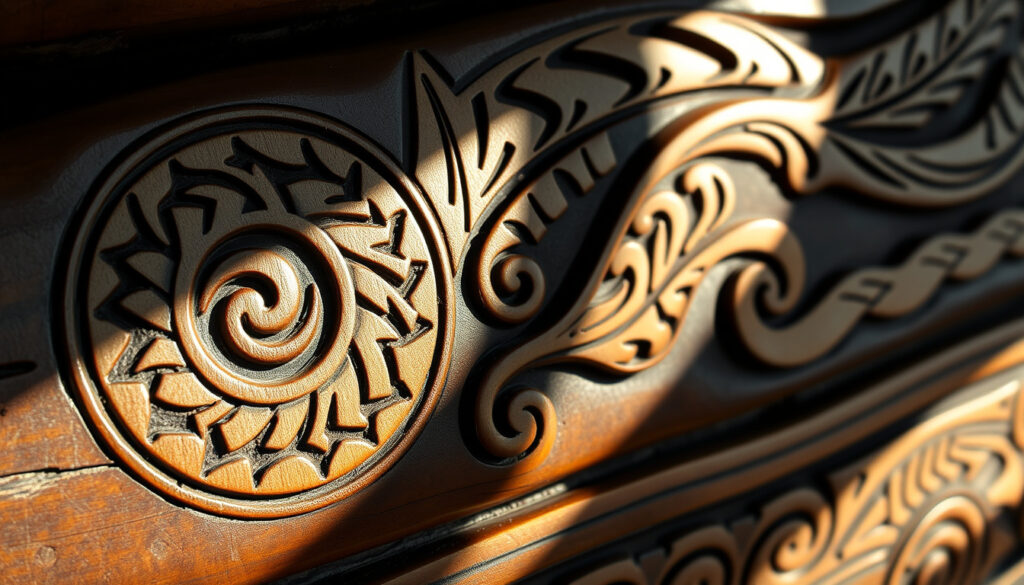
Māori designs carry stories in every curve and spiral. Across Aotearoa, symbols like the koru and hei matau have been carved into jade, painted on meeting house rafters, and etched into skin for centuries—each one a conversation between past and present. This guide breaks down what those designs mean, where they come from, and how to read them.
Core Māori values: 5 · Common Māori symbols referenced: 6 · Traditional colors in kōwhaiwhai: Red, black, white · Key Māori tattoo elements: 3 lines on chin · Top design representing love: Aroha
Quick snapshot
- Chin lines mark life stages for Māori women (Zealand Tattoo)
- Personal heritage symbols unique to wearer (Mountain Jade)
- Strength and commitment encoded in every line (Polynesia.com)
- 6 key designs appear across carvings and tattoos (Mountain Jade)
- Love represented through Aroha motif (Mountain Jade)
- NZ icons like koru derived from native fern (Mountain Jade)
- Tā moko revival continues as cultural pride symbol (New Zealand Tourism)
- Modern practitioners blend old techniques with new designs (Zealand Tattoo)
- Increasing global interest in authentic Māori symbolism (Mountain Jade)
| Label | Value |
|---|---|
| Origin | New Zealand Māori culture |
| Primary Art Forms | Kōwhaiwhai, ta moko, carvings |
| Symbol Count in Guides | Up to 6 core |
| Leadership Values | 5 key |
| Arrival of tattooing tradition | 800–1000 years ago |
| Uhi instruments dated | 1800–1900 (Museum of New Zealand Te Papa Tongarewa) |
What do different Māori patterns mean?
Māori patterns are not decorative—they carry meaning. Every curve, spiral, and color connects to something larger: ancestry, environment, or spiritual belief.
Kowhaiwhai patterns
Kōwhaiwhai are the painted patterns found on the ridge pole (tāhū) and rafters (heke) inside wharenui (meeting houses). They reference mauri—the life energy, emotions, and essence that flows through all things. The patterns vary by tribe, drawn from the local environment and carrying the mana of the house, its ancestors, and its people.
Traditional kōwhaiwhai colors each tell their own story. Red represents warmth, blood, and life. White symbolizes purity and promise for the future. Black connects to the earth. Together, these three colors form the foundation of most kōwhaiwhai palettes.
Key motifs within kōwhaiwhai include the mangōpare (hammerhead shark), representing strength, courage, and power. The ngaru pattern depicts ocean waves and echoes the journey of waka across the sea. The kōwhai ngutukākā draws from the kākā beak plant and native bird.
Tribal variations in kōwhaiwhai are not errors—they are intentional. Each iwi adapts the same motifs to reflect its own landscape, creating a visual dialect that tells you which region a meeting house comes from.
Twists and turns in designs
The twisting curves found throughout Māori design are not random flourishes. They represent life’s journey—the ups and downs, the challenges overcome, and the resilience required to keep moving forward.
The koiri motif shows koru repeating and turning back on themselves, symbolizing self-reflection, nurturing, and flourishing. It appears in both kōwhaiwhai and tā moko, carrying the same meaning across different art forms.
In carvings and tattoos, twists often mark transitions—the point where one chapter ends and another begins. This ties back to the concept of whakapapa, where each generation flows from the one before it.
What are the 6 Māori symbols?
Six symbols appear repeatedly across Māori carvings, tattoos, and jewellery. Each one carries stories of desire, memory, strength, history, commitment, and loyalty passed down through generations.
Core symbols in carvings
The koru (spiral) is the most recognizable Māori motif. Based on the unfurling fern frond, it symbolizes new beginnings, growth, and regeneration. According to a Māori proverb: “Ka hinga atu he tete-kura—ka hara-mai he tete-kura” (As one fern frond dies, one is born to take its place).
The hei tiki represents Tiki, the first man in Māori myth. These carvings are passed down through families to increase mana and worn in remembrance of deceased relatives.
The hei matau (fish hook) symbolizes prosperity, safe travel over water, and strength. It ties directly to Tangaroa, the god of the sea, making it especially significant for coastal communities and those who work with the ocean.
Pounamu (greenstone) carvings are inherently limited in detail, which means pounamu carries broader, less specific meanings—a single hei tiki in jade might represent ancestry generally, while a hei tiki in tā moko pinpoints exactly which ancestor. Collectors should factor this distinction into their assessment of what a piece can authentically convey.
Symbols on ta moko
On the body, the koru represents parenthood, ancestry, genealogy, and whakapapa. Tā moko artists depict koru with human characteristics—head, eye, neck, body, and tail—making each one a portrait of lineage.
The toki (adze) appears in both carvings and tattoos. Originally a working tool for shaping wood and building waka, it symbolizes strength, courage, and leadership. When worn or tattooed, it signals readiness to do hard work and lead others.
Māori arrived in Aotearoa from Eastern Polynesia around 800 to 1000 years ago, bringing their tattooing tradition with them. Over centuries, tā moko evolved using bone chisels for deeper grooves—a technique distinct from Pacific comb-based tattooing—and incorporated the koru spiral that now defines the style.
What are the 5 core Māori values?
Five foundational values shape strong Māori leadership. These are not abstract ideals but practical principles that govern relationships, decision-making, and communal responsibility.
Values in Māori leadership
These five values interconnect to form a complete framework. Whanaungatanga emphasizes relationships and a sense of belonging. Mana gives someone the authority to act, often spiritual or inherited. Tapu restricts certain actions or spaces. Noa removes those restrictions, making things ordinary and accessible. The interplay between tapu and noa governs how leaders move through sacred and everyday contexts.
For leaders operating in te ao Māori (the Māori world), understanding these values is not optional—it is the difference between actions that carry weight and those that ring hollow.
Balancing tapu and noa requires constant judgment. A leader who stays too long in tapu freezes decision-making. One who rushes to noa loses the gravity that makes their choices matter. The skill lies in knowing when to move between the two.
What Māori design means love?
The Aroha motif represents love in Māori design, but this is not romantic love in the Western sense. Aroha encompasses compassion, empathy, and care for others—particularly family and community.
Aroha symbol details
In traditional Māori thinking, Aroha binds people together across time. It shows up in how families care for their elders, how communities support members in need, and how individuals honour their obligations to those who came before them.
The design itself varies—sometimes as a variation on the koru spiral, sometimes as distinct patterns used specifically in contexts where love and commitment are being expressed, such as bindings on ta moko or carvings on pounamu given as gifts.
For buyers of Māori art or those seeking authentic designs, understanding Aroha means recognizing that the piece is not just aesthetically pleasing—it carries an emotional and relational obligation. When someone wears Aroha, they are declaring commitment to those connections.
What does the 3 lines on the chin tattoo mean?
The three horizontal lines on a Māori woman’s chin are among the most recognizable elements of tā moko. They mark significant life stages—typically marriage and the birth of children.
Ta moko chin tattoos
In traditional practice, women wore these lines to signal they had transitioned into new roles within their whānau. Each line could represent a specific milestone: the first for marriage, the second for children, and the third for achieving wisdom or status as a kuia (elder woman).
The practice was historically restricted—women of high status received chin moko, while others did not. Today, the tradition continues but with more personal choice involved. Some women get one line representing marriage, others get three as a more complete expression of their life journey.
The moko serves as an ID, reflecting rank, status, power, and lineage. Each design is unique, created to suit the status and character of the person who receives it. Robbie Whitmore, an expert in tā moko, explains that the patterns are a visual record of who you are and where you come from.
“The moko serves as an ID, reflecting the wearer’s rank, status, power, position, and lineage.” — Robbie Whitmore, tā moko expert (Polynesia.com)
Confirmed facts
- Kōwhaiwhai found on ridge poles and rafters in meeting houses (Twinkl)
- Traditional colors: red, black, white (Twinkl)
- Koru based on unfurling fern frond (Mountain Jade)
- Māori arrived 800–1000 years ago from Eastern Polynesia (New Zealand Tourism)
- Tā moko uses bone chisels, not Pacific combs (New Zealand Tourism)
What’s unclear
- Exact number of distinct symbols varies between sources
- Some origin stories for moko patterns conflict between iwi
- Pre-colonial documentation of specific tribal patterns limited
Tā moko today symbolizes cultural pride and commitment to ancestors. Museum collections, including the Museum of New Zealand Te Papa Tongarewa, hold uhi tā moko instruments from 1800 to 1900 that document how the craft evolved. Modern practitioners carry forward those techniques while adding contemporary designs that speak to today’s wearers.
“Each moko is unique, created to suit the status and character of the person who receives it.” — New Zealand Tourism
For buyers of Māori art, practitioners seeking cultural guidance, or anyone curious about these designs: the symbols carry weight. They are not decorative choices to make lightly. Understanding the difference between a koru in carving versus tā moko, between Aroha and simple ornamentation—that distinction separates genuine engagement from surface-level appropriation. Seeking out cultural advisors and Māori-led resources is the first step toward authentic connection.
Alongside ta moko tattoos and kowhaiwhai patterns, the Matariki stars embody profound Maori values tied to health, memory, and the New Year.
Frequently asked questions
What is kowhaiwhai?
Kōwhaiwhai are painted patterns found on the ridge pole (tāhū) and rafters (heke) inside wharenui (Māori meeting houses). They reference mauri (life energy) and vary by tribe, drawing from the local environment to represent the mana of the house and its people.
What does the koru symbol represent?
The koru represents new beginnings, growth, and regeneration. Based on the unfurling fern frond, it connects to a Māori proverb about the continuous cycle of life and death. In tā moko, koru also represents parenthood, ancestry, and whakapapa (genealogy).
What are traditional Māori tattoos called?
Traditional Māori tattoos are called tā moko. They are distinct from kirituhi, which is designed for non-Māori wearers and carries aesthetic rather than genealogical meaning. Tā moko visually signifies whakapapa, identity, and status.
What colors are used in Māori patterns?
Traditional kōwhaiwhai colors are red, black, and white. Red represents warmth, blood, and life. White symbolizes purity and promise for the future. Black connects to the earth. These three colors form the foundation of most traditional Māori painting.
What do twists in Māori designs symbolize?
Twisting curves represent life’s journey—the challenges faced, the resilience developed, and the continuous motion forward. The koiri motif shows repeating koru turning back on themselves, symbolizing self-reflection and nurturing.
What is the meaning of roimata?
Roimata (tears/stalactite) represents sadness, grief, or the release of emotion. In carving and design, it is often depicted as a tear shape and connected to stories of loss or compassion.
How are Māori symbols used in carvings?
Māori symbols in carvings encode stories, ancestry, and identity. The hei tiki represents the first man and is passed down through families. The hei matau (fish hook) ties to Tangaroa, god of the sea, symbolizing prosperity and safe ocean travel. Each symbol carries specific meaning tied to the wearer’s or the carved object’s purpose.
More related posts
 Carpal Tunnel Syndrome Symptoms – Early Signs and When to See a Doctor
 Image to Text Converter: Free Online OCR Tools in 2025
 Devonport Houses for Sale: Your Guide to Buying in Tasmania
 Cast of Mean Girls: 2004, Musical & 2024 Full List
 Air NZ Arrivals Wellington – Check Flight Status
 How to Transfer Money Between Banks: Ireland Guide
 The Green Frog Masterton Menu – Prices, Items and 2025 Updates
 Best Vacuum Cleaner Reviews 2026: Top Picks & Buying Guide