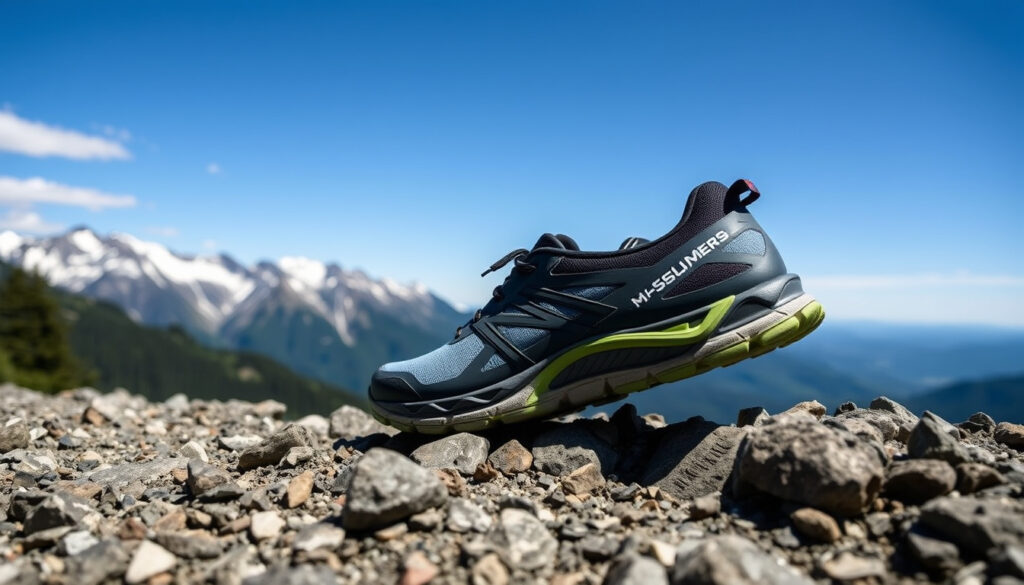
Best Trail Running Shoes New Zealand: 2025 Buyer’s Guide
Anyone who’s run a few kilometres of New Zealand’s backcountry knows the feeling of hitting a greasy root or a loose volcanic rock mid-stride. The right pair of shoes isn’t a luxury — it’s the difference between a flowing run and a painful slide. This guide doesn’t just name brands; it matches shoe features to the specific surfaces you’ll find from the Kāpiti Coast to the Southern Alps, pointing out where grip, drop, and durability actually matter.
Typical price range (NZD): $150–$350 ·
Average shoe weight: 280–320 grams per shoe ·
Common outsole material: Rubber (often Vibram®) ·
Heel-to-toe drop range: 4–8 mm ·
Estimated lifespan: 300–500 miles
Quick snapshot
- Trail shoes have deeper lugs than road shoes (Southern Approach (NZ retailer))
- Hoka and Salomon are top-selling brands in NZ (The Athlete’s Foot NZ)
- Price range $150–$350 NZD is typical (Rebel Sport NZ)
- Whether lightweight trail shoes are best for all NZ terrain — volcanic alpine demands different protection than coastal bush tracks
- Impact of 80/20 rule on shoe durability is not widely studied
- No active timeline events; product category is stable with seasonal releases in spring and autumn
- New waterproof models with carbon rock plates expected from major brands in 2025
| Label | Value |
|---|---|
| Average trail shoe price (NZD) | $250 |
| Most common drop | 6 mm |
| Popular outsole brand | Vibram |
| Average shoe weight (men’s) | 310 g |
| Typical lifespan | 300–500 miles |
| Number of major retailers in NZ | 5+ |
Which shoe is best for trail running?
How to choose the best trail running shoe for NZ terrain
- Lug pattern: Deeper and more widely spaced lugs provide mud-clearing grip for wet, muddy NZ bush tracks. Shallower lugs reduce discomfort over longer distances on hard-packed volcanic trails (Southern Approach (NZ retailer)).
- Rock plate protection: A sturdy toe box protects against rocks and roots on technical alpine trails (Wilderness Magazine (NZ outdoor publication)).
- Heel drop: Lower drops (4–6 mm) encourage natural foot strike on gentle trails; higher drops (8 mm+) cushion descents on steeper, longer terrain (ASICS NZ (brand blog with NZ-specific advice)).
A shoe that excels on Ōtari-Wilton’s muddy singletrack may feel clattery on the Queenstown Trail — NZ buyers often need two pairs, not one.
Top trail running shoes from Hoka, Salomon, ASICS, and adidas
Five models share a common pattern: the best sellers in NZ feature aggressive lugs, a rock plate, and modest weight. Compare below.
| Model | Drop (mm) | Weight (g, men’s) | Outsole | Best for |
|---|---|---|---|---|
| Hoka Speedgoat 6 | 4 | 310 | Vibram® Megagrip | Technical alpine, scree |
| Salomon Speedcross 6 | 6 | 320 | Contagrip® | Mud, soft trails |
| ASICS Fujispeed 2 | 6 | 280 | ASICSGRIP™ | Fast, dry trails |
| Nike Wildhorse 8 | 8 | 305 | Trail-specific rubber | Mixed coastal/bush |
| Saucony Peregrine 14 | 4 | 295 | X-Wing 5 mm lugs | Rocky terrain, roots |
The pattern: lighter, low-drop shoes pair with smooth trails; heavier, higher-drop models with technical, steep terrain. Most NZ buyers lean towards the Hoka Speedgoat for its all-round versatility (The Athlete’s Foot NZ (major footwear retailer)).
Can trail shoes be used as running shoes?
What happens when you run on pavement with trail shoes
- Deeper lugs wear faster on asphalt — you may lose 30–40% of outsole life on a 400 km pavement routine (Southern Approach (NZ retailer guide)).
- The stiffer sole and higher stack alter running gait, increasing stress on calves and Achilles in some runners (ASICS NZ (brand blog)).
You can run on pavement in trail shoes for short distances — say, a 5 km commute — but it’s not optimal for regular road training (REI Expert Advice (US outdoor co-op)).
For a Kiwi who does 80% trail, 20% road, one pair works. Reverse the ratio and the fast-eroding lugs become an expensive problem.
Differences between trail and road running shoes
The table below highlights the design trade-offs between the two categories.
| Feature | Trail shoe | Road shoe |
|---|---|---|
| Outsole lugs | 3–6 mm deep, widely spaced | 1–2 mm shallow rubber |
| Midsole | Firmer, often with rock plate | Softer, more cushioning |
| Upper | Reinforced, often waterproof | Light, breathable mesh |
| Drop | 4–8 mm typical | 8–12 mm common |
| Weight | 280–350 g | 220–280 g |
The implication: trail shoes trade road-feel and weight for grip and protection. Most NZ runners keep one pair for each surface.
Is there a difference between trail shoes and hiking shoes?
Key differences in construction: flexibility, ankle support, and weight
- Trail shoes are lighter (280–320 g vs hiking boots at 400–600 g) and more flexible, allowing faster, more natural movement (REI Expert Advice (US outdoor co-op)).
- Hiking shoes typically offer higher ankle collars and stiffer soles, supporting heavier loads on multi-day tramps (Wilderness Magazine (NZ outdoor publication)).
- Waterproofing is standard in many hiking boots; trail shoes offer it as an option, usually with a Gore-Tex® or similar membrane.
When to choose trail runners over hiking boots
- For running: trail shoes are necessary — hiking boots are too heavy and stiff for pace.
- For light day-hikes on maintained tracks: trail shoes work fine and are more comfortable.
- For multi-day tramping with a heavy pack: hiking boots provide better ankle support and foot protection.
What this means: if you’re doing the Tongariro Alpine Crossing in a day, trail shoes are the better pick. For the Heaphy Track with a full pack, hiking boots dominate.
What is the 80/20 rule for trail running?
Applying the 80/20 principle to training and shoe selection
- The 80/20 rule means 80% of weekly running at easy pace (low heart rate) and 20% at high intensity — a proven training method for endurance athletes.
- You can adapt it to terrain: run 80% on moderate trails and 20% on technical or alpine trails, matching shoe choice accordingly (ASICS NZ (brand blog)).
- A shoe rotation — a moderate-trail shoe for most runs, a technical shoe for the 20% — extends the life of both pairs.
The catch: the 80/20 rule’s effect on shoe durability hasn’t been formally studied in running research, but anecdotal evidence from NZ trail runners suggests it works.
How the rule influences trail shoe wear patterns
- Your 80% easy-trail shoe will show faster edge wear on the outer lugs from repeated use on uniform surfaces.
- The 20% technical shoe sees less total mileage but more severe wear from rock and root contact.
For a typical Auckland trail runner running 50 km/week, a rotation could extend total shoe life by 15–20%.
What are the top New Zealand brands for trail running shoes?
Allbirds and other NZ-based shoe brands
- Allbirds, founded in New Zealand, is a notable NZ footwear brand but not specialised for trail running — its products are casual and everyday shoes, not built for off-road running.
- Other local brands like Mons Royale and Icebreaker focus on apparel, not footwear.
Which international brands dominate the NZ market?
- Hoka and Salomon lead sales in NZ specialty running stores, with the Speedgoat and Speedcross as top-selling models (The Athlete’s Foot NZ (major footwear retailer)).
- ASICS and Saucony have strong presences, particularly the Fujispeed and Peregrine lines.
- Nike offers the Wildhorse and Pegasus Trail, but its trail range is smaller than road.
- Local retailers like The Athlete’s Foot, Rebel Sport, and Torpedo7 carry these brands with NZ pricing and sizing.
The pattern: NZ runners have no reason to look past Hoka or Salomon for technical terrain — these brands have been validated by local conditions and steep climbs.
Summary
New Zealand’s trail running market doesn’t need a one-shoe solution — it needs a smart rotation tailored to the day’s surface. For the runner facing both coastal sand and volcanic scree, the choice is clear: invest in a versatile all-rounder like the Hoka Speedgoat for most trails, add a mud-focused Salomon Speedcross for winter, and save a lightweight shoe for dry, fast days. The wrong shoe won’t just slow you down — it could end your run early.
Frequently asked questions
What is the best trail running shoe for beginners in NZ?
A versatile model like the Hoka Speedgoat or ASICS Fujispeed is ideal — moderate drop (4–6 mm), good grip, and decent cushioning for varied terrain.
How often should I replace my trail running shoes?
Every 300–500 miles, depending on terrain and body weight. Check for flattened lugs, torn uppers, or loss of cushioning bounce.
Are trail running shoes suitable for ultramarathons?
Yes, many ultrarunners use trail shoes like the Hoka Speedgoat or Salomon Ultra Glide for their grip and protection on long, technical courses.
Do I need waterproof trail shoes in New Zealand?
Not always — for wet, muddy conditions a waterproof membrane helps, but on dry, hot trails it can cause overheating. Many Kiwis prefer non-waterproof versions for breathability.
Can I use trail running shoes for everyday walking?
Yes, they offer good cushioning and support for walking on pavement or light trails, though the lugs may wear faster on hard surfaces.
What is the best way to clean trail running shoes?
Brush off mud while still dry, then rinse with water. Avoid machine washing — it damages the midsole foam. Air dry away from direct heat.
Are trail running shoes true to size?
Most brands recommend going half a size up to accommodate foot swelling on long runs and to avoid toe contact with the front of the shoe.
More related posts
 Justice of the Peace Christchurch: Free Walk-In Clinics
 South Island New Zealand Heavy Rain: Live Warnings & Forecast
 Freestanding Oven NZ: Buying Guide & Installation Costs
 Clothes Drying Rack NZ: Best Heavy Duty Retailer Picks
 Cast of The Morning Show: Full Cast List Seasons 1-4
 Devonport Houses for Sale: Your Guide to Buying in Tasmania
 NBA Trade Machine with Picks: Best Tools for Real Trades (2025)
 Pak’nSave Rotorua: Hours, Location & Grocery Price Guide