The Fall of the Berlin Wall: Causes, Facts and Impact
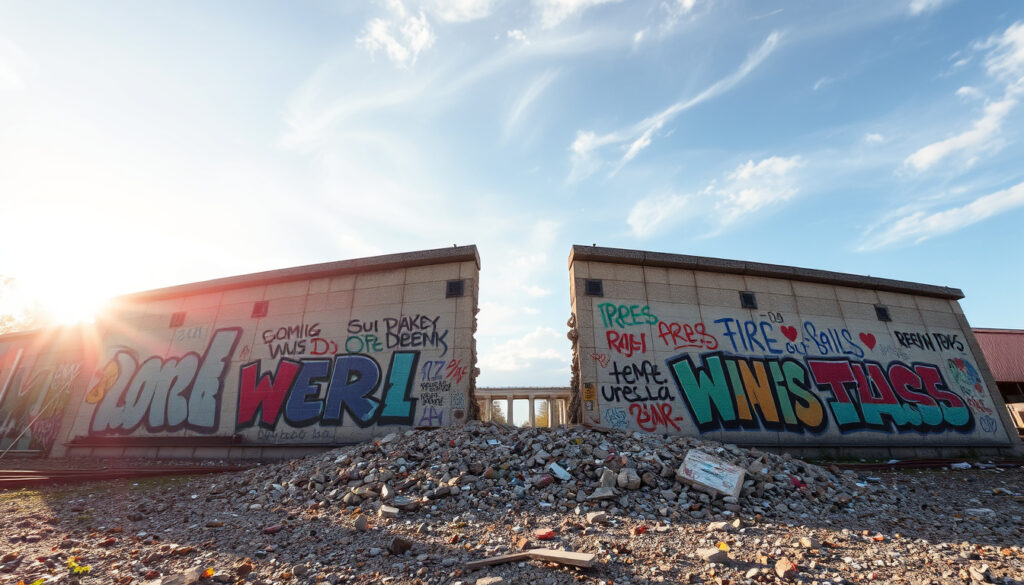
Few images capture the end of an era like the sight of Berliners standing atop a concrete barrier that had divided a city for 28 years. On the night of 9 November 1989, the Berlin Wall opened, not because of a master plan but because a tired bureaucrat fumbled a press release.
Date of fall: 9 November 1989 ·
Estimated crowd at the wall on the night of fall: hundreds of thousands ·
Border crossings in the first 3 days: over 2 million ·
Total deaths at the Berlin Wall (1961–1989): at least 140 (official estimate)
Quick snapshot
- The Berlin Wall fell on 9 November 1989 (BBC News)
- At least 140 people died attempting to cross between 1961 and 1989 (U.S. Department of State)
- 13 August 1961: Construction begins (History.com)
- 9 November 1989: Wall opens (BBC News)
- German reunification on 3 October 1990 (German Federal Government)
- Collapse of other East European regimes (U.S. State Department)
The key facts below offer a quick reference on the wall’s physical dimensions, timeline, and human toll.
| Label | Value |
|---|---|
| Event | Fall of the Berlin Wall |
| Date | 9 November 1989 |
| Location | Berlin, East Germany |
| Key Figure | Günter Schabowski (mistaken announcement) |
| Deaths at the wall (1961–1989) | at least 140 |
| Length of wall | 155 km |
What caused the Berlin Wall to fall?
Political pressures in East Germany
By the autumn of 1989, the East German government was under severe strain. Soviet leader Mikhail Gorbachev’s reforms — glasnost and perestroika — signaled that Moscow would not prop up hardline regimes as in the past. The East German economy was stagnating, and citizens were increasingly disillusioned with the ruling Socialist Unity Party (Tufts University).
Mass protests and peaceful revolution
Weekly Monday demonstrations in Leipzig grew from a few hundred in September to over 200,000 by early November. Similar protests erupted in Dresden, East Berlin, and other cities. The chant “Wir sind das Volk” (We are the people) directly challenged the legitimacy of the regime (Berlin.de).
Schabowski’s press conference mistake
On the evening of 9 November 1989, East German spokesman Günter Schabowski held a press conference to announce new travel regulations. Handed a hastily drafted note, he said the regulations would take effect “immediately, without delay.” In reality, the rules were supposed to be phased in — but his imprecise wording was broadcast live across East Germany (BBC News).
Border guards overwhelmed
Thousands of East Berliners streamed to the border crossings, demanding to pass. The guards at Bornholmer Strasse and other checkpoints had no orders to use force. Facing a crowd, they eventually opened the gates. By midnight, people were crossing freely, celebrating atop the wall (U.S. State Department).
The implication: the fall was not a single decision but the result of sustained civic pressure, a crumbling regime, and a bureaucratic slip that combined at a single moment.
What are 5 facts about the Berlin Wall?
Construction date and duration
- The wall was built on 13 August 1961 by the East German government to stop the exodus of citizens to West Berlin (Bruegel think tank).
- It stood for more than 28 years until 9 November 1989.
Physical dimensions
- The barrier system stretched 155 km around West Berlin, including a heavily fortified inner strip (Berlin.de).
Division of Berlin
- It physically and ideologically divided East and West Berlin during the Cold War (History.com).
Death toll
- At least 140 people died trying to cross, though some researchers put the figure at over 200 (U.S. Department of State).
Fall date and immediate aftermath
- The wall fell on 9 November 1989. Within days, more than 2 million East Germans visited West Berlin and West Germany.
The pattern: the wall’s 28-year existence and its sudden fall reveal how physical barriers can crumble when political will evaporates.
Was the fall of Berlin Wall good?
Positive outcomes
The opening of the wall led directly to the reunification of Germany on 3 October 1990, ending decades of Cold War division in Europe. It also triggered the rapid collapse of communist regimes across Eastern Europe (U.S. State Department).
Negative consequences
For many East Germans, reunification brought economic shock — state-run industries shut down, unemployment soared, and the social safety nets of the GDR vanished. East German wages and pensions took years to catch up with western levels (Tufts University).
Overall assessment
The fall is overwhelmingly seen as a triumph for freedom and democracy. The trade-off, however, remains visible in persistent economic disparities between eastern and western Germany.
Upsides
- German reunification and restored national unity
- End of the Iron Curtain and Cold War division
- Spread of democracy across Eastern Europe
- Freedom of movement for millions
Downsides
- Economic dislocation and high unemployment in eastern Germany
- Loss of state-provided social safety nets for East Germans
- Persistent cultural and economic divides decades later
- Cost of reunification estimated at trillions of euros
The catch: the freedom won on 9 November 1989 came with a decades-long economic adjustment for millions of East Germans.
How many people died trying to cross the Berlin Wall between 1961 and 1989?
Official figures
The Berlin Wall Memorial lists at least 140 confirmed deaths — individuals shot, drowned, or killed by landmines and automatic firing systems. The U.S. Department of State cites “at least 100 East Germans” and notes the true number may be higher (U.S. Department of State).
Unofficial estimates
Some historians and victim advocacy groups argue the real total could exceed 200, counting undocumented escapes and deaths in East German waters. The discrepancy stems from East Germany’s strict secrecy about escape fatalities (Bruegel think tank).
Famous incidents
- Ida Siekmann (d. 22 August 1961) – the first known fatality; she jumped from her apartment window into Bernauer Strasse and died from injuries incurred during the fall.
- Chris Gueffroy (d. 5 February 1989) – the last person shot while trying to escape; he was killed by border guards at the inner-German border.
What this means: the total death count remains contested because East Germany kept escape fatalities secret, making the official figure a floor rather than a ceiling.
What did John F. Kennedy say about the Berlin Wall?
Ich bin ein Berliner
On 26 June 1963, U.S. President John F. Kennedy stood before a crowd of 400,000 at Rathaus Schöneberg in West Berlin and declared: “Ich bin ein Berliner” — I am a Berliner. The phrase, spoken in German, affirmed American solidarity with West Berliners in the face of the newly built wall (U.S. State Department).
Cold War context of the speech
Kennedy’s visit came less than two years after the wall’s construction, a time of intense tension. The Soviet Union had threatened to sign a separate peace treaty with East Germany, which could have cut off Western access to Berlin. The speech was a calculated display of resolve.
Impact of the quote
The line became one of the most iconic Cold War phrases, symbolizing Western commitment to a free Berlin. It also rallied West Germans and West Berliners at a moment when the city’s future was uncertain.
Timeline of the Berlin Wall
- – Construction of the wall begins, separating East and West Berlin (History.com).
- – Mass protests in Leipzig, Dresden, and Berlin pressure the East German government (Tufts University).Read more about German reunification
- – Schabowski’s press conference; border crossings open.
- – Gradual dismantling of the wall by citizens and authorities (Berlin.de).
- – Formal German reunification (German Federal Government).
The pattern: the wall’s physical fall came within weeks of sustained protests, but its complete political dismantling took nearly a year and culminated in reunification.
Confirmed facts
- The Berlin Wall fell on 9 November 1989
- At least 140 people died attempting to cross (U.S. Department of State)
- Schabowski’s press conference triggered the opening
- JFK spoke the phrase “Ich bin ein Berliner” in 1963 (U.S. State Department)
What’s unclear
- Exact number of deaths remains disputed (some sources cite up to 200) (Wikipedia)
- Whether the border opening was intentional or accidental is still debated
“Ich bin ein Berliner.”
— John F. Kennedy, speech at the Berlin Wall, 26 June 1963
“Therefore we have decided, in order to avoid further confusion, to publish a regulation that makes it possible, with immediate effect, to leave the country through all border crossing points.”
— Günter Schabowski, press conference, 9 November 1989
The fall of the Berlin Wall was not just a night of celebration — it was the culmination of a peaceful revolution that redrew the map of Europe. For the citizens of East Germany, the fall meant a chance to choose their own path — but also the challenge of rebuilding their identity in a united Germany.Read more about the Cold War
Frequently asked questions
How long did the Berlin Wall stand?
The wall stood for 28 years, from 13 August 1961 to 9 November 1989.
Who ordered the building of the Berlin Wall?
The East German government, under the leadership of Walter Ulbricht and with Soviet approval, ordered its construction.
What happened to the Berlin Wall after it fell?
Large sections were dismantled by crowds and later by authorities. Remaining segments became historical monuments and tourist attractions.
Why did the Soviet Union not intervene on 9 November?
Soviet leader Gorbachev had signaled he would not use force to prop up East European regimes, and the East German government was already collapsing.
How did people cross the Berlin Wall before it fell?
Through heavily fortified checkpoints, smugglers, or dangerous attempts to climb, tunnel, or swim across. More than 5,000 East Germans escaped successfully.
What was the role of peaceful protests in the fall?
Mass demonstrations, especially the Monday protests in Leipzig, forced the East German government to loosen travel restrictions and ultimately opened the wall.
How many people fled East Germany through the wall?
An estimated 5,000 people successfully escaped across the Berlin Wall during its existence, while many more fled via other countries before 1961.
Did any West Berliners die at the wall?
Yes — several West Berliners and Westerners were killed by East German border guards, including Peter Fechter (1962) and others shot at close range.
More related posts
 Ukraine News Today Now Live: Latest Updates on Russia, Putin
 ASICS Running Shoes NZ – Men’s, Women’s & Buyers Guide
 Sam Ruthe Mile Attempt: Sub-4 Record Breaker at 15
 Health 2000 New Plymouth – Address, Hours & Products
 The Fat Duck Te Anau: Menu, Prices, Reviews & Reservations
 Te Wiki o te Reo Māori 2025: Theme, Dates & Resources
 Silver Ferns vs England 2025: Scores, Taurua News & TV
 Fisher and Paykel Healthcare Careers: Jobs, Pay, and Process