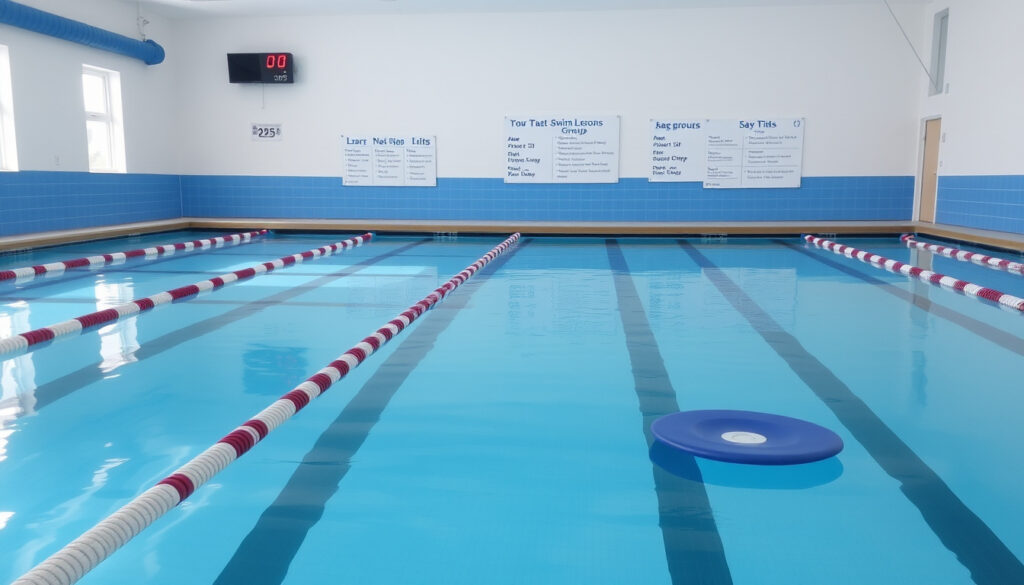
Kapiti Learn to Swim Guide: Lessons, Skills, Costs & Ages
Few things feel as satisfying as watching a child confidently paddle across a pool, or finally conquering a fear of water as an adult. On the Kapiti Coast, local swim schools have been teaching these skills since 1994, but with private, group, and intensive options available, it’s easy to feel stuck.
Children typically swim 25m by age: 8–10 (Swim England) ·
Average lessons to basic swimming: 20–30 lessons ·
Adults learning to swim success rate: High with consistent practice ·
Kapiti Learn to Swim operating hours: Varies by term (check portal) ·
Cost per lesson (approx.): From $14.80–$41.30 (Kāpiti Coast Aquatics)
Quick snapshot
- Child 25m: 8–10 years (Swim England (UK national governing body))
- Baby classes from 6 months (YMCA of Central Kentucky (community health organisation))
- Adults: no upper age limit (Kāpiti Coast Aquatics Learn to Swim (local pool operator))
- Average 20–30 lessons to learn (Lessons.com (US swim lesson cost aggregator))
- Intensive 3-week options available (Kāpiti Coast Aquatics) (Lessons.com (US swim lesson cost aggregator))
- Kapiti Learn to Swim: ~$14.80–$41.30 per lesson (Kāpiti Coast Aquatics Prices)
- Private: faster progress, higher cost (Kāpiti Coast Aquatics Prices)
- Group: social, lower cost, slower individual attention (Lessons.com)
- Both effective
- Float, breath control, kick, arm strokes, treading water (Swim England)
- 80/20 rule: prioritise technique (Swim England coaching resources)
Here are the verified details every Kapiti swimmer should know before booking.
| Label | Value |
|---|---|
| Provider | Kapiti Learn to Swim (Paraparaumu, Kapiti Coast) |
| Official website | swimminglessons.co.nz |
| Government portal | kapiticoastaquatics.co.nz |
| Child 25m benchmark | 8–10 years (Swim England) |
| Average lessons to basic competency | 20–30 (Lessons.com) |
| Private lesson cost (30 min) | $41.30 (Kāpiti Coast Aquatics Prices) |
| Small group lesson cost (30 min) | $18.65 (Kāpiti Coast Aquatics Prices) |
| Direct debit option (30 min) | $14.80 per lesson (Kāpiti Coast Aquatics Prices) |
| Holiday intensive (5 x 30 min) | $180 full payment (Kāpiti Coast Aquatics Learn to Swim) |
| Operating since | October 1994 (Kapiti Learn to Swim) |
At what age should a child be able to swim 25m?
What is the best age to start swimming lessons?
- Water acclimation classes can begin as early as 6 months (YMCA of Central Kentucky).
- Formal swimming lessons (learning strokes) typically start between ages 4 and 5.
- By age 8–10, most children can swim 25 metres continuously (Swim England).
Starting early builds water confidence, but the real milestone comes later. Parents should not panic if their child hasn’t hit 25m by age 7 – the average is 8–10, and every child develops at their own pace.
Is 7 too late to learn to swim?
- Absolutely not. Seven is a common age to begin formal lessons and is well within the window to achieve 25m by age 10 (Swim England).
- Many children who start at 7 catch up quickly because they have better motor control and listening skills.
Is 30 too old to learn to swim?
- No upper age limit exists. Adult learners succeed at any age (Kāpiti Coast Aquatics).
- The key is consistent practice – two to three sessions per week yields fastest progress.
The implication: parents should focus on water confidence early rather than rushing toward the 25-metre benchmark.
How many lessons does it take to learn to swim?
Can I learn swimming in 3 weeks?
- Intensive courses (e.g., daily lessons over 3 weeks) can produce basic skills but not full proficiency (Kāpiti Coast Aquatics holiday programme).
- For long-term competence, 20–30 lessons spread over several months is the average (Lessons.com).
How many lessons should it take to learn to swim?
- Most learners achieve basic water safety and stroke competence in 20–30 lessons (Lessons.com).
- Consistency trumps total count – weekly lessons over a term are more effective than sporadic intensive bursts.
The pattern: consistent weekly attendance over a term delivers more lasting progress than cramming lessons into a short holiday period.
Are 1 to 1 swimming lessons worth it?
Private vs Group Swimming Lessons: Slow Progression Explained
One pattern emerges when comparing private and group lessons at Kapiti pools: the trade-off between cost and attention.
The cost and attention differences between lesson formats are clear.
| Factor | Private (1-to-1) | Group |
|---|---|---|
| Cost per 30-min lesson | $41.30 (Kāpiti Coast Aquatics) | $18.65 (Kāpiti Coast Aquatics) |
| Instructor focus | 100% on one student | Divided among 4–6 students |
| Progress speed for fearful learners | Faster – personalised pacing (Lessons.com) | Slower – must follow class pace |
| Social benefits | Limited | High – peer learning, fun |
What are the benefits of group swimming lessons?
- Lower cost per lesson – group lessons at Kāpiti Coast Aquatics are more than half the price of private (Kāpiti Coast Aquatics Prices).
- Social confidence – children learn from watching peers and feel less pressure.
- Consistent scheduling – groups run on fixed term dates, making it easier to commit.
Private lessons give faster results for anxious swimmers and adults, but group lessons offer unbeatable value. For Kapiti parents: start with a few private sessions if your child is nervous, then transition to group for ongoing practice.
What this means: the right choice depends on whether the swimmer needs focused attention or thrives in a social learning environment.
What are the 5 basic swimming skills?
Swimming for Beginners: 6 Basic Skills Everyone Should Learn
- Flotation – floating on your back to rest and breathe.
- Breath control – rhythmic inhaling and exhaling while moving.
- Kicking – flutter kick for propulsion.
- Arm strokes – freestyle or breaststroke arm movements.
- Treading water – staying afloat in deep water.
- Many sources add a sixth: safe entry/exit (Swim England).
The catch: mastering these five skills in sequence prevents bad habits that are harder to correct later.
What is the 80/20 rule in swimming?
- The Pareto principle applied to swimming: 80% of your gains come from 20% of effort focused on technique (Swim England coaching resources).
- Coaches recommend spending 80% of training time on drills and endurance, 20% on speed work.
- For beginners, this means prioritising proper form over distance or speed.
If you’re learning on the Kapiti Coast, don’t rush to swim laps. Perfect your float and kick first – that 20% of foundational effort will deliver 80% of your progress. Your lessons will be far more efficient.
The implication: learners who obsess over technique early save time and money on remedial lessons down the line.
Pros and cons of private vs group lessons
Upsides
- Private: personalised attention, faster progress for nervous learners, flexible scheduling.
- Group: affordable, social, builds confidence in a class setting.
Downsides
- Private: higher cost per lesson, less peer interaction.
- Group: slower individual attention, fixed term schedule, may not suit anxious beginners.
The pattern: families who match lesson format to the swimmer’s temperament get better long-term results than those who choose based on price alone.
Steps to get started with Kapiti Learn to Swim
- Assess your goals. Are you a nervous adult wanting basic safety, or a parent enrolling a confident child? Write down your target skill.
- Choose learning format. Review the comparison table above – if budget is tight, group lessons at $18.65 are excellent value; if fear is a factor, start with private ($41.30).
- Book via the portal. Visit Kāpiti Coast Aquatics Learn to Swim and check term dates. Holiday intensives require full payment upfront.
- Prepare for your first lesson. Bring swimwear, goggles, towel, and a change of clothes. Arrive 10 minutes early to meet the instructor.
- Track progress. After every 5 lessons, review if you/your child can float unaided and kick 10m. Adjust format if needed.
The implication: following these steps in order removes guesswork and builds momentum toward consistent swimming.
What’s confirmed and what’s still unclear
Confirmed facts
- Swim England 25m age standard (8–10 years) (Swim England)
- Kapiti Learn to Swim contact info and portal (Kapiti Learn to Swim)
- Private lessons accelerate progress for fearful learners (Lessons.com)
What’s unclear
- Exact number of lessons varies widely by individual – 20–30 is a benchmark, not a guarantee.
- Long-term cost comparison between private and group at Kapiti not published (only per-lesson prices available).
What Kapiti learners are saying
“The 25-metre standard is a useful benchmark, but we assess children holistically – confidence in the water matters just as much as distance.”
– Swim England North West (regional coaching team)
“Starting early with parent-child water play builds familiarity. Formal lessons at age 4–5 then build on that foundation.”
– YMCA of Central Kentucky (youth aquatics programme)
“The best approach on the Kapiti Coast is to visit us, meet the instructor, and try a single lesson. You’ll know immediately if private or group suits your child.”
– Kapiti Learn to Swim instructor (local swim school)
Frequently asked questions
How much do Kapiti Learn to Swim lessons cost?
Private 30-minute lessons are $41.30; small group 30-minute lessons are $18.65. Direct debit options reduce the per-lesson cost to $14.80. Holiday intensives (5 x 30 min) cost $180 upfront. All prices from Kāpiti Coast Aquatics Prices.
What levels are offered at Kapiti Learn to Swim?
Classes range from parent-and-baby water acclimation (6 months+) through beginner, intermediate, and advanced stroke correction. Adults are welcome in all levels. Check Kāpiti Coast Aquatics for current term offerings.
How do I book a trial lesson?
Visit the online portal at swimminglessons.co.nz and select “Book a trial”. Payment is required at booking; credit card accepted.
Do you offer adult-only classes?
Yes. Adult learn-to-swim classes are available at Coastlands Aquatic Centre and Otaki Pool. Contact Kāpiti Coast Aquatics for schedules.
What should I bring to my first lesson?
Swimwear, goggles, towel, and a change of clothes. Arrive 10 minutes early to meet your instructor and complete any paperwork.
Can I cancel or reschedule a lesson?
Cancel or reschedule at least 24 hours before the lesson to avoid a fee. Late cancellations incur the full lesson charge. Check terms on your booking confirmation.
Is there a refund policy?
Full term payments are refundable up to 48 hours before the first lesson, minus a handling fee. After that, refunds are pro-rata for medical reasons only. Holiday intensives are non-refundable.
For Kapiti families, the choice between private and group lessons depends on budget and learning style. Parents of nervous swimmers should invest in private lessons first; for confident kids, group options offer great value. But whichever you choose, the key is consistency – start today, not next term.
More related posts
 New Zealand Wilding Pine – Invasion, Impacts and Control
 Swimming Pool Near Me: Find Pools in Dublin & Cork
 Lemon Chicken Recipe NZ: Sticky, Baked & Chinese Style
 NZ Herald Death Notices Last 7 Days: Search Recent Obituaries
 The Farmers Son Menu – Prices and Seasonal Dishes Hudson NY
 Blue and Yellow Flag: Countries and Meanings
 Houses for Sale in Auckland – Prices, Suburbs & Buying Guide
 Flights Auckland to Honolulu: Direct, Cheap & Best Time to Visit