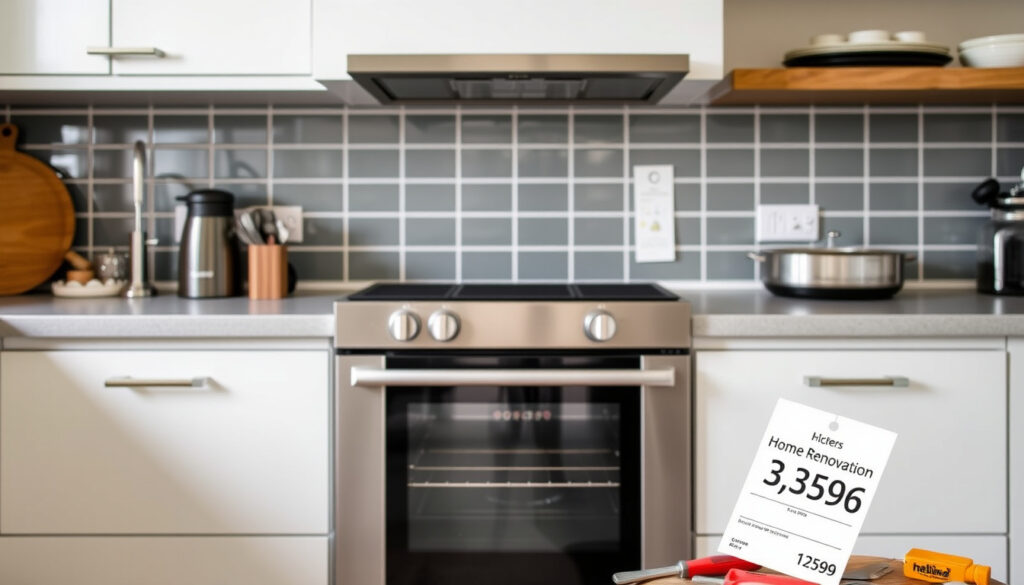
Freestanding Oven NZ: Buying Guide & Installation Costs
Anyone who has shopped for a kitchen appliance in New Zealand has stared at the row of freestanding ovens and wondered which one actually delivers. With brands like Fisher & Paykel, Westinghouse and Bosch competing for space at Noel Leeming and Harvey Norman, the choice comes down to more than just price — installation rules and energy labels matter just as much.
Average price of a freestanding oven in NZ: $800 – $3,500 ·
Most popular brands: Fisher & Paykel, Westinghouse, Bosch, Samsung ·
Typical electrician installation fee: $150 – $300 ·
Models tested by Consumer NZ (2025): 14 ·
Common fuel types: Electric, Gas, Dual Fuel
Quick snapshot
- All freestanding ovens require a power connection (100% Home New Zealand appliance retailer)
- Hardwired models need a licensed electrician (Electrolux NZ manufacturer guidance)
- Pyrolytic ovens heat to 500°C for cleaning (CHOICE independent consumer advocacy)
- Exact installation cost varies by region and electrician rates
- Long-term durability of specific brands is subjective
- Energy rating labels updated by EECA (2024-2025) affect new models entering NZ (100% Home NZ retailer buying guide)
- More smart-enabled freestanding ovens arriving in NZ from Samsung and Bosch
- Price drops expected on older models as new energy-rating standards phase in
| Attribute | Value |
|---|---|
| Number of models tested by Consumer NZ (2025) | 14 |
| Average price range in NZ | $800 – $3,500 |
| Most common type in NZ homes | Electric freestanding oven |
| Professional installation recommended | Yes for hardwired models |
| Typical electrician fee | $150 – $300 |
| Standard width for NZ kitchens | 600 mm (most common) |
What is the best free standing oven to buy?
Consumer NZ tested 14 freestanding oven models in 2025, covering the main brands sold at Harvey Norman, Noel Leeming and Mitre 10. The top scorers came from Fisher & Paykel (NZ-made models with solid reliability records), Bosch (premium features and even baking) and Westinghouse (strong value-for-money). 100% Home New Zealand appliance buying guide notes that freestanding ovens can be placed anywhere in the kitchen without being confined to specific cabinetry, which makes them a flexible choice for rentals and renovations alike.
Top-rated freestanding ovens in NZ
- Fisher & Paykel OB60 Series — 600 mm electric, fan-forced, $1,600–$2,400. Known for reliability and NZ-based support.
- Bosch Series 6 — Dual-fuel option with pyrolytic cleaning, $2,200–$3,200. Consistently high scores for even heat distribution.
- Westinghouse WLE644 — Electric, 600 mm, under $1,500. Budget-friendly while still offering digital timer and multiple functions.
- Samsung NV70 — Smart-enabled electric oven with steam assist, $1,900–$2,700.
Best value ovens under $1500
For buyers watching the budget, the Westinghouse WLE644 and entry-level Fisher & Paykel models land in the $900–$1,400 range. CHOICE independent consumer advocacy advises measuring your largest baking dish rather than trusting stated oven capacity because manufacturers measure usable capacity differently — a crucial tip when you are comparing a $1,200 oven against a $2,500 one on paper.
Consumer NZ test highlights
Consumer NZ’s 2025 test cycle scored ovens on baking evenness, temperature accuracy, energy efficiency and ease of cleaning. The standout result: several mid-priced electric models matched premium ovens on baking performance. 100% Home New Zealand retailer buying guide states that family size and cooking style should influence the choice of oven capacity — a 60-litre oven serves a household of four, while heavier bakers should look at 80 litres or more.
Spending more on a Bosch or Samsung gets you pyrolytic cleaning and smart features, but a $1,200 Westinghouse will bake evenly and last 10-15 years if maintained. The real premium sits in installation costs, not the oven itself.
Do you need an electrician to install a freestanding oven?
In New Zealand, the answer depends on how the oven connects to your home’s electrical supply. Electrolux NZ manufacturer guidance states that only licensed electricians can install electrical cookers. Most full-size freestanding ovens sold in NZ are hardwired — meaning they connect directly to a dedicated circuit via a junction box — and that requires a registered electrician to do the work.
Installation requirements for freestanding ovens
- Hardwired models (most common): require a 20–32 amp dedicated circuit and an isolating switch. Licensed electrician mandatory.
- Plug-in models: rare for full-size ovens, but some compact units use a standard 10-amp plug. Check the product specs before buying.
- Gas models: require both a licensed gasfitter and an electrician (for ignition and controls).
Electrical safety and regulations
New Zealand’s electrical regulations (AS/NZS 3000) mandate that any hardwired appliance must be connected by a licensed professional. Using an unregistered tradesperson for oven installation can void your home insurance and create serious safety risks. Electrolux NZ manufacturer guidance stresses that the isolating switch must be accessible and clearly labelled.
DIY vs professional installation
If you are replacing an existing freestanding oven and the wiring is already in place, an electrician will typically charge between $150 and $300 for the swap — around 30–60 minutes of labour plus a call-out fee. Installing a new circuit for a kitchen that never had a freestanding oven costs more: $400–$800 depending on switchboard capacity and cable runs. 100% Home New Zealand retailer buying guide advises checking the available space and cavity dimensions before buying — a 600 mm oven needs a 600 mm gap, not 590.
What are the pros and cons of free standing ovens?
100% Home New Zealand appliance buying guide sums up the core trade-off: freestanding ovens offer flexibility and lower cost, but they do not deliver the seamless, integrated look of a built-in oven. For NZ homeowners, the choice often comes down to kitchen layout and whether you own or rent.
Upsides
- Can be placed anywhere in the kitchen — no cabinetry needed (100% Home NZ)
- Lower purchase price than built-in models (typically $300–$1,000 less)
- Easier to replace or upgrade — no renovation required
- Wide range of sizes and styles available in NZ stores
- Ideal for rental properties where the oven moves with the tenant
Downsides
- Requires more floor space than a built-in oven (100% Home NZ)
- Less seamless, integrated look — the gap around the unit can collect crumbs
- Limited to standard widths (600 mm or 900 mm) — fewer options than built-in
- Cooktop is fixed at waist height — not ideal for every user
Who should consider a freestanding model
Freestanding ovens suit renters, homeowners planning a kitchen renovation within 5 years, and anyone who prioritises lower upfront cost over a flush-fit aesthetic. CHOICE independent consumer advocacy advises that the oven height should be adjustable to match the benchtop and allow levelling — a feature worth checking in-store before buying.
What to look for when buying a freestanding oven?
Five factors separate a good oven from a frustrating one. CHOICE independent consumer advocacy recommends three or more shelves or trays for flexibility, and an oven light large enough to see all shelves including the top shelf — small details that make daily cooking easier.
Size and capacity
Standard widths in New Zealand are 600 mm (most common) and 900 mm (larger, fewer models). Capacity ranges from 55 litres to 90 litres. CHOICE independent consumer advocacy notes that usable oven capacity is not directly comparable across brands because of different measurement methods — the safest approach is to bring your largest baking dish to the store and physically check the fit.
Fuel type: electric, gas, dual fuel
- Electric: most common in NZ. Even heat, easy to install (with electrician), lower upfront cost. Great for baking.
- Gas: cooktop responds faster, oven can be humid (good for roasting). Requires gas line and gasfitter. Less common in NZ homes.
- Dual Fuel: gas cooktop with electric oven. Best of both worlds but most expensive and requires both an electrician and gasfitter.
Cleaning features: pyrolytic vs catalytic
Pyrolytic ovens heat to 500°C to burn food residue into ash — easy cleaning, but typically adds $200–$500 to the price. Catalytic ovens absorb grease on special liners that burn off during normal cooking; they are cheaper but less thorough. CHOICE independent consumer advocacy recommends shelf safety stops so shelves do not pull out accidentally — a safety feature worth prioritising.
Energy efficiency and warranty
Look for at least a 4-star energy rating under EECA’s NZ label system. Most freestanding ovens come with a 2-year warranty (entry-level) or up to 5 years (premium brands). 100% Home New Zealand retailer buying guide notes that EECA administers label compliance for energy efficiency labelling in New Zealand — check the yellow tag before buying.
A 600 mm electric freestanding oven from Fisher & Paykel with a 4-star energy rating and 3-year warranty hits the sweet spot for most NZ buyers. Going bigger or adding dual fuel means paying $600–$1,200 more for marginal cooking gains.
Is it worth getting a pyrolytic oven?
Pyrolytic cleaning is the most effective self-cleaning method on the market, but it comes with a price premium. CHOICE independent consumer advocacy explains that pyrolytic ovens heat to 500°C to turn food residue into ash that you simply wipe away — no chemicals, no scrubbing.
How pyrolytic cleaning works
The oven locks itself and runs a 90–120 minute cycle at 500°C. Once cooled, you sweep the ash out with a damp cloth. It is thorough and chemical-free, but the cycle uses significant electricity — roughly 2–3 kWh per run, adding about 60–90 cents to your power bill each time.
Cost vs benefit analysis
Pyrolytic models typically cost $200–$500 more than equivalent non-pyrolytic ovens. 100% Home New Zealand retailer buying guide suggests that for heavy users — anyone baking or roasting 4+ times a week — the convenience justifies the premium. For lighter cooks, the extra cost may never be recouped.
Alternatives: catalytic, steam, manual cleaning
- Catalytic liners: absorb grease and burn it off during normal cooking. Less effective than pyrolytic but $100–$300 cheaper.
- Steam cleaning: newer models use a water tray to loosen grime at low temperature (90°C). Good for light soiling only.
- Manual cleaning: the old-fashioned way with oven cleaner. Zero upfront cost, but 30–45 minutes of scrubbing each time.
What NZ buyers say — expert quotes
“Consumer NZ’s 2025 test cycle found that several mid-priced electric freestanding ovens matched premium models on baking evenness and temperature accuracy. The biggest differentiator was cleaning features, not cooking performance.”
— Consumer NZ independent consumer organisation, 2025 oven test report
“Expect to pay between $150 and $300 for a licensed electrician to install a new freestanding oven in New Zealand. The cost rises if your kitchen needs a new dedicated circuit or if the switchboard requires an upgrade.”
— MyBuilder NZ trades platform, installation cost guide
Two different sources, one consistent message: the oven itself is only half the cost equation. Installation and compliance represent a real line item in the total budget for any freestanding oven purchase in New Zealand.
electrolux.co.nz, harveynorman.co.nz, westinghouse.co.nz, youtube.com, consumer.org.nz
For those comparing retailers in New Zealand, Mitre 10s freestanding oven range offers a useful alternative to Harvey Norman and Noel Leeming.
Frequently asked questions
Can I install a freestanding oven myself?
No — New Zealand law requires a licensed electrician to connect any hardwired oven. Plug-in compact models may be DIY, but most full-size ovens need professional installation. Doing it yourself risks voiding insurance and creating electrical hazards.
What size freestanding oven do I need?
Standard NZ kitchens use a 600 mm width. Measure your gap before buying — a 600 mm oven needs 600 mm of clear space, not 590. Capacity of 60–80 litres suits a family of four. Larger households may want an 80–90 litre model.
Are gas freestanding ovens safe?
Yes, when installed by a licensed gasfitter. Gas ovens must have adequate ventilation and a properly fitted gas line. Annual servicing is recommended to check for leaks and burner efficiency.
How to clean a freestanding oven without pyrolytic?
Use a commercial oven cleaner on cool surfaces (follow the instructions), or make a baking soda paste overnight and wipe clean. Catalytic liners self-clean during normal cooking. Avoid caustic cleaners on enamel surfaces.
How long do freestanding ovens typically last?
Most freestanding ovens last 10–15 years with proper care. Premium brands like Fisher & Paykel and Bosch often reach 15–20 years. Regular cleaning and not slamming the door are the best ways to extend lifespan.
What is the warranty on freestanding ovens in NZ?
Entry-level models: 2 years. Mid-range (Westinghouse, Fisher & Paykel): 3 years. Premium (Bosch, Miele): 5 years. Extended warranties are available from retailers but read the fine print — some exclude labour after year one.
Do freestanding ovens come with a plug?
Most full-size freestanding ovens sold in NZ are hardwired — they do not come with a standard plug. A few compact models (under 60 cm) include a 10-amp plug. Always check the product specifications before buying.
For NZ homeowners replacing an existing freestanding oven, the cheapest path is a like-for-like 600 mm electric swap: $1,200–$1,600 for the oven plus $150–$300 for the electrician. That is the most cost-effective route to a reliable oven that will serve a family for a decade or more.
A freestanding oven is one of the longest-lasting purchases you will make for your kitchen. Getting the fuel type right, understanding the installation rules, and matching capacity to your household size matters more than brand prestige. 100% Home New Zealand appliance buying guide puts it plainly: choosing the right oven involves considering type, size, features, budget, kitchen design, and cooking preferences. For NZ homeowners staring down a renovation or a broken oven, a 600 mm electric freestanding oven with a 4-star energy rating and a good warranty delivers the best balance of cost, compliance and cooking performance — or you pay a premium for dual fuel and design aesthetics.
Related reading: Ooni Pizza Oven NZ: Prices, Reviews & Buyer’s Guide · Ninja Double Stack Air Fryer: Is the Vertical Design Worth It?
More related posts
 The Green Frog Masterton Menu – Prices, Items and 2025 Updates
 KiwiSaver Contribution Minimum Increase 2026: Rate Changes
 ANZ Mortgage Interest Rates 2026: Current Rates & Forecast
 Permanent Resident Visa NZ: 2025 Requirements & Process
 German Shepherd Puppies NZ: Prices, Breeders & Guide
 1923 TV Serie : Ca t, Sea on & Yellow tone Watch Order
 Simon Barnett Daughter Wedding Photos – What Public Sources Reveal
 Carpal Tunnel Syndrome Symptoms – Early Signs and When to See a Doctor